
Key Highlights
- A/B testing, also known as split testing, is a way to compare two versions of a webpage or app. You use this method to see which one works better.
- This b testing gives marketing teams real data, so they can make choices based on facts, not guesses.
- When you look at user behavior, you get to see how people use your site. With this, you can make changes that improve the user experience.
- The main goal is to get a better conversion rate and reach the main targets for your business.
- Tests that do not work out still give valuable insights. This helps you learn more about your audience all the time.
Introduction
Have you ever thought if a new headline or changing a button color on your website might help you get more sales? There is no need to guess. You can use A/B testing to find out what works best. A/B testing is a simple and powerful way to test small changes to your website. With this, you can see how those changes affect user behavior.
When you know what your audience likes, you can make small changes. These changes can make the user experience better for everyone. This can also help you reach your business goals faster. This guide will show you what b testing is. You will also learn how to use it to improve your site.
What is A/B testing?
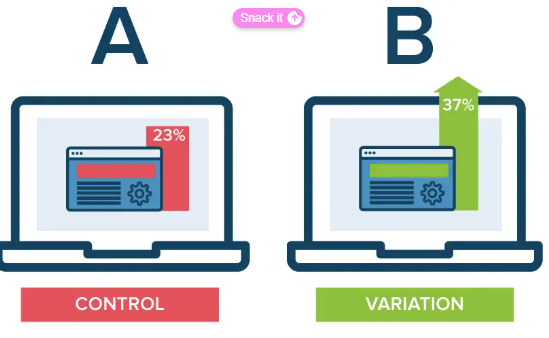
A/B testing, or split testing, is a simple way to compare two versions of something. You do this to find out which version works better. Let’s say you have two headlines for your homepage. With a b test, you show the first headline (called version A, the control) to half of the people who visit. You show the second headline (version B, the variation) to the other half. A/B testing is a form of hypothesis testing that helps you know if your change makes things better or not.
The way b testing works is simple. Your website traffic is split randomly between two versions. A b testing tool watches how users interact with each one. When the test has been running for enough time, and you have a good sample size, you look at the test results. These results tell you if the change helped, hurt, or made no difference. You learn what really happened, instead of just guessing. A b test lets you get clear answers that come from real data.
Why you should A/B test
You should do A/B test because it helps your team try out new ideas and see the real results. This kind of testing lets you make careful changes to your user experiences. You will use the data you get from this, instead of just listening to what someone thinks, even if that person is the boss. A/B test helps you know what parts make the most change in user behavior and your business goals. This way, you let the numbers guide you, and you trust them until you know what works best.
A/B testing is a big part of conversion rate optimization. It helps with making sure your website or app gets better over time. If you want to get more sign-ups, increase sales, or lower bounce rates, A/B testing is the way to go. Using real user data, you get to see which changes work well. This way, you know every update has a good effect. A/B testing helps give users a better experience, and it gets you closer to hitting your goals.
How to do A/B testing
Running an A/B test is not hard, but you need to follow a plan to get data you can trust. A clear framework for your b testing helps you feel sure about the test results. This way, you can make smart choices for your business. The main thing is to pick one change, then check how it affects your audience.
This process is about gathering the first data and then looking at the final results when you do split testing. At first, you need to find what you want to test. Then, you set a goal. After that, you make a change, and start the A/B test. You need to keep going until there is enough traffic for good results. The steps below show the right way to plan and do an A/B test using split testing when you have enough traffic.
1. Collect data
The first thing to do is use your analytics tools to look for chances to make changes. Check your website data to find pages with a lot of people visiting. These pages give you the best chance to get a large enough sample size fast. A small change the here can make a big difference. A good b testing tool can help you find these pages and also help with your tests.
Focus on areas that do not perform well. Check the pages where the most people leave. Also, look at the ones that do not get many conversions in your conversion funnel. These spots are the best ones to test. If you understand user behavior on these pages, you can make a guess about what changes could fix the problem.
By looking at website traffic and how people use your site, you can see what is blocking your visitors. Some users may not click the call-to-action button, while others might leave the form before finishing it. Collecting this data in the beginning is very important. It helps you know what to test next. Also, it makes sure you are working to fix a real issue.
2. Set clear goals
After you know what you want to test, it is important to say what a good result looks like. Your goal needs to be clear and easy to measure. A common goal is to raise the conversion rate. But you may be looking to get more people to fill out forms. You might want to make the bounce rate go down, or you could want to see fewer carts left behind.
Before you begin, you need to know where you are now. You should find out your current bounce rate. This number is what you will use to see if things get better. The baseline helps you show that your changes, like an A/B test, make a difference for your business goals. For example, if A/B testing takes your bounce rate down from 40% to 20%, you can see good results.
When you set a clear goal and choose a set of metrics to track, you give yourself a simple way to judge your test results. The team can see the main goal and use these numbers to know if the change worked. If you do not have a goal, you cannot tell if your test results are good or bad.
3. Create test hypothesis
Every A/B test needs a clear hypothesis at the beginning. This means there should be a good reason and prediction for why one change might give better results than another. A simple idea could be “change the button color to yellow.” A real hypothesis for a b test would be “changing the button color to yellow will get more clicks because the yellow stands out better on the background and people will see it more easily.”
Your guess should come from the data you got earlier. If you saw that the users do not click a button, you should do hypothesis testing that aims to help people notice it more. You want to use data for this step because it helps you get significant changes and meaningful results. You start with the null hypothesis. That says there is no difference between the two versions.
Making a clear prediction helps you have a goal for your test. It links the change you make to the result you expect. This helps you stay on track and gives your work a reason. Doing this is the thing that sets real tests apart from just guessing or changing things at random. It is a key step if you want to get good, reliable answers.
4. Design variations
Now it is time to turn your idea into a real test by making a variation. In a normal A/B test, you have your first page. This is called the control or version A. Then you make a new page with some changes. This is your variation B. It can feel like a good idea to make many design changes at once, but if you do this, it is hard to say what design change made the new result happen.
For your first tests, it is good to make just one variant B. Test only one part at a time. For example, if you want to test the call-to-action, the only thing that should be different between the two pages is the CTA. This helps you know what makes the change. You can say for sure that the results come from that one change.
When you make different versions of a variable, you are doing A/B testing. In this kind of experiment, one group sees the original, and another group gets variation B. By comparing the results, you can see what works best and what does not on your website. This is one of the most clear ways to get good insights using A/B testing.
5. Run the experiment
With your A/B testing variations set, you can start the test on your site. A/B testing software will split your website traffic. It will send people to the control or the new version at random. This way, bucket testing helps make sure an equal number of visitors try each version. There be no bias, so you get clear results about which one is better.
The time you run your b test matters. You need to let it run long enough to get good info from enough visitors. Most people run it from one to two weeks. This helps cover changes in how many visitors you get on different days of the week. Still, how long you need to run your b test depends on how many visitors you have and what confidence level you want to reach.
During the test, watch to make sure all is working well. Do not stop it early, even if you think one version is doing better. Other ways, like split URL testing, also work much the same way. In split URL testing, people are sent to different URLs for each change. No matter which type you use, you need to let the test finish to get good and true results.
6. Analyze results
After you finish the test, you need to look at the results. The testing software will show you the data. You can see how each version did with your goals. The main thing to check is statistical significance. This helps you know if the difference you see is real or if it just happened by chance. Most people use a 95% confidence level for this kind of test.
If the results show there really is a difference, and one version did better, you have a winning variation. When you get a winning variation, you can be sure to use the new change. If the test has no winner, you might not know what step to take next. Sometimes, things are unclear. The old version may even do better in some cases.
Remember, you never really fail in A/B testing. Even if what you guessed turns out to be wrong, you still get valuable insights about your users. Every test, whether the result is good, bad, or just neutral, helps you improve your plan and know your audience better. Be sure to write down what you learn from all significant results, so you can use this when you do B testing in the future.
A/B testing examples
Looking at A/B testing when it is used can help you better understand it. Real examples show you how companies use split testing to help key numbers go up. With things like changing text or adding new ideas to the homepage, b testing helps businesses know what speaks to their people. It helps them see what makes a positive impact.
These tests show how you can take an idea and see clear results from it. When you look at what others have done to use A/B testing and boost their website traffic, you can find good examples to follow. They also help you think about ways to get more engagement on your own site. Below, there are a few cases that show A/B testing can really work.
1. Homepage A/B test
One smart way to use b testing is to put something fun on a company’s homepage. The team thought that an interactive and playful feature might help people stay on the site and use it more. They tried this by showing a picture of a dog to half the people who visited the site.
When people saw the dog and petted it, they got a link to a content report. The test wanted to see if this fun part of the user experience would make people read more, compared to those who did not see the dog. This test looked at how making one small change to the user experience can affect user behavior.
The result was very good. People who saw the dog on the main page read the content three times more than people who did not. This A/B test showed that adding a fun and creative touch can really boost user experience. There is a clear link between making things fun for people and having a higher conversion rate for how much they read or use the content.
2. Pop-up to flop-up
In another A/B test, a strategy consultant wanted to make the user journey better on a booking website. In the old way, people had to click on a pin on the map. This would take them to a new page where they saw the product details before they could go to checkout. The idea was that showing a pop-up with more details right on the map would make things faster for users. The hope was this would help more people finish their booking.
The test was set up to cut down on steps. The goal was to make it easier for people to find the information they wanted.
- Control (A): When users click a pin, they go to a new page.
- Variation (B): When users click a pin, they see a pop-up with details right on the same page.
The results did not match what we thought would happen. When the pop-up was added, fewer people got to the checkout page. This showed there was a change in user behavior. There was not enough info in the pop-up to help users feel sure about moving forward. The test did not make the conversion rate better. Still, there is a good lesson to take away from this. The pop-up needs better information.
Understanding the Meaning of A/B Testing
To get the most out of b testing, you should know the key ideas that make it work. At its heart, b testing uses a scientific method for marketing and product design. This is not just guessing. You use real numbers and facts to help you choose what to do. You can do this by testing things and measuring what happens.
The words split testing and hypothesis testing are important when we talk about this process. You do not just change things at random here. You test a clear idea to find out if it works or not. Let’s look at some of the main ideas and words behind A/B testing so you will know more about how it goes.
AB Testing Full Form and Definition
The term “A/B testing” is the full name for what people sometimes call split testing or bucket testing. All these words mean the same thing. A/B testing is when you compare two versions of a webpage, app, or something else to see which one works better.
B testing is when you show these two different versions, A and B, to users at random. A is usually the control, so it is the original one. B is the version with changes, and that is what you want to test. If you split your audience in this way, you get a kind of controlled experiment.
After showing both versions to enough people, you can look at the test results to see which one did better with your goals. AB testing is a good way to turn clicks into customers. It helps you learn from what your audience does.
Key Concepts Behind AB Testing Meaning
The idea behind A/B testing is simple. It comes from a few key ideas that help people trust the results and use them. You need to get these basics to run A/B or split testing that really makes the user experience better. That is what turns testing into a real, science-based process and not just guessing.
At its core, b testing helps you make good choices by using real user data. This way, you can see what works best with facts, not just guesses. The main ideas of b testing are:
- Hypothesis Testing: Every test starts with a simple idea. This idea is about what change you think will make a metric better. You want to see if this guess can really help.
- Randomization: You put users into two groups. They do not pick their group. It is random. Some see the old thing, some see the new. This helps get rid of bias.
- Control vs. Variation: You look at the new design and check how it does against the old design. You want to know what happens if you make a change.
- Statistical Analysis: You do some math to see if the change means something. This math shows if what you see is not just luck.
A/B Testing vs. Multivariate Testing
While many people talk about A/B testing and multivariate testing together, they are not the same. Split testing, which is also called A/B testing, works best when you want to see which of two or more versions of a single page or part of your site does better. For example, you can test two headlines. This helps you know which one gets better results overall.
On the other hand, multivariate testing lets you try out many variables and their mixes at the same time. You can test two headlines and two images in one go. Multivariate testing shows the mix that gives the best test results. For example, you might see that headline A with image B works better than others. This way to get test results is more complex and needs more people to visit your site to get results you can trust.
Use A/B testing when you want to make bigger or more bold changes. Use multivariate testing if you want to fine-tune a page. A/B testing lets you see what happens with large shifts, while multivariate testing shows how different page parts work together.
| Feature | A/B Testing | Multivariate Testing |
|---|---|---|
| Goal | To find the best-performing version between two or more distinct options. | To find the best-performing combination of multiple elements. |
| Complexity | Simpler to set up and analyze. | More complex, tests multiple combinations at once. |
| Traffic Needs | Requires less traffic to get significant results. | Requires significantly more traffic due to many variations. |
The Importance of AB Testing in Marketing
For marketing teams today, A/B testing is a must. It helps you stop guessing. You get clear data that guides what works for your customers. A/B testing helps you reach your business goals. If you want a higher conversion rate, A/B testing is key. It is at the heart of conversion rate optimization.
By testing and updating campaigns, landing pages, and emails often, marketing teams can make sure what they do works well. Using data helps the team get better results, earn more, and learn more about the people they want to reach. A/B testing plays a big part in helping marketing teams get good results.
How A/B Testing Optimizes Campaign Performance
A/B testing is a good way to make your marketing campaign work better. When you try different things, you get to see what makes people take action. For example, if you have a product marketing campaign, you can test the ad copy and the landing page. This helps you use your money well and makes it cheaper to get new customers. A/B testing gives you the right answers about what works for your marketing campaign.
In email marketing, you can try out different subject lines to find which gets more open rates. You can also test what is inside the email, like the call-to-action or a video thumbnail, to see what helps your conversion rate go up.
Each test gives you clear test results that you can use right away. When you make these small changes over time, they can lead to a big jump in how well your campaign does. With this ongoing work to make things better, you make sure you get the most from your marketing budget and the time you put in.
Reasons A/B Testing is Essential for Businesses
A/B testing helps a business grow by using data instead of guesswork. It changes how decisions are made. The plan goes from using opinions to using real evidence. This is key for the business to meet its goals and keep doing well over time. A/B testing also lowers risk and helps the team learn more.
There are several key reasons to add A/B testing to your plan. A/B testing can bring a big positive impact to what you do. These benefits are not only for one campaign. They can help your whole way of doing marketing and product development.
- Solve Visitor Pain Points: Find out what problems or confusion people have on your website. Fix these issues so users feel less stressed.
- Get Better ROI from Existing Traffic: Work to increase conversions from people who already visit your website. You do not need to spend more money to get new visitors for this.
- Make Low-Risk Modifications: Try small changes first before you update everything. This helps keep problems to a minimum if something goes wrong.
In the end, A/B testing gives you valuable insights about your customers. These significant results show you what changes matter most.
AB Testing in Meta Ads
A/B testing can help you get better results from your Meta ads. You can use A/B testing for Facebook and Instagram to try different parts of your ads and see what works best. The platform has split testing tools built in, so you do not need anything extra. A/B testing lets you make the most of your advertising money by seeing which ad is better.
You can try out a lot of things in your Meta ads. For example, you can test different ad copy to see which one your audience likes more. You can also change up the ad pictures or videos to find out which one gets the most attention.
You can A/B test more than just the ad. Try A/B testing different groups of people and different places to show the ad. When you test these things one at a time, you can find the winning variation. This helps you see what gets the most people to take action or engage. A data-driven way like this helps you get better results as time goes on.
Commonly Tested Elements in A/B Experiments
When you start A/B testing, it can be hard to know what you should test first. There are many options out there. Some things have a bigger effect on user behavior than others. It’s smart to begin with these important parts so you can get better results and learn more.
Common things that are often tested include the call-to-action (CTA) button on a page. People also change the headlines on landing pages and look at how the layout works. Even small updates to these parts can lead to good changes in the bounce rate and how many people turn into customers. Let’s look at what you can test that helps the most.
CTAs, Landing Pages, and Website Copy
Calls-to-action (CTAs) are tested a lot. The reason is simple. The words, color, and spot of your cta button can have a big effect on if people click it or not. You can try different text to find out what helps people decide to take action more.
- “Shop Now” and “Explore Products”
- “Get Started” and “Try for Free”
- “Learn More” and “Read the Guide”
Landing pages are very important when you want to work on conversion rate optimization. The things you can test include headlines, the list of benefits, and social proof such as testimonials. You can also work with the layout. When you change the main image or video, it can change your test results a lot. All these steps can help to boost the conversion rate on your landing pages.
Don’t forget to pay attention to your website text. The way you sound, like if you are casual or formal, and how long the text is can change how people feel about your website. The way you set up your text is also important. Try A/B testing different text choices to see which one people like most. This way, you will know what message works best for your audience.
Forms and Navigation Elements
Forms are something that you need on many websites. But they often slow down users. If your form is long or confusing, people may leave without finishing it. A/B testing can help you make your forms better. You can try changing the amount of fields, test different words on the “Submit” button, or add a progress bar if you have a long form. This way, you find out what works best and keep people from leaving your site.
Your site’s navigation is very important for the user experience. If people can’t find what they need, they might leave. This makes your bounce rate go up. You can A/B test where you put your navigation menu, the things that you add to it, and how many items users see.
Testing these parts can help you get valuable insights into user behavior. Just making small changes to your forms and menus may be helpful. This can take away things that block the user and make it easier for people to do what they want on your site. When you do this, your overall conversion rates may get better.
Images, Design, and Page Layout
The way your website looks can really affect the user experience. The images on your site show people what your brand is like. A/B testing with different images is a good way to know what your audience likes best. You can try pictures that show how people use your product, or you can use photos of the product by itself. It’s also good to test real photos and drawings. This will help you find out which ones get people to pay more attention.
The way your site looks, like the colors you use and the size of the text, can change how people feel about it. A small change to design can help people read your content better. It also helps them see your CTAs more clearly. This can lead to a better conversion rate.
Your page layout is a key part of the user experience. You can try using a long page or a short one. You can also move things like reviews, proof from people, or pictures to new spots on the page. Each test like this can show what works best to make the user experience feel better and more interesting.
AB Testing Examples in Real-World Marketing
A/B testing is not just a theory you read about. A lot of marketing teams use b testing each day in different industries. A simple b test can lead to a good boost in website traffic, a better conversion rate, and a smoother user experience. These real-world examples show what can happen when you use it the right way.
Many businesses, like tech companies and online shops, always try new things to understand people better. The examples below show how you can test marketing channels in a smart way. This can help you find ideas for your own business.
Homepage AB Testing Examples
The homepage is the first thing most people see when they come to your brand. This makes the homepage a great place for b testing. A good b test here can help you get a better conversion rate. It also helps improve the user experience as soon as people visit your site. Doing b testing on the homepage is a smart way for us to work on conversion rate optimization.
Different industries use their homepages for different things. This means there can be many ways to run tests. Here are some examples of things you can test:
- E-commerce: Try out different promos on the homepage or change where the navigation items are. This can help people get to product pages faster.
- Technology: Change the text on your homepage and test different calls-to-action. This can help increase how many people sign up for a free trial or fill out lead forms.
- Travel: Test out new ways of setting up the homepage search box. This can make it easier for people to find and book trips.
Each of these tests helps make things easier for people. The goal is to help visitors do what they came to do. This can lead to better engagement and more people taking action on your site.
Email Subject Line Experiments
Email marketing is a good way to reach people. Your email subject line is important because it opens the door to your message. If the subject line does not get people to look, they will not read what you send. This is why subject lines are good for A/B test, and they are used a lot for it.
By trying out different subject lines, you can change your open rates. Even small tweaks may make a big difference in how many people read your emails.
- Personalization: Try using the person’s name in the subject line to see if it makes a difference.
- Emojis: Check if having a suitable emoji in the subject line helps people get more interested.
- Tone and Length: Test if asking a question works better than using a statement in the subject line, or try a short one instead of a longer one.
Looking at the b test results from these experiments helps you see what messaging works best for your audience. When you know this, you can use it to make your whole marketing campaign better. Your email marketing can get stronger and work well for more people.
Social Media Ad A/B Testing Examples
Social media is a big part of most marketing plans. A/B testing is very important to help you get the most from your ad budget. When you do b testing on your social media ads, you can improve your campaigns. You want to see a higher conversion rate and better returns on what you spend.
There are a lot of things you can try in one social media ad campaign. You can test what works best. This helps you improve each part of your ad. You get better results when you look at the way your social media ads perform.
- Ad Copy: Try out more headlines and text. See which one gets the most clicks.
- Creative: Use different images, videos, or carousel ads. Find out which look brings the most interest.
- Audience: Test who gets your ads. See which group likes your offer the most.
This step-by-step way to do b testing helps you make sure you are not just putting money into social media ads. You use your money on a plan that can actually work better for you.
Key Steps to Run a Successful A/B Test
Now you know what A/B testing is and why people use it. Let’s look at the main steps you need to make a test work well. A clear plan is the best way to help your b testing give you good and real answers. You want to trust the results so you can act with no doubt. The steps below will help you go from an idea to putting A/B testing in place.
Every part of the process matters, from setting clear goals to looking at the final data. If you take things one step at a time, you can learn something good from your work. The next steps will help you make a strong base for your testing program.
Setting Hypotheses and Goals
The first thing you need to do is figure out what the problem is and come up with a guess to solve it. To start, look at your data. This can help you find the area that is not doing well. Then make a clear prediction, which you can test, about what change might make it better. A good guess is not just a thought; it also says why you think the change will fix the problem.
Your hypothesis testing needs to be connected to your business goals. Do you want to raise sales, get more leads, or make sure people interact more? Then your test must have an objective you can measure. The best way is to set a SMART goal for each experiment. A SMART goal is one that is specific, can be measured, is possible, matters to your business, and has a set time for when you want to reach it.
When you have a clear goal and a strong idea, your test has a purpose. This helps you set up the different versions of your test and know how to check the test results. If you do not start with this, your test may not have direction. Then it will be hard to understand what the test results mean.
Designing Variations and Splitting Traffic
After you set your idea, it’s time to work on your A/B test. You will have your main page, which is the control. Then, you will make at least one other page with the design change that you want to test. Make sure you change only one part at a time in your versions of a variable. This way, you can see what part makes the difference.
Next, you have to split your traffic. It’s important that people are picked at random to see the control or the change, so there is no bias. Most testing tools do this for you, and they make sure that the number of visitors is even between the different versions.
In some cases, like when you do a big redesign, you can use split URL testing. This type of url testing means you send people to two very different web addresses. No matter what method you choose, it is important to put people in groups at random. Random assignment helps the test stay fair and true.
Running the Test and Measuring Outcomes
With your different versions ready and the traffic set up, you can start the test. Let it run for the planned amount of time. Do not stop the test early, even if you see that one version looks better. If you stop too soon, your results may not be right. Wait till you have enough data.
While the test is active, your b testing tool will gather data on how people use each version. It will keep track of important things like the conversion rate, how many clicks happen, and other ways people interact that matter for your goal. It is a good idea to look at things often. This makes sure the test does not have any problems with how it works.
Once the test ends, you will look at the test results. This helps you see if there was any clear difference in how each choice did. This is when you find out if your idea about the test was right. The data will show you which one worked better. This gives you a good idea of what to do next to get significant results.
Statistical Methods Used in A/B Testing
You do not have to be great at math to run an A/B test. But it helps to know some basics about how the numbers work. These basic statistics give you confidence that what you see is true and not just random. Things like statistical significance, confidence level, and sample size are the main ideas that help you trust your A/B test results.
This knowledge will help you read your test results in the right way. You can then explain them clearly to people involved in your A/B testing. Let’s quickly go over what these words mean and how you can use them with your A/B testing work.
Understanding AB Testing Statistics
Statistical significance shows if the difference between the options in your test happened because of your change, not by luck. When you get a result that is statistically significant, you can feel sure that what you did made a real difference to the outcome.
To figure this out, you have to work out the sample size you need for your test. The number you need depends on your conversion rate at the start, the smallest change you want to notice, and the confidence level you want. A 95% confidence level is normal in the field. This means there is only a 5% chance that your results are random.
Once your b testing has reached the needed sample size, you can look at the test results. If there is enough difference between the groups, based on what you set before, you can say which one is better. This way of looking at data helps people trust A/B testing when they have to make a choice.
Frequentist vs. Bayesian Approaches
There are two main ways to understand A/B testing results: frequentist and Bayesian. The frequentist way is the older one. It starts by saying that there is no difference between the options. That is called the null hypothesis. You need to run the test all the way through before you can look at the results. After the test ends, you can check for statistical significance.
The Bayesian approach is more flexible for b testing. It takes in prior data and then changes its predictions as new data comes in. You can look at results while the test is still going. If one option is much better, you might be able to pick a winner early. This can save you time.
Both ways to look at this are fine. Each one answers a different question.
The frequentist way tells you what is the chance to get your results if there is no real difference.
The Bayesian way tells you what is the chance that one thing is really better than the other.
| Approach | Frequentist | Bayesian |
|---|---|---|
| Core Idea | Assumes no difference (null hypothesis) and calculates p-value. | Uses prior data and updates probability as new data comes in. |
| Flexibility | Test must run to a predetermined sample size. No peeking. | Allows for reviewing results mid-test and stopping early. |
| Result | Provides a p-value to determine statistical significance. | Provides the probability that one variation is better than the other. |
Common Mistakes and Best Practices in A/B Testing
A/B testing is strong for checking ideas, but it’s easy to mess up your test results. This is often because people repeat common mistakes. If you know what these are, you’re more likely to avoid them. Using simple and proven steps, you can make sure your b testing works well. It will help you set up the b test, run it right, and feel sure about the b test results you get.
This will help you give your users the best experience by using real data. Let’s look at some common mistakes to stay away from, and also the best ways that can help you get good results.
Typical Errors to Avoid in AB Testing
To really make A/B tests work for you, you have to watch out for some big mistakes that can ruin your results. A main problem is ending the test too soon. You might feel you want to stop and pick a winner as soon as you see one choice leading. But you should wait. It is key to have a big enough sample size before you decide. This way, you know your results are right.
Another big problem is when you test things without having a clear, data-driven plan. If you just make random changes and do not know why, you waste time and use up resources. You need to be careful and not run tests on pages that do not get enough visitors. If there is not sufficient traffic, you may not reach statistical significance.
Here are some common mistakes to watch out for:
- Testing too many things at once: If you change lots of things at the same time, you will not know what caused the result.
- Ignoring external factors: A holiday, sales event, or other outside event can change what you see in your data. Be aware of when you run the test.
- Giving up after one “failed” test: A test that does not have a “winner” still gives you something to learn. Every test helps you figure out what works.
Proven Best Practices for A/B Testing Success
To get the most out of A/B testing, you need to follow some best practices. These steps help you run better tests and find valuable insights. They make sure your A/B testing matches your business goals. By doing this, you can give users the best experience.
First, you need to have a clear idea before you begin testing. Start with a guess or prediction that comes from looking at your data. Your test should check if that guess is right or wrong. This way, you have a purpose and are more likely to get meaningful results.
Here are some key best practices to follow:
- Test one variable at a time: A regular A/B test works best when you change only one thing. This will help you see what effect your change has.
- Run your test long enough: Do not end your test early. Wait until you reach statistical significance. This makes sure your results can be trusted.
- Prioritize your tests: Pick b tests that can have the most effect on your business goals. Focus on what matters most.
- Learn from all outcomes: It does not matter if your idea is proven or if the null hypothesis stays true. Write down what you learn. This will help you with tests in the future.
A/B testing & SEO
A lot of people ask if A/B testing can harm the SEO of your website. The answer is no. Google says split testing is good because it helps make the user experience better. Doing a good test will not hurt how your website shows up in searches. But you need to be careful and do things the right way so you do not run into problems. Always make sure you do not use “cloaking.” This means you do not show search engines something different than what users get.
To keep your SEO safe while running a b testing on your web page, add a rel="canonical" attribute on your test pages. This should point back to the original web page. If you need to use redirects during your test, use a 302 temporary redirect and not a 301 permanent one. This tells search engines to keep the main URL in their search results. If you follow these easy steps, your b testing will not harm your search results. A/B testing is not just for marketing. A lot of people also use it in product development and design. It helps you test new features and make things easier to use.
Understanding A/B test results
After you finish your A/B test, you need to read the results. The tool you use for testing will show you how each b test version did. But it is on you to figure out what the data means. First, check if you have a statistically significant result. This will tell you if the difference you see between your choices is real and not by chance.
If you have a winning variation, you need to see if the improvement is useful for your business goals. A small 0.1% rise in conversions could be real, but is it enough to go ahead and make the change? You should look at this uplift and check if it matches your business goals. These meaningful results, whether they are good or bad, help you learn more about your audience. You should always read the test results by thinking about your bigger goals.
A/B testing metrics
To run a good A/B test, you need to watch the right set of metrics. You will have one main metric, like conversion rate, that shows the goal of your A/B test. But it is also smart to keep an eye on other metrics, too. These checks, often called guardrail metrics, help you make sure that a boost in one area does not hurt another part of what you are testing. This way, you get the full picture of the A/B test and can feel sure that any change is really good.
For example, sometimes a change can help you get more clicks, but it can also make your bounce rate go up. That’s why it’s important to keep track of more than one metric. For an e-commerce site, it’s good to watch things like your average order value and cart abandonment rate. This way, you get a better picture of how things are going.
| Metric Type | Examples |
|---|---|
| Primary Success Metrics | Conversion Rate, Click-Through Rate, Revenue Per Visitor |
| Supporting Indicators | Time on Page, Bounce Rate, Pages Per Session |
| E-commerce Metrics | Average Order Value (AOV), Cart Abandonment Rate |
Creating a culture of A/B testing
The true power of A/B testing shows when it is a key part of your company’s culture. A/B testing should not be just a single project for the marketing teams. A company should treat it as an ongoing process that happens everywhere, not only in one area. It is important to get the leaders on board. You need to show them how A/B testing gives value and connects its results to business goals.
To create this kind of culture, you have to give your teams the right tools and training. Ask everyone to come up with ideas and treat each new feature or campaign as something you can test. When you make a b test part of your normal work process and share the valuable insights you find, you can help your group move away from guessing. This way, people will start to use facts and data when making choices.
Segmenting A/B tests
As your A/B testing program grows, you can learn even more by splitting your A/B tests into different groups. This way, you can see how new visitors and other types of groups react to your changes. For example, you may look at the results for new visitors and compare them with people who come back, or compare mobile users to people who use a desktop. This helps you notice if a change is good for one group, but not for another.
Looking at user behavior in detail helps you get more clear results. It also lets you give people a more personal experience. For example, you can make a change in your mobile app that shows up only for some users. But be careful with breaking users into groups. You want each group to be big enough to hit statistical significance. If you make too many small groups, the data may not be good and you might get results that are not true or helpful.
Conclusion
To sum up, A/B testing is a great way for businesses to make the most out of their marketing. If you want to get people more interested in what you offer, A/B testing helps. When you look at different versions of your content side by side, you can find out what your audience likes more. This way, you can use real data and not just guess. A/B testing works best when you know your goals and understand how to read the results. When you use A/B testing, be open to trying new ideas. Keep working to get better at what you do. If you want your marketing to get better and see the difference A/B testing can make, get a free talk with our experts today!
Frequently Asked Questions
What’s the Big Deal with A/B Testing?
A/B testing helps marketing teams and product managers use real data instead of just guessing. With b testing, you can get valuable insights into user behavior. This makes it easier to improve the user experience. It also helps make sure any changes fit well with the business goals. In the end, A/B testing can drive better results and a higher ROI.
How do you actually run A/B tests?
To run an A/B test, you make two versions, A and B, of something. Then, you use split testing to show A and B to different groups of people. You need a big enough sample size for reliable b test results. After the test is done, you look at the test results to see which version did better.
What are the best free A/B testing tools for small businesses?
For small businesses, Google Optimize used to be a great free b testing tool. Now that it is no longer available, you can look for split testing options in Google Analytics 4. A lot of email marketing platforms and website builders have built-in split testing features. These help you look at test results, so you get to improve your conversion rate without spending a lot of money on a testing tool or b testing tool.
What does A/B Testing look like in your job?
In an analytics job, A/B testing is about lookingat user behavior to come up withideas. We partner with marketing teams to plan and start b testing experiments that match business goals. My work is to read the data, find valuable insights, and share which choices bring good results.
How does one learn A/B Testing?
Learning b testing means you get to know the main ideas, like how to make guesses and look at b test results. You can practice by doing small tests. You could also read about real stories or join online courses. The point is to see how changes in user experience can help you reach business goals. This helps make the best experience for your audience.
How are you handling A/B testing on your sites?
We do split testing by using a b testing tool that works with our framework. We set up a b test and split our website traffic between the control and a variant. Then, we let the test run for some time. The tool gathers data, and we look over the test results. This helps us make decisions based on what the data tells us about our site.
Is A/B testing everything necessary? : r/UXDesign
A/B testing is important if you want to get better results for users and make more sales. But you do not have to use it for every choice you make. The context is key. Think about the main goal and how it may change things for users before you choose A/B testing alone.
What is A/B testing?
A/B testing, or split testing, is a way to see how two versions of a website or app work with people. You show one version to some users and the other version to others. Then, you look at how people use them and which one does better. This helps a business make good choices based on the data from real users.
What are the benefits of A/B testing? – Ping Data Science
A/B testing helps make better decisions using facts from data. It also makes the user experience better by changing things that matter the most. With A/B testing, people can find what works best and get more from their ideas. Marketers use A/B testing to make campaigns work well. The best part is it helps them spend time and money on things that get good results.
When to A/B test or multivariate test?
A/B testing works best when you have a clear goal, enough people visiting your site, and different things to try out. Use A/B testing if you want to test simple changes. Choose multivariate testing when there are more parts to test and things feel more complex. Pick the type of testing that matches what you want to do and the data you have.

