
Key Highlights
- Self-Help Groups (SHGs) play a big part in rural development and help more people be part of the financial system. They reach out to those who are often left out.
- These groups help women feel stronger and more able. SHGs give women a space where they can grow both with money and in their personal lives.
- The way microfinance works, all members can save some money. They can also get loans without the need for collateral like banks ask for.
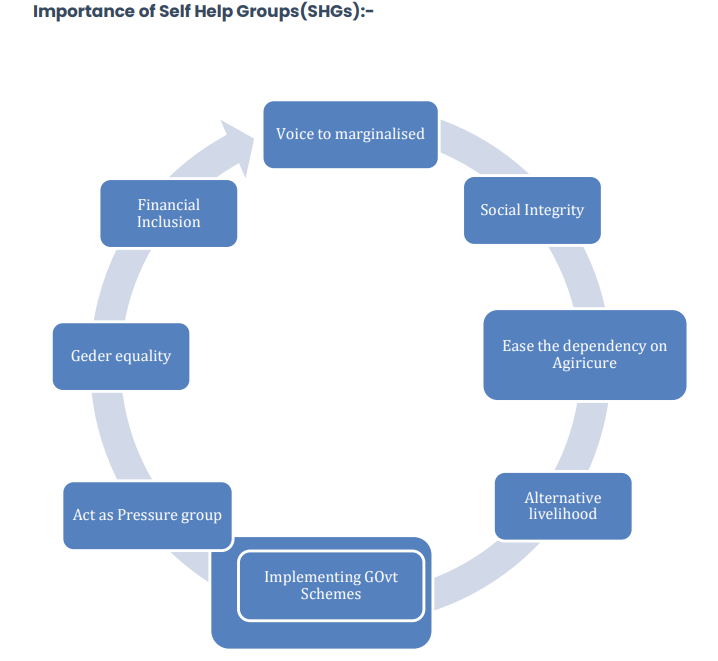
- By working together, SHGs work on social issues in their areas. They can act as pressure groups to make sure things get better for the community.
- Government agencies help SHGs in many ways. These agencies offer different plans to fight poverty and help people start their own business, pushing for more people to shape the future of entrepreneurship.
Table of Contents
Introduction
Have you thought about how small groups in a community can make a big difference? Self-help groups (SHGs) are doing this across India. The people in these groups are changing lives by helping more people to use banks and money services. They also help others to find steady ways to earn and keep work. SHGs are great for rural development. They let people feel they can control their jobs and money. In this article, we will talk about the goals of SHGs, what makes SHGs special, and how much they help. You will see their vital role in financial inclusion and development in India.
About SHG in India
An SHG in India is a small group of people who come together on their own. The people in the group often come from the same background. They work together because they want a better life. These groups run themselves and the members keep each other in line. SHGs work based on helping each other and being able to depend on themselves.
The main goal is to bring people together, with a focus on women and people in groups who often be left out. When these groups work as one, they help members save money. They make it easier to get credit, and they help with community development too. This builds the support that all members need. To know more about how they work, we need to look at where they started and what their setup looks like.
Emergence and Evolution of Self Help Groups India
The start of the SHG movement in India began with the Self-Employed Women’s Association (SEWA) in 1972. This group brought together poor women who worked for themselves and not for big companies. The aim was to help these women in the unorganized sector increase what they earn. Before SEWA, back in 1954, the Textile Labour Association set up a women’s wing. This group worked to teach families of mill workers new simple skills. Both these steps were important. They helped create a strong base for future community development in India, including what the SHGs do today.
The movement picked up speed when the National Bank for Agriculture and Rural Development (NABARD) started the SHG-Bank Linkage Project in 1992. This has grown into the world’s biggest microfinance effort. It changed how things work in rural development in India. In 1993, NABARD and the Reserve Bank of India said that SHGs can open savings accounts. This linked them with the banking system in India in a formal way.
This change carried on with government plans to help people who are poor. In 1999, the Swarn Jayanti Gram Swarozgar Yojana started. It focused on building and training SHGs in rural India to help people start their own work. Later, this program turned into the National Rural Livelihoods Mission (NRLM) in 2011. It made the SHG system even stronger in India.
Typical Structure and Functioning of SHG Groups
An SHG is a financial intermediary committee made up of about 10 to 25 local women. Most of these women are between 18 and 40 years old. This small size helps keep the group easy to manage. The people in the group can talk and work together in a good way. The women often have similar backgrounds, and that helps them trust each other. With this trust, all can understand and work as one group very well.
These groups work in a simple but strong way. Members come together often and put their money into one shared fund. This fund is used to give out small loans to those who need it or want to start ways to earn money. Every member has a say because decisions are made by everyone as a group. Collective action and peer pressure help make sure everything runs well and that loan payments are made on time. The whole system of governance is built so that all people feel like they own a part of it.
An SHG usually goes through three main steps. The group starts off simple. Over time, it grows and learns about money and skills. This helps the members develop and improve together.
| Stage | Description |
|---|---|
| Group Formation | Individuals come together, often with the help of an NGO or government agency, to form a group. |
| Capital Formation | Members contribute regular savings to build a collective pool of funds for internal lending. |
| Skill Development | The group focuses on acquiring necessary skills to boost income-generating activities for its members. |
Objectives of Self Help Groups India
The main purpose of self-help groups is to help women feel strong and reduce poverty. They work to give women an easy way to get credit and encourage them to start their own small businesses. SHGs also want to help people who do not have a bank account get in touch with formal financial institutions. By bringing people together, these groups support women, increase inclusion, and push for financial inclusion for those outside the banking world. This way, many people who feel left out can have a chance to grow and get ahead.
These groups do more than work toward money goals. They help their members feel sure of themselves and build new skills. The groups want people to make better choices, be fair to both men and women, and help families who do not have much. Because of all this, SHGs play a part in sustainable development and make the world feel more equal and fair for everyone. The sections below will show how these groups try to reach both their money and social targets.
Promoting Financial Inclusion and Savings
One thing that SHG does well is help poor people start saving money. Many members do not get to use formal banking services. So, the group is their first way to feel a bit safer with their money. The members put in small amounts of money often. All these amounts go into a fund shared by the group. Doing this helps them learn good money habits and gives them all a fallback when they need it.
The group puts their money together as a fund. They use this fund to give small loans to their members at reasonable interest rates—that way, members don’t have to turn to moneylenders. People in the group take loans for different reasons. This could be for things like dealing with medical emergencies or starting a small business. When members handle their own funds, they get to practice and learn financial literacy skills and management. The whole lending process inside the group is the base of what they do in microfinance. Also, it helps the group create a credit history.
SHGs play a big role to help connect people from poor communities with financial institutions. They do this in several ways:
- Helping people without bank accounts to use formal banking services.
- Giving people a way to get credit even if they do not have collateral.
- Teaching members more about financial literacy. People also learn good money management skills.
- Being a trusted link for banks to connect with customers who live in rural areas.
Social and Economic Empowerment Initiatives
Empowering women is the main idea of the SHG movement. In rural areas, SHGs help women find financial independence. This support lets women have a bigger say at home and in their community. When women start earning and using their own money, their confidence grows. They feel better making choices, too. All this begins to change old views on what women and men can do. It helps bring more equality in rural areas.
Many SHGs help their members learn new skills by offering vocational training. The people in these groups learn things like tailoring, making handicrafts, and the latest ways to work in farming. This vocational training gives them chances to start new economic activities and find more employment. Women in the SHGs use these skills to earn from several sources and not just from old ways of working. By building these skills, they make sure their small businesses keep going strong and bring in more profit over time.
The social and economic effects of these plans are big. SHGs help women feel stronger in life by:
- Helping them build their confidence and learn leadership skills.
- Giving them help to begin and run their own economic activities.
- Setting up a place where they can talk together about social issues like dowry and domestic violence.
- Making their social status better and motivating them to take part in politics.
Key Features of SHG in India
Self-Help Groups have a few things that help them work well. These groups are often small and have about 10 to 20 people. The people in the group are from the same area and have a similar way of living and earning. This helps everyone trust each other and feel close. A big idea in Self-Help Groups is that all members make choices together. This means they all help run the group and manage money. This way, everything is clear, and everyone shares the work.
These groups often act as pressure groups. They ask for what the community needs and make sure local governance does its job. Their special microfinance model lets them work with formal banking institutions. This helps people to get bigger loans without needing collateral. The way they do things is not the same as other community organizations. We will talk more soon about how their system works.
Microfinance Model and Loan Process
The microfinance model in an SHG works with trust and the practice of saving money together. It begins when each member adds a small amount of money to a central group fund. This simple act of coming together helps the group build its own cash reserve. The group stays in control of all this money. This service is very important for people who did not have a savings account or access to other financial services before.
Once the group has saved enough money, they can start lending to each other. A person in the group may ask for a loan for a reason. The group talks and decides to give the loan or not. They also choose how much money to give and when it must be paid back. The Reserve Bank of India and NABARD support this model in India. This help lets SHGs open bank accounts and grow a formal credit profile. Usually, more than 96% pay back their loans on time. This makes SHGs good clients for banks.
The loan process is at the center of their microfinance model. It helps people get more financial access. The steps in this process usually are as follows:
- The group puts their money together often to make a fund that everyone manages.
- Members can get loans without needing to offer collateral, and the interest rates are kept reasonable.
- Because the group saves money and always pays back on time, they can get bigger loans from banks.
- Everyone helps each other make sure payments are made on time, so there is strong peer support and mutual accountability.
Distinctive Characteristics Compared to Other Community Organizations
SHGs are not like other community groups. What sets them apart is because they focus mostly on financial intermediation. A lot of groups talk about social issues, but SHGs are made to work on savings and credit activities first. This money part gives people power right away. It also drives other social and economic actions.
Another big difference is that the members come from similar backgrounds. This helps people feel at home with each other. When everyone is from the same area and lifestyle, they trust each other more. There is strong peer pressure, so people are careful with their money. This makes them save well and pay back loans on time. How the group is run is also important. The governance is managed by everyone inside the group, and decisions are made together. Each member gets to be a part of their success.
Compared to some other groups in the community, SHGs have several things that make them special. These special things are:
- The main goal is to save money, offer credit, and help build good financial habits.
- Everyone in the group is similar. This helps people to trust each other and feel close inside the group.
- Peer pressure is used. This helps make sure each person is responsible.
- The group works with banks. This allows them to get more credit and financial services.
Conclusion
Self-Help Groups (SHGs) in India help bring financial inclusion to people in many communities. These groups focus on inclusion and empower their members, especially women. SHGs work by letting people save money and get microfinance in new ways. They also help people feel supported and build strong social connections.
SHGs do more than give out money. They encourage members to grow together and stay strong even in hard times. This helps break patterns of poverty and helps people stand on their own. More people now see the good work SHGs do. We should keep giving support to these efforts.
If you want to know how SHGs and financial inclusion can help your community in India, or if you want to join, there are chances for you to get involved. Reach out and find what these groups can do for you and your community!
Frequently Asked Questions
How do SHGs in India contribute to women’s empowerment and poverty alleviation?
SHGs help women feel stronger by teaching them about money and how it works. These groups also let women borrow money. With this support, they can start their own small businesses. Getting their own money like this helps women step out of the cycle of poverty. They can earn more for their families. As a result, more women join in economic activities. This also helps them feel more confident. Women start to make more decisions in their lives.
What is the government’s role in promoting SHG groups in India?
The government helps a lot in rural development through different groups like the Ministry of Rural Development. The National Rural Livelihoods Mission (NRLM) and Deendayal Antyodaya Yojana work to build and support SHGs. These schemes link SHGs with banks and give them the money they need. This support is there to help entrepreneurship and bring down poverty in these areas.
What are some notable success stories of self help groups in India?
Kudumbashree in Kerala is one of the good stories. It has helped many local women feel stronger by giving them microcredit and chances to start their own businesses. In Maharashtra, MAVIM has done something like this. It has helped self-help groups grow, and it gives them money and help with work. This has made the members’ lives better and has helped them feel more confident about their future.
What do you mean by SHG in India?
An SHG in India is a small group of people who come together on their own. They mostly have the same background. These people put their savings together, so they have money to help each other. The group works together for their good.
People in the SHG join in to help bring financial inclusion. They take action as a team to work on social issues. The group supports rural development and works like a platform for inclusion and empowerment.
What is SHG and its function?
An SHG is a group. It works as a financial helper for the people who join. The main job of an SHG is to give loans without asking for any collateral. It wants people to save money and do their repayments on time. Peer pressure and democratic governance make sure members pay back what they owe. With the SHG, many people can get a loan who otherwise would not be able to. It helps members with financial independence and gives them a chance to grow.
What are your opinions on self-help groups?
Self-help groups help people become a part of the financial system and build better communities. They bring people together who are often left out and give them a voice as pressure groups to push for social change. These groups help members reach formal financial institutions which is important for financial inclusion. By supporting entrepreneurship and local economic activities, self-help groups play a vital role in making their communities stronger and improving lives.
How does the SHG help the poor?
SHGs help poor people get microfinance. Members can borrow money through a simple loan process. They do not need collateral, which is often needed at banks and keeps many people out. This makes it easier for people in rural areas with limited access to financial services to start businesses. They can improve their lives. With this support, poverty gets reduced and people see better days.
What is the meaning of SHG?
The meaning of SHG is Self-Help Group. It is a small group made up of people who come together to reach common goals. The people in this group join by their own choice. They rely on trust and work with each other to make things better. They practice democratic governance, so everyone has a say. SHG groups focus on financial literacy. They help members save money and feel included. They use collective action and peer support to help each other. The aim is to help everyone in the SHG feel that they belong and take part in every task.




