

Key Highlights
Here are the important points to know about India’s key wetlands:
- India has 94 Ramsar Sites. These are the wetlands of international importance, named under the Ramsar Convention.
- The Sundarban Wetland in West Bengal is the largest Ramsar site that India has.
- Renuka Lake in Himachal Pradesh is the smallest Ramsar site. This shows that the size does not decide how good the wetland is.
- Tamil Nadu has the highest number of Ramsar sites than any other state.
- The wetlands are very important for the conservation of wetlands. They help keep biodiversity safe and also give us many ecosystem services.
Introduction
Have you ever thought about the special wetlands found in India? These are not just normal wet places. Many are called Ramsar sites. This name shows that they are wetlands of international importance under the Ramsar Convention. The Ramsar Convention is an agreement between countries made in 1971. The main goal is to help protect and practice wise use of all wetlands. India plays an important part by naming new ramsar sites. India helps keep these wetlands of international importance safe and healthy for us and for future generations.
Ramsar Sites in India, State-wise List, Largest, Smallest & Oldest Sites
India has shown strong support for wetland conservation by taking care of many Ramsar sites. These wetlands of international importance are found in different parts of the country. There are many types, from coastal mangroves to lakes high in the mountains.
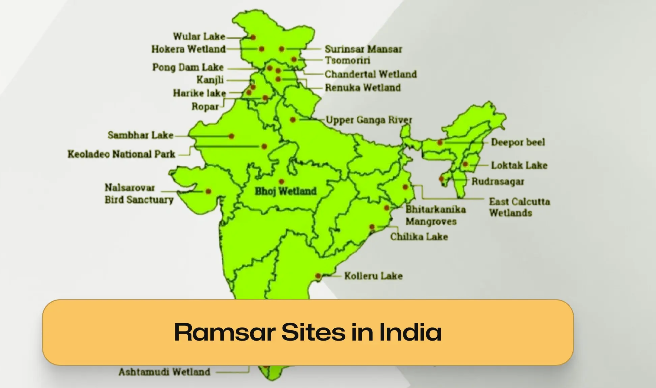
Each of these places helps protect a wide range of plants and animals. They also help local ecosystems stay healthy and strong. A state-wise list of Ramsar sites shows just how different and special these areas are in the country.
Exploring these sites shows many interesting things. You can find out which state has the most marked areas. You will see where the biggest and smallest sites are. You can also learn which wetlands got this important title first. Knowing about this spread helps you get a better picture of India’s rich nature.
1. State-wise List of Ramsar Sites in India
India’s Ramsar sites can be found in many states. This shows that the whole country is working to save these important places. Tamil Nadu has the most wetlands of international importance. It now has 18 sites. Uttar Pradesh comes next, with 10 sites. These numbers show how the wetlands of international importance matter in the Gangetic plains.
Keywords: ramsar sites, wetlands of international importance, international importance, tamil nadu, uttar pradesh
This state-wise list of Ramsar sites shows how they are spread out across the country. The list below is a small part of the main one. It helps you see that these protected places can be found from the north, south, east, and west.
| State | Number of Ramsar Sites |
|---|---|
| Tamil Nadu | 18 |
| Uttar Pradesh | 10 |
| Odisha | 6 |
| Punjab | 6 |
| Bihar | 6 |
This way of sharing helps protect many kinds of wetlands under the Ramsar Convention. There are coastal wetlands in Odisha and river places in Punjab. Each state helps reach the big goal of wetland conservation in the country.
2. Largest Ramsar Site in India
When you look at size, one ramsar site stands out above the rest. The biggest ramsar site in India is the Sundarban Wetland in West Bengal. It covers 4,230 square kilometers. This area is a key part of the world’s largest mangrove forest. The Sundarban Wetland is very important because it is full of life and gives many good things to nature and to people.
The Sundarban Wetland is very big and means a lot for the conservation of wetlands. It makes up more than 60% of all the mangrove forests in India. You can find 90% of the country’s mangrove species in the Sundarban Wetland. This special place is also home to many animals. Some of these, like the fishing cat and the Northern River Terrapin, are in danger.
Calling the Sundarbans a Ramsar site shows how important it is to the world. This title helps people work together to save its special land and water. It also helps keep the Sundarbans working well, like when it blocks storms and protects the coast. All these good things help both nature and the people who live there.
3. Smallest Ramsar Site in India
At the other end is Renuka Lake in Himachal Pradesh. This ramsar site is the smallest one in India. It covers just 0.2 square kilometers. Even with its small size, this freshwater lake shows that international importance does not depend only on how big the place is. Springs feed this lake. People there feel a strong bond to it because of their culture and stories from old times.
Renuka Lake may be small, but it is a key habitat. The lake is named after the mother of the well-known Hindu sage Parshuram. Lush forests grow around it. This spot shows how even small wetlands of international importance have great natural and cultural value. It helps local plants and animals, and is also a spiritual place for people.
Another small but important place is the Vembannur Wetland Complex in Tamil Nadu. It covers 0.2 square kilometers. Like Renuka Lake, this inland water tank, which was made by people, shows why it is good to take care of wetlands of any size. Many wetlands be there for birds as a bird sanctuary, and they help both local and migratory birds. The Vembannur Wetland Complex in Tamil Nadu is one of these important places.
4. Oldest Ramsar Site in India
India started its journey with the Ramsar Convention back in 1981. At that time, it picked its first two Ramsar sites. The oldest Ramsar sites in India are Chilika Lake, which is in Odisha, and Keoladeo National Park, which is in Rajasthan. Both of these well-known wetlands got their Ramsar recognition at the same time. This marked the start of a big change for wetland conservation in the country as both sites took the lead in caring for the environment. The importance of these sites is still strong today because the Ramsar sites play a key part in protecting water areas in India.
Chilika Lake is a large lagoon with salty water. It is known for the Irrawaddy dolphins that live there. The lake also gets many migratory birds in the winter. A lot of people come here just to see these birds.
Keoladeo National Park used to be a duck-hunting place. Now, it is a well-known national park and bird sanctuary. The park has several man-made wetlands that hold water at different times of the year. These wetlands bring many kinds of bird species. Birdwatchers from all over come to this bird sanctuary to see the birds.
The naming of these two ramsar sites showed how important they are for nature around the world. They are the oldest ramsar sites in India. This shows that India has cared for its nature for a long time. These places were also the first ones in the country to help people learn about taking care of the land and water.
5. Latest Additions to Ramsar Sites in India
India keeps adding new ramsar sites to its list of protected wetlands. In the past year, several new ramsar sites became part of this network. This shows that the country is still working hard to find and save important wetland areas.
When these new ramsar sites get listed, they help make the rules about the wise use of wetlands stronger. These steps make sure that people use the wetland resources well. The aim is to protect these places so that they can give us and the people who come after us lots of benefits.
These new ramsar sites are in many states. Each place has something different in nature to offer for the Ramsar list. What are the latest ramsar sites added in India? The most recent ramsar sites cover many types of places. Some are bird sanctuaries, and some are reservoirs.
Some of the latest additions are:
- Karaivetti Bird Sanctuary (Tamil Nadu): This is a place with freshwater that many migratory birds visit to feed.
- Longwood Shola Reserve Forest (Tamil Nadu): This is a special shola forest found in the Nilgiris. It is close to the city and gives water that people need.
- Magadi Kere Conservation Reserve (Karnataka): A place full of animals and plants. A lot of migratory water birds, like the bar-headed goose, come here.
These places, like Karaivetti bird sanctuary and Longwood Shola Reserve Forest in Tamil Nadu, are very important for birds, nature, and the people who live nearby.
These steps help to keep more types of plants and animals safe. They also help these places get known around the world. This means more people want to take care of these places. People in the community also get to help and take part in caring for them.
Criteria and Process for Designating Ramsar Sites in India
Getting a wetland to be a Ramsar site is a step-by-step process. There are clear rules from the Ramsar Convention that tell you what must be done. A site does not get picked unless it shows it has international importance. These standards make sure only wetlands with special ecological character get the title. The idea is to help wetland conservation and support wise use of wetlands all across the world.
When a wetland is seen as a possible candidate, it goes through a formal process to get the status. People have to make a full proposal. This shows how the place meets the needed rules. Next, we will talk about what rules a wetland must follow and what steps there are to get this important global status.
Criteria for Wetlands to Become Ramsar Sites
For a wetland in India to get the status of a site of international importance, it has to meet at least one out of nine rules set by the Ramsar Convention. These rules help find wetlands that are rare, special, or important for keeping many types of living things safe. The main goal is to protect places that have a strong ecological character. The Ramsar Convention wants to make sure these important areas stay safe for the future.
So, how does a wetland become a ramsar site in India? To qualify, the place must meet some conditions. These focus on types of animals, places where the animals live, and waterbirds. The goal is to make sure there is wise use of wetlands. This is important because these areas are good for global biodiversity. The wise use of wetlands helps keep many species safe.
A wetland can qualify if it:
- Has a clear, rare, or special example of a wetland that is natural or almost natural.
- Helps protect endangered species, including those that are at risk, or groups of plants and animals that could be lost.
- Has 20,000 or more waterbirds many times over the years.
- Supports a large part of the local kinds of fish and their groups.
Meeting any of these points shows that a wetland is important to the world. This makes it possible for the area to be nominated.
Steps to Get Ramsar Designation in India
The process to make an area a ramsar site in India starts at the state level. This process goes through several steps and ends with the area getting global attention. It takes care to make sure every chosen site really deserves the ramsar site label. This method supports the main ideas of the ramsar convention, which focus on wetland conservation and the wise use of these areas.
First, the state government has to find a wetland that might be good for this. They need to make a proposal with details. This document is called a Ramsar Information Sheet (RIS). It gives all the needed facts about the wetland. It talks about the area’s plants, water levels, and the animals that live there. The proposal must show that the wetland meets at least one of nine set rules.
The steps generally include:
- The state government finds the wetland and collects data about it.
- The state government gets the Ramsar Information Sheet (RIS) ready and sends it to the national government.
- India’s Ministry of Environment, Forest and Climate Change goes over the documents and gives approval.
- The final step is to send the nomination to the Ramsar Secretariat to get the wetland officially listed. This step-by-step process makes sure the choice is based on real science and a plan to care for the wetland for many years, which is important for us while facing climate change.
International Importance of Ramsar Sites
The international importance of Ramsar sites is huge. These sites are not limited to just national protection. They are part of a global group focused on the conservation of wetlands. This label brings worldwide attention to these areas. It shows their key role in supporting biodiversity and giving important ecosystem services. For India, the meaning of this is even more deep since there are many different wetland habitats across the country.
Many of India’s Ramsar sites are found on the Central Asian Flyway. This flyway is a big path that migratory birds use. The Ramsar sites become very important because birds stop here to rest and eat as they move from one place to another. The Ramsar Convention gives a way for countries to work together to protect these places. With this help, migratory birds can always have safe spaces in different countries as they travel.
In the end, the convention helps bring local conservation work to the world’s attention. It helps people work together, share what they know, and get both money and tools needed for the job. This lets India use good plans to take care of its wetlands. It also keeps these places safe for many years and helps all the different animals and plants that live there.
Ramsar Sites in India by Region
India’s Ramsar sites are much more than just a long list. You can look at them by region to see where they are and what they offer. The north has high-altitude wetlands, and the east is home to coastal mangroves. Every region has its own group of these wetlands of international importance. Having a regional view helps us see how many types of landscapes the country has. This way, you can get a clear idea of the ramsar sites and their value to India.
Whether you are at a national park in the foothills of the Himalayas, or visiting a bird sanctuary down south, you will see that these places are at the heart of the area’s wildlife. These ramsar sites are very important for nature in their parts of India. In the next parts, you will read more about some important ramsar sites in North, South, East, West, Central, and Northeast India. This will let you feel like you are taking a trip to these amazing places and get to know their special plants and animals.
North India Ramsar Sites
North India has many beautiful Ramsar sites. Some are high lakes in the Himalayas, while others are river wetlands in the plains. These wetlands of international importance help keep water safe for the region. They also give a home to many plants and animals. A lot of migratory birds use these Ramsar sites each year. These wetlands of international importance are important for nature in North India.
For example, the Upper Ganga River is a ramsar site. This area is between Brijghat and Narora in Uttar Pradesh. It is home to the Ganges River Dolphin, which is endangered, and also the Gharial. In the same way, the states of Himachal Pradesh and the Union Territory of Jammu & Kashmir have several important wetlands.
Key sites in North India include:
- Pong Dam Lake (Himachal Pradesh): This place is a big reservoir on the Beas River. It is very important because many migratory water birds come here.
- Wular Lake (Jammu & Kashmir): Wular Lake is the biggest freshwater lake in India. The Jhelum River feeds it.
- Asan Barrage (Uttarakhand): This place is a bird sanctuary. It sits where the Asan and Yamuna rivers meet.
- Keoladeo National Park (Rajasthan): This national park is famous all over the world for its many types of birds. A lot of people know about its rich bird life.
These places show the many different kinds of wetlands you can find in the north part of the country. These wetland areas are home to a lot of life and do well in this part of the country.
South India Ramsar Sites
South India, with a focus on Tamil Nadu, is well known for having many ramsar sites. Tamil Nadu has more ramsar sites than any other state in the country. This shows that the state has rich aquatic places, both at the coast and inside the land. These wetlands give many ecosystem services, like helping to control floods and help people who fish in the area. They show us the wise use of nature’s resources.
Many of these wetlands are well-known places for birds. They are a safe spot for many kinds of birds that either live there all year or come from far away. Karnataka and Kerala also have many important ramsar sites. These include backwaters, lakes, and estuaries full of many living things.
Some prominent Ramsar sites in South India are:
- Vembanad-Kol Wetland (Kerala): This is the longest lake you will find in India. It is a large brackish water wetland.
- Point Calimere Wildlife and Bird Sanctuary (Tamil Nadu): This bird sanctuary is in Tamil Nadu. It is one of the last dry evergreen forests left.
- Ranganathituu Bird Sanctuary (Karnataka): This place is a part of the Kaveri River. You get to see crocodiles and many bird species here.
- Gulf of Mannar Marine Biosphere Reserve (Tamil Nadu): This is the first marine biosphere reserve not only in Tamil Nadu, but also in all of South and Southeast Asia.
These places show the great amount of plants and animals in the wetlands of the southern peninsula. They also help people see how important these wetlands are for nature.
East India Ramsar Sites
East India has many important wetlands. There are big river systems, coastal lagoons, and mangrove forests. Places like West Bengal, Odisha, and Bihar have several of the main ramsar sites in the country. Each of these areas has its own type of life. These wetlands are not just home to many animals and plants. They also help millions of people who live nearby.
The Sundarban Wetland in West Bengal is the main highlight of the area. It is the largest ramsar site in India and is a big mangrove place with a lot of plants and animals. Odisha is also known for its wetland complex, including the well-known Chilika Lake.
Key Ramsar sites in East India include:
- Sundarban Wetland (West Bengal): This is the largest mangrove forest you will find in the world.
- Chilika Lake (Odisha): Chilika lake is the biggest coastal lagoon in India. It is a good place for migratory birds.
- East Kolkata Wetlands (West Bengal): These wetlands are special. The people here use wastewater to help grow fish and crops.
- Kanwar Taal (Bihar): This is a key oxbow lake in the Indo-Gangetic plain.
These sites show the rich water traditions in eastern India. They also play a big role in the area’s nature and money matters.
West India Ramsar Sites
The western part of India has many types of wetlands, like freshwater lakes, big water stores, and coastal areas. These places are called wetlands of international importance. You can find many of them in Gujarat, Rajasthan, and Maharashtra. These sites are important for many animals and people, especially in dry or almost dry areas. They help support both wildlife and those who live near them. Many people know their international importance because of the life they make possible.
These wetlands play an important part as a water source and also give a safe place for many kinds of animals and birds. For example, Nalsarovar Bird Sanctuary in Gujarat is the biggest natural freshwater lake in the Thar Desert. In Rajasthan, wetlands like Sambhar Lake are special because they have salty water, not fresh. A new spot, Udaipur Jheel in Bihar, is one of the oxbow lakes.
Some notable Ramsar sites in West India are:
- Nalsarovar Bird Sanctuary (Gujarat): This place is very important for the Indian Wild Ass, which is in danger of dying out.
- Sambhar Lake (Rajasthan): This is the biggest inland saltwater lake in India. Many flamingos come here in winter.
- Lonar Lake (Maharashtra): A special lake that was made when a meteor hit the area.
- Thane Creek (Maharashtra): This is a wide creek with mangroves. A lot of flamingos live here.
These places are known for the many birds and are special for being a bird sanctuary.
These sites show the rich nature in the west of India. You can see everything from salty lakes to lakes people have made.
Central India Ramsar Sites
Central India has several Ramsar sites, and many of them are in Madhya Pradesh. These places include both the human-made reservoirs and the natural wetlands. They are very important for water management in the area. A lot of different plants and animals get support from these wetlands. When these wetlands get the Ramsar site tag, it shows how special they are in the middle part of the country.
Madhya Pradesh works hard to find and take care of its wetlands. Places like the Bhoj Wetland in Bhopal show how an urban wetland can help nature and give people a place to relax. The list of ramsar sites in the state has grown. This shows the good work and strong ways madhya pradesh uses for wetland conservation.
Key Ramsar sites in Central India include:
- Bhoj Wetland (Madhya Pradesh): This is a human-made lake in Bhopal. The Sarus Crane lives here.
- Sakhya Sagar (Madhya Pradesh): This is a lake close to Madhav National Park. The Mugger crocodile can be found in this lake.
- Tawa Reservoir (Madhya Pradesh): This is a big lake in the Satpura Tiger Reserve. It is an important place where fish lay eggs.
- Yashwant Sagar (Madhya Pradesh): This lake is an Important Bird Area in the Indore region. Many birds visit here and it is a well-known spot.
These lakes and reservoirs in Madhya Pradesh play a big part for the birds and animals that live in or near Madhav National Park, Sakhya Sagar, and Tawa Reservoir.
These wetlands are important parts in Central India. They help keep the land stable and are good for nature.
Northeast India Ramsar Sites
Northeast India has many plants and animals, and the wetlands here are part of that. This part of the country is home to some wetlands of international importance. The wetlands in this region are special because they are clean and kept well. They are also very important to local communities, with a deep connection to their lives and culture.
Loktak Lake is the largest freshwater lake in Northeast India. This lake in Manipur is well-known because of its floating islands, called “phumdis.” There is also Keibul Lamjao National Park on it, which is the only floating national park in the world. In Tripura, you will find Rudrasagar Lake. It is important because of its value to both nature and culture.
Notable Ramsar sites in Northeast India include:
- Loktak Lake (Manipur): This is the biggest freshwater lake in the area. It is well-known for its floating phumdis.
- Deepor Beel (Assam): This is a freshwater lake near Guwahati. It is an important spot for birds and works as a bird sanctuary.
- Rudrasagar Lake (Tripura): This is a reservoir. It is a place where the very rare Three-striped Roof Turtle lives.
- Pala Wetland (Mizoram): This is a natural lake. It is found in the Indo-Burma area, which is a special place for a lot of different plants and animals.
These wetlands are very important for Northeast India. They stand out because of their special nature. The people who live there also depend on them, as they support local cultures.
State-wise Area and Number of Ramsar Sites
Have you ever thought about how the number of Ramsar sites and the area they cover can change from state to state? The number of Ramsar sites is good for seeing how much work goes into saving them. But, if you look at the total area, it helps you see how big these wetlands of international importance are. Some states have many small sites. Others have only a few, but they are very large. Looking at both tells you more about the way these important places are spread out in the country.
This pattern shows some good facts about India’s land and nature. In the next parts, we will talk about the states that have the largest area with Ramsar sites. We will also tell you about the states with the highest number of Ramsar sites. Then, we will share which states got the newest places added to this list.
Area Covered by Ramsar Sites in Major States
When you look at the area covered by ramsar sites, you can see that a small number of states make up most of the land protected in India. This happens because there are one or two very big wetlands of international importance in these states. West Bengal is at the top of this list. That is because the Sundarban wetland is so large and holds a lot of international importance.
Odisha comes next, with big places like Chilika Lake and Hirakud Reservoir making up a lot of its area. This shows that the number of sites matters, but the size of these areas also makes a big difference in how they help nature.
Here is a look at how much area is covered by Ramsar sites in some of the big states:
| State | Area Under Ramsar Sites (km²) |
|---|---|
| West Bengal | 4,355 |
| Odisha | 3,456 |
| Tamil Nadu | 2,469 |
| Kerala | 2,130 |
| Andhra Pradesh | 901 |
These numbers show just how big the work to protect the land is in these states. They also show the major part these big wetlands have in keeping the area’s nature in balance.
States with Highest Number of Ramsar Sites
Some states have big wetland areas, but some are known for the number of protected places. Tamil Nadu is at the top when it comes to the highest number of Ramsar sites. This shows that the state is really working to look after many of its smaller coastal and inland wetlands, which are very important for the environment. The high number of Ramsar sites in Tamil Nadu makes it stand out from other states.
Uttar Pradesh comes right after Tamil Nadu for the highest number of sites. There are many oxbow lakes and marshes in this state, most of them found along the Gangetic plain. These areas are very important for both migratory birds and the birds that live there all year. You can even spot the Sarus Crane in these spots.
Here are the states that have the highest number of Ramsar sites:
- Tamil Nadu: Has the most, with 18 sites.
- Uttar Pradesh: Is next, with 10 sites.
- Odisha, Punjab, and Bihar: All have 6 sites each.
There are now a lot of these places in some states, especially in Tamil Nadu. This shows that there is a strong will to look after many types of wetlands. A wide range of these nature spots now get the help they need. Different wet areas can now be safe, and that is good for the nature in Tamil Nadu.
States with the Most Recent Additions
India’s list of Ramsar sites keeps growing. The country keeps adding new wetlands that are important around the world. Many states in India have been active about adding new ramsar sites. This shows their strong action for wetland conservation. The latest ramsar sites often show new types of ecosystems. This helps make the list of ramsar sites more diverse and rich for everyone.
Tamil Nadu is leading the way with this growth. The state has added many new places to the list it already had. Karnataka is also important in this area. Some new sites from Karnataka are Aghanashini Estuary and Magadi Kere Conservation Reserve.
The states with the most recent additions include:
- Tamil Nadu: There are now new places like Karaivetti Bird Sanctuary and Longwood Shola Reserve Forest.
- Karnataka: The state has also named places like Magadi Kere, Ankasamudra, and Aghanashini Estuary.
- Bihar: Three new sites are now listed, such as Gokul Jalashay, Udaipur Jheel, and Gogabeel Lake.
These sites, like Longwood Shola Reserve Forest, Karaivetti Bird Sanctuary, Udaipur Jheel, and Gogabeel Lake, are now better known for being home to birds and nature.
These new designations are good news. They show that more people now know and care about saving India’s important wetland areas. It also means that people in different states are starting to do more to protect them.
Importance of Ramsar Sites in India
Ramsar sites are not just nice places to look at. These wetlands of international importance do a lot for us. They help many living things, support local jobs, and play a big part in fighting climate change. The way they are picked out and taken care of helps people use them in a smart way and helps with the conservation of wetlands. This means they can be good for us now and also help future generations.
These places give homes to animals that are at risk of disappearing, like many endangered species. They also help bring people in for tourism and support jobs and local businesses. The next parts will look at how these areas help save many different kinds of living things, how they are important for people and money, how they make tourism better, and the way they help fight climate change.
Biodiversity Conservation and Ecosystem Services
One big job of ramsar sites is the conservation of wetlands. These sites help take care of the land and all the animal species that live in these places. There is a lot of plant and animal life in these areas, and some of them are rare or close to vanishing. For some species, ramsar sites are the only place left where they can live.
These wetlands give many ecosystem services that help people and nature. They clean water on their own, refill the water that is under the ground, and keep the coast safe from being worn away or hit by storms. The Ramsar Convention says it is important to use these places in a wise way.
Ramsar sites are vital for:
- Protecting endangered species: Places like the Upper Ganga River help keep the Ganges River Dolphin safe.
- Supporting bird species: These places are very important for bird species, especially for migratory birds that fly along the Central Asian Flyway.
- Nurturing aquatic life: Mangroves and estuaries are homes where many young fish and prawn species grow.
- Maintaining genetic diversity: They help protect unique plant life too, like the Indian Bdellium-Tree in Khijadia WLS.
When we protect these habitats, it helps many species stay alive. It also keeps our planet healthy for all of us.
Social and Economic Value of Ramsar Sites
Ramsar wetlands are important for more than just the environment. They give a lot of help to local communities. Many people in India use these places to make a living. The idea of sustainable use means we can use these resources now, but still keep them safe for the future. This way, ramsar wetlands will continue to help people and not run out.
These sites give many ecosystem services that turn into money-making benefits. For example, there are wetlands like Kolleru Lake that help support fisheries. The East Kolkata Wetlands are where people get fish from wastewater-fed aquaculture. Many people who live near these wetlands count on them for farming, animal feed, and plants they use as medicine.
The social and economic contributions include:
- Supporting livelihoods: Many people in these areas do fishing, farming, and aquaculture for a living. These are common types of work at Ramsar sites.
- Providing resources: Wetlands give water that people use on their farms and in their homes.
- Cultural significance: A lot of these places, like Rudrasagar Lake, are very important for local customs and festivals.
- Promoting sustainable practices: The Ramsar label helps people work together, so they can look after and protect these resources in the right way.
Taking care of these wetlands helps the people who live there. It keeps them safe and helps them have a good life.
Ramsar Sites and Tourism in India
Ramsar sites help a lot to boost ecotourism in India. The places are rich in plants and animals, and they look beautiful. People from all over the world come to see them, like nature lovers, birdwatchers, and photographers. This type of tourism gives people a good reason to save these areas. It also helps people know why wetlands matter and why we should protect them.
Many Ramsar sites are already well-known places for tourists. A few of them are Keoladeo National Park and Chilika Lake. People go to these sites for birdwatching, boating, and to feel close to nature. Events like World Wetlands Day, which is every year on February 2nd, also help people notice these ramsar sites. This day gets more people to visit the national park and other world wetlands on the list.
Tourism in Ramsar sites contributes by:
- Generating revenue for local communities: The money from homestays, guide services, and souvenir shops helps local communities when people come to visit.
- Promoting environmental education: People who visit get to learn why wetland ecosystems are important.
- Supporting conservation efforts: Money from entry fees and tourism can be used to keep the site in good shape.
- Showcasing natural heritage: Places like Tsomoriri lake with the Korzok monastery let people see both nature and culture when they travel.
Sustainable tourism is important. It lets people enjoy these beautiful places without hurting their land and water. This way, everyone can visit and see them now and for many years to come.
Role in Climate Change Mitigation
Wetlands play a big part in helping with climate change. When we focus on wetland conservation, we can help the planet. Wetlands are good at holding back greenhouse gases and can help us deal with the impacts of climate change. More and more people now see that wetlands are an important part of the world’s plan to fight climate change.
These places, like mangroves and peatlands, are very good at taking in and holding carbon. They keep a lot of carbon in their dirt and plants. This stops it from going out into the air. The wise use and care of these wetlands is important. It helps us keep this important service.
Wetlands help combat climate change by:
- Carbon Sequestration: Mangrove forests, such as the Sundarbans, hold much more carbon per unit of land than many regular forests on land. This is important in the fight against climate change.
- Flood and Storm Protection: Coastal wetlands be a strong shield. They take in large waves and storms, which helps stop big floods.
- Water Regulation: These wetlands help control the way water moves. They lower the chance of both floods and dry periods. This is more needed now, as climate change makes both problems worse.
- Maintaining Microclimates: Wetlands, including the Longwood Shola Reserve Forest, help keep the air and rainfall steady in their area. This helps keep the local weather from swinging too much.
Taking care of our wetlands and making them better helps us deal with climate change. This is a good and direct way to make our future safer from the changing climate.
Conclusion
To sum up, Ramsar Sites in India are important for many reasons. They help save different kinds of plants and animals. They also give support to local jobs and help fight climate change. When we learn more about the importance of these wetlands, we see how much they give to us. This is true in nature, society, and even for local money matters. You can read about the biggest sites or read what is new. This can help you feel closer to the world we share. If you want to act or know more about these special places, feel free to ask for a free consultation. By working together, we can make sure ramsar sites are safe and used well for our future.
Frequently Asked Questions
How many Ramsar sites are there in India currently?
India now has 94 Ramsar sites. This count shows that the country cares a lot about the conservation of wetlands. These places have been picked as wetlands of international importance. They help protect the country’s many water areas in different states.
Which is the largest and smallest Ramsar site in India?
The Sundarban Wetland in West Bengal is the largest Ramsar site in India. It covers 4,230 km². On the other hand, Renuka Lake in Himachal Pradesh is the smallest Ramsar site. It is only 0.2 km², but it still shows that even small wetlands can have great international importance. Both places are top examples of Ramsar sites in the country.
What is the process for designating a Ramsar site in India?
To make a wetland a Ramsar site, the state government makes a plan. They show that the wetland has international importance and that it meets the Ramsar Convention rules. Once it gets national approval, the plan goes to the Ramsar Secretariat. This helps make sure these wetlands be used wisely and stay protected for their value in the world.




