

Key Highlights
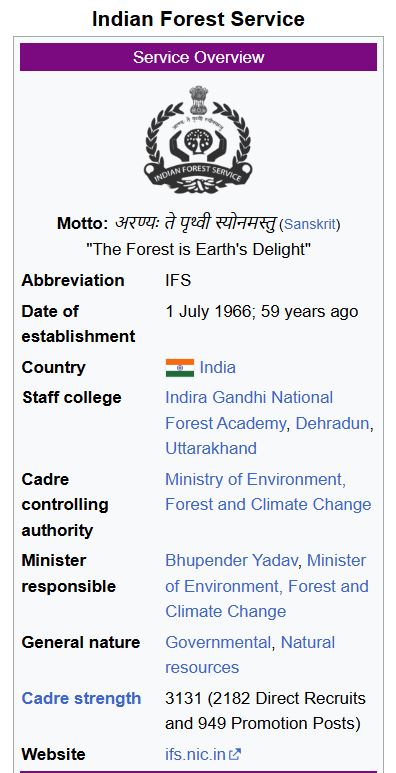
- The Indian Forest Service (IFoS) is one of the three All India Services. The other two are the IAS and IPS.
- The ministry of environment, forest, and climate change looks after this service.
- A forest officer is picked through the civil services exam. The union public service commission holds this test.
- The forest department works to follow the national forest policy and take care of the country’s natural resources.
- The government of india started the indian forest service in 1966. The goal was to use science for good management of indian forests.
Table of Contents
Introduction
Have you ever wondered who takes care of the indian forest and helps keep its animals safe? The Indian Forest Service (IFoS) does this work for the government of india. This group is part of the civil services. It takes care of forest service jobs and helps keep the land and nature in balance. If you choose this job, you can help with indian forest management. You also make sure the country has clean air, water, and land for all people.
Historical Overview of Forest Service in India
The story of the forest service in India has been going on for many years. It began when the british government was in power. In 1867, they made the imperial forest service because they thought forest management needed to be better. A man from Germany, Dietrich Brandis, helped set up the forest service. He showed others how to use a new way to take care of the forests that was more organized.
This early system started because of rules like the Indian Forest Act. As time went on, things changed a lot. The forest service we know in india today came from these old rules. When the india services act began the new forest service, it was a big move forward. This new part was built on what people had done earlier. Now, let’s look at how the way people work with the indian forest has grown over many years. Let’s also see what big moments helped make the indian forest service the way it is now.
Evolution of Forest Management Practices
India be one of the first places to use scientific management of its forests. The new way to care for forests started in 1864 when the British made the Imperial Forest Department. A German forest officer named Dietrich Brandis became the first inspector general of forests. His work was important for the forest department at that time.
At first, the officers for this service went to France and Germany to get their training. Later, the training started to be held at top universities in London, Oxford, and Edinburgh. This change helped make forestry work in India much better and more skilled. It gave people a better way to look after and manage the forests here.
The Indian Forest College began in Dehradun in 1938. This was a big step in forestry education in the country. It helped us start to look after our own forests. This change built a base for new ideas to care for the indian forest. These ideas focus on keeping the forest safe and following the way of sustainable development. Because of this, our forests can be there for all the people who come after us.
Key Milestones in Forest Service Development
The forest service has had many important moments over time. In 1866, the country got its first Inspector General of Forests. This was a big step. It helped make the basics for forest administration and started to show how the forest service would get better in the years to come.
A big change came with the Government of India Act, 1935. This act moved the control of forestry from the central government to the provinces. Because of this change, the Imperial Forest Service stopped hiring people for a while. This was an important step for the government of india and the forest service at that time.
Forests are important for everyone in India. Because of this, the Indian Forest Service started again in 1966. It began under the All India Services Act, 1951. The government of india made this change, bringing the forest service back as a main all india service. Now, the forest service works to take care of the indian forest and keep the nation’s green land safe.
| Milestone | Year |
|---|---|
| Imperial Forest Department Established | 1864 |
| Imperial Forest Service Constituted | 1867 |
| Forestry Transferred to Provincial List | 1935 |
| Indian Forest Service (IFoS) Constituted | 1966 |
Administrative Structure of Forest Service in India
The forest service is started by both the national and the state governments. They join hands to make sure things go well for conservation. At the top level, the central government stays in charge. The Ministry of Environment, Forest and Climate Change steps in to help. This ministry cares for issues about climate change and also looks after the forest service in the country.
The main group makes the main rules for the forest department. The plans they make at the top are done by the state forest department in each state. Every state has its own team. This team starts with the Principal Chief Conservator of Forests and goes down to the people who work in the field every day. These teams and people work together to handle daily jobs. The next sections will talk more about what the central group and the state agencies do.
Central Government Agencies and Ministries
The Ministry of Environment, Forest and Climate Change (MoEF&CC) is the main group that manages the Indian Forest Service. This is a part of the Government of India. It looks after every need of Indian Forest Service officers. The ministry handles service rules, posts officers to jobs, and takes care of all their work. It is also working on climate change and helps to protect the Indian forest system.
At the top of the central government team for forests is the Director General of Forests. The inspector general of forests helps the Director General with their work. They both give advice to the central government about forests and things about the environment. Their job is to make sure all national plans follow the right science and support the country’s aims.
These main agencies play a big role in how the country’s environment grows over time. They set rules, meet with other groups in different countries, and offer advice to state groups. This makes the plan for protecting India’s natural places clear and keeps it the same across the country.
State Forest Departments and Their Roles
Once people get selected for the Indian Forest Service, they go to work in their state cadres. This is when the real work begins for them in the field. Every officer joins the state forest department. The state forest department looks after the forests and wildlife that are in that state.
The chief conservator is the person who leads the forest group in a state. This person is named the Principal Chief Conservator of Forests. The chief conservator is the highest IFoS officer in the state. He or she takes care of the whole team. The work is broken down into circles, divisions, and ranges. This way, it is easier to look after everything, and all work can be managed well.
A main person in this system is called the Divisional Forest Officer (DFO). The forest officer is in charge of one or more forest divisions. The DFO looks after all the work and money in that place. He also makes sure the rules be followed. The DFO has the most power in his area. He manages everything. This means the DFO runs projects to save the forest and also works to stop bad things from happening.
Major Roles and Functions of Forest Service in India
A forest officer is someone who has many key jobs. The work that they do is good for the country. A forest officer works on forest conservation and makes sure wildlife is not in danger. They help keep our use of natural resources safe for everyone. A forest officer is also there to help with climate change.
The work that Conservators of Forests do is important for forest management. They help to make the big rules for forests. They also look after the forests every day. Their main jobs are to save trees and protect the animals who live there.
Conservation and Sustainable Use of Forests
The Indian Forest Service has one main job. It works to follow the National Forest Policy. This rule helps all people do forest conservation as part of their work. The policy wants to keep the environment stable in India. The main goal is to protect indian forest and also help with sustainable development.
Officers do a lot to keep forests in good shape and help them grow. They may plant a large number of new trees. The officers also support local people to grow trees with crops by using agroforestry. They come up with plans to help deal with the trouble that comes from climate change.
Their work lets forests keep giving us what we need in our lives. The main jobs in this field are:
- Leading the way to plant more trees. Also helping start social forestry programs.
- Taking care of forest resources to support local people.
- Making and using plans to fight the impact of climate change.
- Keeping forests safe from fires. Keeping them safe from people moving in without permission. Also stopping illegal tree cutting.
Wildlife Protection and Biodiversity Management
The forest service does much more than just look after trees. It takes care of a large number of plants and animals in India. A big part of the job is wildlife management. The officers work to keep animals safe where they live. The forest service also is in charge of national parks, tiger reserves, and wildlife sanctuaries.
This means acting strongly to stop people from hunting animals or breaking other wildlife rules. Officers team up with law groups for this. They keep an eye on important areas. They check out crimes and see that people who break rules in their forest divisions get punished.
The management of biodiversity can be a tough job. It needs some work from scientists. People must fix places where plants and animals live. They have to count different animals too. There are ways to stop problems that happen between people and wild animals. Here are the main things you have to do for this kind of job:
- Managing national parks and places where wild animals are kept safe.
- Fighting crimes against wild animals, like poaching and trading that is not allowed.
- Working on plans to help animals that may go away for good.
Becoming an Indian Forest Service Officer
Do you want to work in a job where you look after nature? You can be an Indian forest officer. This is a role in the civil services. A lot of people say it is hard, but it is also a good job. To get this job, you have to pass a competitive examination set by the union public service commission (UPSC).
The first thing you need to do is find out what is needed for the application form and how it works. Getting picked is hard and many people try. This can be good for people who care about the environment. In this post, we will talk about who can apply and how you can send your application form for this important service.
Eligibility Criteria for the Indian Forest Service Examination
If you want to give the Indian Forest Service exam, there are some special rules you must follow. UPSC sets these rules. You need to meet the rules about your nationality, age, and your education. This exam is also a part of the civil services examination. But, the Indian Forest Service exam has its own rules about what you should have studied at school or college.
To meet the education needs, you have to get a Bachelor’s degree from a known university. Your degree should have at least one of the needed optional subjects in science or engineering. This is key because you have to have the right science background for work in forestry. Some optional subjects are Botany, Chemistry, Geology, Mathematics, Physics, Zoology, Agriculture, Forestry, or Engineering.
The government of india has told people the main steps that they need to follow if they want to apply. Here are some important things you need to know:
- Nationality: You need to be a citizen of India. A few people from Nepal, Bhutan, and some other groups can also fit the rules.
- Age: You should be at least 21 years old and no more than 32 years old. If you are SC/ST or OBC, your age limit can get some relaxation.
- Education: You need to have a Bachelor’s degree. The degree should be in a science subject like Botany, Chemistry, or Forestry. A degree in Engineering will also be accepted.
Application Process and Important Dates
The application process for the Indian Forest Service is online. You have to use the Union Public Service Commission (UPSC) website for this. If you are new and want to apply, you must finish the One Time Registration (OTR) on the portal.
After you sign up, you need to fill out an application form for the civil services examination. On this form, you can say if you want to choose IFoS as your option. The first part of the exam, called the preliminary test, is the same for both the civil services and IFoS. So, you only take one test for all choices like IAS, IPS, and IFoS.
After you pass the first exam, you need to fill out the Detailed Application Form-I. This application form is for the IFoS Main Examination. Here are the steps you should follow to start.
- Go to the official UPSC website (
upsconline.nic.in) and finish the One Time Registration (OTR). - Fill out the common competitive examination form. Be sure to select Indian Forest Service in this step.
- If you pass the Prelims, send the DAF-I. Then, you can take part in the IFoS Mains.
Indian Forest Service Exam Pattern and Syllabus
Knowing the exam pattern can help you do well in this tough test. The Indian Forest Service, or forest service, chooses people through two steps. First, there is the Preliminary Examination. Next comes the Main Examination. After both, the indian forest service holds an interview called a personality test. The Preliminary exam works much like the civil services examination.
The Main Examination is very important for the forest service. There are written papers for General English, General Knowledge, and two optional subjects that you pick. This part is made to see how much you know and how well you can write.
Prelims and Mains Structure
The first step to be an IFoS officer is to clear the Prelims. This test helps choose who gets to move forward. There are two papers in this round. One is General Studies Paper-I. The other is CSAT, also called Paper-II. You have to pass this level to take the Mains exam.
The IFoS Mains exam is different from other civil services exams. It has its own way of testing people. This test is written. You will take six papers. These papers look at how well you know the subjects. In this Main Examination, you must write all answers in English.
This competitive examination uses a set exam pattern for the Mains stage. You will get marks for both general and optional subjects. Here is how the Mains structure works.
| Paper | Subject | Marks |
|---|---|---|
| Paper I | General English | 300 |
| Paper II | General Knowledge | 300 |
| Paper III & IV | Optional Subject 1 | 200 each |
| Paper V & VI | Optional Subject 2 | 200 each |
Main Subjects and Interview Format
For the Main Examination, you need to choose two optional subjects from a group of 14 subjects. These main subjects are taught at a high level, almost the same as you study for an honors degree. Some of the optional subjects you can pick are Forestry, Agriculture, Botany, Chemistry, Geology, and a few types of engineering. But remember, there are some subject combinations that are not allowed.
After you pass the written mains, you will get a call for the personality test. People also call it the interview. This round has 300 marks. It is a big part of getting into the forest service. The interview board looks at how fast you think, if you show leadership, how well you solve problems, and if you fit the forest service job.
Your final spot will be decided when your marks from the main written papers and the personality test are added together.
- Optional Subjects: You need to choose two optional subjects. Some that you can pick are Forestry, Zoology, or Geology.
- General Papers: The exam includes a general knowledge paper. There will be one for general english too. These test how much you know and how clearly you can talk.
- Interview: The final part is the personality test. This stage checks what you are like and if you can do well in the service.
Conclusion
To sum up, the Forest Services in India play a key role. They take care of india’s forests, wildlife, and natural resources. Their history goes back many years. This system in the indian forest is planned out well. The officers work hard to protect animals, and they look after all the plants and trees found in india’s forests.
If you want to join the indian forest service, you need to know about the rules, exam steps, and what the officers do every day. A job in the forest service is a way for you to help india’s forests and add to a better life for people and the planet. When you feel you are ready to start, use good resources, and be ready to make a big change for everyone.
Frequently Asked Questions
What is the role of the Forest Survey of India?
The Forest Survey of India (FSI) is part of the government of india. FSI has a main job to do surveys and studies about forests in india. The team collects data that is used for forest management. The information they share helps with planning and keeping a check on all the forest land in the country.
Where are Indian Forest Service officers trained?
Indian Forest Service officers first get full training before starting their jobs. They begin at the Lal Bahadur Shastri National Academy of Administration in Mussoorie. Here, they take a foundation course. After this, they move to the Indira Gandhi National Forest Academy in Dehradun. This is the main place in India for learning about the indian forest and how things work there. Every officer must follow these steps to join the indian forest or the forest service. The training is made to get them ready for all that the indian forest service asks from them.
Which official sites provide resources on forest service in India?
For official info, you should go to websites run by the government of india. The Union Public Service Commission shares exam details at upsconline.nic.in. To read more about climate change and get the latest news, check the Ministry of Environment, Forest and Climate Change website at moef.gov.in. You can also use the IFoS portal at ifs.nic.in for more details.




