
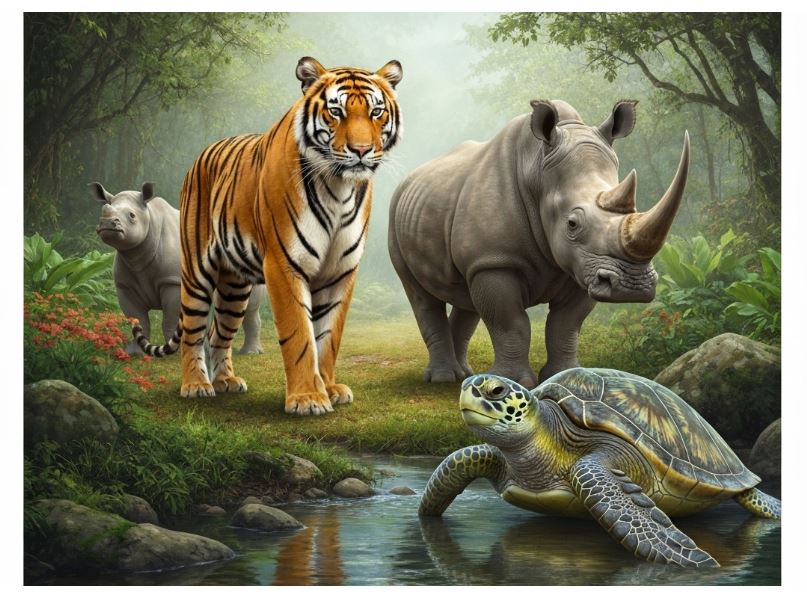
Key Highlights
- An endangered species is a living thing in the world that has a very high chance of dying out soon. A big reason for this is habitat loss and when the group has less genetic variation.
- A lot of times, human activities cause problems for these species. Farming, illegal wildlife trade, pollution, and climate change all be things that put animals and plants at risk of extinction.
- The International Union for Conservation of Nature has something called the Red List. The Red List shows the risk of extinction for many species across the world.
- Some animals in the world only have a few left in the wild. The Amur leopard and Sumatran orangutan are two that people now call critically endangered.
- People and groups do different things to help endangered species. Conservation efforts like rules set by governments, actions from international organizations, captive breeding, and what individuals do on their own can make a difference.
Introduction
Have you ever stopped to think what people mean when they say an animal is an endangered species? This means an animal species has a high risk of extinction, and that could happen soon. It is not far off and it is not a small problem. It is a real thing that hurts the balance in our natural world. The way many people live leads more animals to be at risk and pushed close to being gone. This puts all kinds of plants and animals in the world at risk, and makes the world less special. If we know what these animals go through, we can help and try to make things better for them.
List of Endangered Species Around the World
Thousands of animal species in the world may soon be gone forever. The International Union for Conservation of Nature looks after the Red List of Threatened Species. This Red List shows the conservation status of many living things like mammals, birds, plants, and corals. The Red List of Threatened Species is a way to see which animal species need our help the most. The international union does important work to save these animals. It tells people about the risk of extinction for some species, and helps decide what we should do next to protect them.
From the thick forests in Asia to the big oceans across the world, there are many new species and older animals trying to survive. Some of these new species were only found by us in the past few years. The list below will show you some of the world’s most endangered species. Each animal or plant on this list faces its own problems, and these issues make them at risk.
1. Amur Leopard
The Amur leopard is one of the rare big cats in the world. It is a critically endangered species. Right now, the population size is only about 130 leopards living in the wild. These animals are found in a small part of the far east of Russia and in northeastern China. The struggle for them has been hard for many years. Since 1996, the world knows their situation is critical because their numbers are so low.
The main problem that animal populations face now is habitat loss. Other things cause trouble for them too, like breaking land into smaller parts. When people build new things, the size of the area where animals live gets smaller. Food becomes harder for them to find. Roads and ways for people to move from one place to another also break up animal habitats. This puts space between groups of leopards and makes life harder for them.
Even if there are problems, there can still be hope for this threatened species. Conservation efforts help their numbers get better. Their amount is starting to go up. Protected areas now be in almost 90% of the places where Amur leopards can live. The spaces give them a home so they can feel safe and get stronger.
2. Javan Rhino
The Javan rhino is a big animal that is at risk of extinction. Its numbers have gone down a lot, like some other rhino types. This makes the animal an endangered species. Javan rhinos are a native species. They live in very few places. Because of this, they have more problems from things going on in those areas.
A big reason that rhinos are disappearing is habitat loss. A lot of forests are cleared for farms and homes. When forests go, the rhinos lose where they live. They do not have enough space to move around or find food. On top of this, there is the danger from people who hunt them for their horns. These people sell the horns in secret, which makes things worse for the rhinos.
The fight to save rhinos shows how tough conservation can be. For example, black rhino numbers dropped by 98% from 1960 to 1995 because of a lot of poaching. Since the 1990s, some rhino groups have grown to twice their size because of conservation efforts. Still, the risk is high. This is why people need to keep working to protect all kinds of rhinos, like the Javan rhino.
3. Sumatran Orangutan
The Sumatran orangutan lives on the island of Sumatra in Indonesia. This is a critically endangered species. There be fewer than 14,000 of these great apes left in the world. That puts them at the brink of extinction. These animals are smart and use the forest in many ways. They are important for the health of the forest ecosystem. But now, their survival is under threat because people and other things make it hard for them to live in their natural home.
Habitat destruction is the biggest reason this animal species is dropping in numbers. People cut down trees, build roads, and set up farms in some places. This breaks apart big areas of forest. Orangutans need these forests to live and feel safe. From 1985 to 2007, this animal species lost about 60% of its forest home. They now have to stay in smaller and separate spots.
Most of the Sumatran orangutans left now live in the Leuser Ecosystem. This place has thick rainforests and wet swamps. A lot of groups try every day to keep this area safe. They want to stop people from trading these animals as pets, which is not legal. The fight to help the Sumatran orangutan is still going on and there is a lot more work to do.
4. Hawaiian Crow
The Hawaiian crow, which people call ‘Alalā, is a good example of a native species that has had trouble surviving. Birds that live on islands are well suited to their home. But this also means they can be at risk fast if things change. A lot of island birds face problems like habitat loss and new predators moving in. Because of all this, they can become a threatened species quickly.
One problem that small groups of animals face is that they lost genetic diversity. If there are not many animals around, they be at a bigger risk. They find it hard to fight sickness or deal with changes in their home. The gene pool be not strong, so it make them weak and cause new problems. The California condor went through this. It came close to the brink of extinction. A breeding plan, where people helped them have babies in safe spots, helped the birds come back.
The Hawaiian crow is no longer found in the wild. Right now, there are many conservation efforts to help this endangered species. People raise the birds in safe places to help their numbers grow. These programs also try to keep as much genetic diversity as possible. The goal is to return the bird to its original forests in Hawaii one day. For that to work, we have to make sure the birds get a safe place to live and grow first. The work is good, but there is still more to do before they can go back home.
5. Hawksbill Turtle
The hawksbill turtle is a kind of sea turtle. It has a very pretty shell that many people want. Because of this, their life has got to be tough. A lot of people want its shell, so these turtles are in danger and their numbers go down. The hawksbill turtle is now called a threatened species and it is also seen as critically endangered.
You can find this sea turtle in warm, tropical waters. They are in the Atlantic, Indian, and Pacific Oceans. It is not easy to know just how many of them are in the ocean now, because these turtles move a lot. A lot of people who work in marine life and study them say the number is still getting smaller. This shows they are in trouble and are a threatened species.
Across the world, there has been a big drop in the number of hawksbill turtles. In the last three generations, about 80% of them have been lost. A big reason for this is that people hunt hawksbill turtles for their shells, which are called “tortoiseshell.” People then use these shells to make jewelry and other things. The hawksbill turtles also sometimes get stuck by accident in fishing nets. This is called bycatch. Another problem is habitat degradation. The beaches where the turtles lay eggs, and the coral reefs where they get their food, are getting damaged a lot.
Looking to the future, hawksbill turtles face even bigger problems. Plastic pollution, climate change, and higher sea levels are some of the main things making life hard for them. These things can damage the places where the turtles go to lay their eggs. People in the world need to work together to protect these turtles and their homes. If we do not act, the hawksbill turtle could disappear one day. What we do now matters a lot for their survival.
6. Indian Elephant
The Indian elephant is a type of Asian elephant. This animal species is now in trouble. Before, you could find them in a lot of places in Asia. Their numbers are lower today, and that is because of human activities. Now, people try hard with conservation efforts to help them, especially in India.
The biggest problem for the Indian elephant is habitat loss. Human populations keep getting bigger, and this takes more land. A lot of forests be cut down to make space for farms, roads, and houses. The elephants have less area to live in, so they get pushed into tight spaces. Because of this, the elephants come into the fields to eat crops. This makes problems for people and the elephants. Many fights happen, and it can end badly for both humans and elephants.
Groups like the World Wide Fund for Nature-India are doing a lot to help these great animals. They work to stop problems that happen between elephants and people. The team helps keep paths open for elephants so they can move from one place to another. They also work hard to stop poaching. The world is starting to notice all their strong conservation efforts. Because of this, there is hope that Indian elephants will keep living with people and stay safe in the wild.
7. Vaquita
The vaquita is the smallest porpoise in the world. It is one of the most critically endangered species. You will only see it in the northern Gulf of California. The way people use land and water makes life hard for this animal. This shows how fast animals can be lost if we do not give enough care. The vaquita is in trouble just like the Yangtze finless porpoise. Both belong to marine life. People’s actions have hurt them both.
The biggest risk for these small animals is not global warming at first. The real problem is that many of them get trapped by mistake in illegal fishing nets. The numbers of the Yangtze finless porpoise have gone down a lot because people catch too many fish. The water in the river also got dirty. Because of this, the Yangtze river dolphin is now gone forever. This sad story tells us what can happen to animal populations if we do not fix these problems.
There are stories that show things can get better. China chose to stop fishing for ten years. The country gave the Yangtze finless porpoise more help too. Because of these steps, the group of this animal started to grow for the first time. Big actions like this need to happen fast to save the vaquita and keep it from going away for good. This shows why it is so important to quickly help and protect all endangered species, especially those that are critically endangered species.
8. Mountain Gorilla
The mountain gorilla is known as one of the most well-known endangered species in the world. At one point, these animals were very close to being gone for good and were on the verge of extinction. But strong conservation programs helped save them, and they have made a good comeback. Now, mountain gorillas live only in several high forests, which are found inside a few national parks in the Democratic Republic of Congo, Rwanda, and Uganda. These places do a lot to protect them, and many people across the world know about their journey.
Their chances to stay alive are at risk because of a lot of things. A main problem is habitat fragmentation. Farms are growing and roads are cutting up the land. Civil unrest in their area makes them struggle more. They can get stuck in traps left out for other animals. Since they have almost 98% of the same DNA as us, they can pick up human diseases. All these issues push them into small parts of their old natural habitats.
Even though there are problems, people have come together to help. The count of mountain gorillas is going up. Now, there are more than 1,000 of them. This number is much higher than before. Their level of risk changed from critically endangered to endangered. That shows how putting in hard work over time to help threatened species can lead to good results.
9. Gharial
The gharial is easy to spot because it has a long and thin snout. You can find this animal in the Indian subcontinent as it is a native species there. The gharial is now known to be a critically endangered species. There are some other reptiles, like the Siamese crocodile, that have a story similar to this. They also face problems because of what people do. Many endangered species are at risk for the same reasons.
The biggest threat to the gharial and other threatened species of reptiles is habitat destruction. The rivers they live in are not the same now. Dams, farming, and pollution have changed these places a lot. This damage makes it hard for them to breed. It also means there are less fish, which is their main food. This is bad for them and those like them that also live there.
These animals have problems because people are taking away the places they live. This is called habitat loss. A lot of people hunt them to get their skin and other body parts. Some use those parts for old medicine. There are only a few animals like the Siamese crocodile and gharial left now. You do not see them as much, and their groups are not big or close together like before. If we want these reptiles to be safe, we need to take care of their homes in freshwater places. We should stop those who break the law and hurt these animals. This is not easy to fix. A lot of people who work to protect nature are trying every day so these animals do not die out.
10. Black Rhino
The black rhino is a strong animal species. There has been a big drop in the number of black rhinos. From 1960 to 1995, poachers killed almost all of them. By that time, only about 2% of the black rhino population was left. Because of this, the black rhino is now an endangered species.
The biggest cause of this drop was the illegal international trade in rhino horn. The horn has keratin, which is the same thing found in people’s fingernails. In some places in the world, rhino horn is wanted for old medicine. People also buy the horn to show off they have money. This made poaching rise quickly and almost wiped out all rhinos. The western black rhino, a type of rhino, was said to be gone for good in 2011.
Intensive conservation efforts have played a big part in saving the black rhino. Anti-poaching patrols, help from local people, and private ownership work together for the good of these animals. The black rhino population has gone up to more than 6,400 since the 1990s. That is more than double what it was. They are still in danger, but this shows what people can do when they work as one for wildlife protection.
11. Yangtze Finless Porpoise
The Yangtze finless porpoise is a special animal. It is the only freshwater porpoise in the world that is still alive today. This kind of creature is an endangered species. It can be found in the Yangtze River in China. There is a risk of extinction for it because people have hurt the land and water there over many years. Now, it is a critically endangered species. People worry that it could disappear from the world forever.
The main problems for this rare mammal happen at the same time. Habitat loss is a big issue because of sand dredging, and many ships move through the area. Too much fishing makes it hard for the mammal to find food. The water is also dirty now, which makes its home unsafe and not good to live in. These problems led to the Yangtze river dolphin disappearing from these waters. It used to be part of them before.
Even though it looked bad, there is still hope. The Chinese government gave the porpoise its highest protection. It put a 10-year fishing ban along the river. This helps with fixing places the animal lives. The ban is not just about climate change. Because of these moves, the porpoise numbers went up for the first time. The count grew from 1,012 to 1,249. This shows that when the government acts, it can help endangered species come back.
12. Kakapo
The kakapo is a big parrot that lives in New Zealand. It cannot fly. It comes out at night. This bird is one of the most loved native species in New Zealand. The kakapo is one of the rarest birds in the world. For many years, it has been very close to disappearing. The story of the kakapo shows how island animals that cannot fly can be in trouble when anything changes in their home.
Like a lot of other threatened species that are found on islands, the kakapo lived for a long time with no land predators around. People came along and brought new invasive species, such as stoats and cats. This was not good for the animal populations there. The kakapo could not fly away if something tried to get them. So, it was easy for predators to catch the kakapo, and their numbers dropped quickly. Invasive species have caused a lot of trouble for them.
Intensive conservation efforts are why the kakapo is still around now. The last birds were moved to islands that have no predators. On these islands, teams keep a close watch on every kakapo. They give the birds extra food, look after their health, and help them breed. Because of these actions, their number has slowly gone up from just 50 birds in the 1990s. This way of looking after each bird may be the only thing that can stop this unique bird from being gone forever.
13. Philippine Eagle
The Philippine eagle is one of the biggest and strongest eagles in the world. It lives in the Philippines and is a native species there. People know this bird as a national symbol. But it has an endangered status, so its number is going down. These wild animals are at the top of the food chain in the forest. Still, there is a risk that their time in the wild could be lost.
The main reason for this is that there is too much habitat destruction. The eagle needs a lot of old rainforests to live. It needs space to hunt and raise its young. But these forests are getting cut down fast. People clear trees for wood and change the land into farms. Because of this, the eagle has less space. Their home is now much smaller. The population of eagles is spread out and broken up. It gets hard for them to meet, find partners, or make new families.
Efforts to save the Philippine eagle focus on making sure the places it lives stay safe. A big part of this is teaching local communities about why the bird matters. Groups that want to help birds also run breeding programs. These programs help more Philippine eagles be born and raised. The way the American bald eagle came back is a good story. It was nearly gone but recovered after DDT was banned and many people worked hard. So, there is hope. If people care and work together in local communities, the Philippine eagle can have a future too.
14. Red Panda
The red panda is a cute animal species that moves like a cat. It is a vulnerable species. People can find it in the Eastern Himalayas and in some parts of southwestern China. A lot of people say it is close to the giant panda, but the red panda is in its own family. Now, there are fewer red pandas in the wild. Their numbers keep going down every year.
The main issue for the red panda is the loss of natural habitats. The forests where they live get removed for wood, farms, and people who build there. This takes away their space and breaks up groups of red pandas. When red pandas get split up like this, it gets hard for them to find mates. This also makes it tough for them to keep good genetic diversity.
Many people are working hard to help protect this loved animal. In India, some groups, like the World Wide Fund for Nature, focus on conservation efforts to keep the red panda’s home safe. They try to stop activities that harm these forests. People from these groups also talk and work with local communities and those in charge. With these steps, the world hopes the red panda will still be living in the mountains for a long time.
15. Snow Leopard
The snow leopard is a famous mountain animal that lives in Central and South Asia. It can be found in high areas with cold weather. Not many other animals live there. A lot of people know about the snow leopard. Now, it is seen as an endangered species. Its numbers are dropping because of problems that are caused by people.
One big problem for the snow leopard is habitat fragmentation. When people move in, they keep more livestock, and use more of the land. This breaks up the large areas that snow leopards need. The number of wild animals they hunt, like blue sheep and ibex, goes down. There are more problems with herders too. Leopards sometimes go after their animals. Some herders may kill leopards because of this. Poaching is another trouble for them. A lot of people still hunt snow leopards for their fur and bones.
Many conservation programs work to protect this big cat. They team up with local communities to help lessen problems between people and leopards. The programs send out patrols to stop people from hunting the big cat. These teams also do scientific research to better know what this species wants and needs. Other rare cats, like the Amur leopard, deal with the same dangers. Snow leopards need large spaces to live, so they can walk and find food without trouble. This helps them stay alive.
Major Causes of Species Endangerment
The way a species becomes endangered includes a lot of steps. Most of the main problems come because of things people do. At this time, we can see that nature is losing many plants and animals. Many scientists say it is almost like a mass extinction. The biggest reason is habitat destruction. This takes away the places animals use to live and find food.
Other big threats come from people who hunt or fish too much. The problem also comes from invasive species, pollution, and climate change too. Each of these makes it more likely that some animals or plants will not be around later. Many times, these problems work together, so everything gets worse and it happens sooner.
Habitat Loss and Fragmentation
Habitat loss is the biggest reason that endangered species in the world are at risk. This happens when people take away natural habitats to build homes, run businesses, or grow crops. A good example is the Amazon rainforest. A lot of it is gone now because of cattle ranches. This pushes native species out of their living space. In some cases, habitat loss takes away a home forever. Other times, it splits natural habitats into small and separate places.
This process is known as habitat fragmentation. It takes place when a large space for animals gets broken up because of roads, farms, or cities. This can be tough for animals that need big areas to live, like mountain lions. They might find it hard to get food or meet other animals of their kind. Habitat fragmentation can also cause animals and people to meet more often, and this can sometimes be risky.
The effects of habitat loss are serious. They can spread to many places and can cause big problems.
- There can be less room for animals to live. This might make the group not as big.
- If groups of animals are kept away from each other, their genetic diversity can drop.
- People and animals may face more issues when they live near each other.
- Animals may find it hard to move around or have babies, since their way can get blocked.
Overexploitation and Illegal Wildlife Trade
Overexploitation happens when people hunt or catch animals faster than they can grow new young. This is a big problem for threatened species. It can make them go away for good. A long time ago, people hunted the American bison too much. The bison almost was lost. Today, overfishing is happening in the oceans. This is making the number of whales, tuna, and other marine life fall.
A big problem with overuse is linked to the illegal wildlife trade. People get involved in this black market because they want rare animal parts. It is a risk for many endangered species. For example, the international trade of rhino horn and pangolin scales drives people to keep taking these animals. Even when the trade is not legal, it makes these rare animals more wanted by poachers. Because of all this, it becomes harder for these rare animals to survive, and the issue keeps getting worse.
The damage from this illegal act is big. A few main parts of this threat are:
- Helping big poachers get animals like elephants, tigers, and rhinos on a large scale.
- Making rare animals wanted by collectors, and that puts them at more risk of dying out.
- Hurting conservation efforts and breaking the rule of law more often.
- Causing animals like the Sunda pangolin to almost disappear from the places where they used to be found.
Pollution and Environmental Contamination
Pollution is a big problem for wildlife. It harms animals in many ways. The air, water, and soil can get bad because of pollution. This makes it hard or not good for threatened species to live there. For example, when pesticides go into rivers and lakes from farms, they hurt animals like the Wyoming toad.
Plastic pollution is a huge issue for marine life in our oceans. Many sea turtles, like the hawksbill turtle, often think plastic bags are food. A lot of them end up stuck in old fishing nets. Chemicals in the water can also hurt marine life. In the last century, people used the pesticide called DDT. This made bird eggshells, including those of the brown pelican, very thin. The shells broke before the chicks could get out, so not many brown pelicans survived.
The different kinds of pollution hurt the earth and can make life hard for many living things. Here are some of the ways this can happen:
- Chemicals such as pesticides can enter rivers and seas. They be bad for fish and other life in the water.
- Plastic pollution makes some sea animals eat plastic or get stuck in it, and that is dangerous for them.
- Oil spills and factory waste mess up places where animals live.
- Water pollution, fishing too much, and building a lot hurt animals like the Yangtze finless porpoise.
Climate Change and Its Impact on Wildlife
Climate change is now one of the biggest dangers to endangered species. When global warming causes changes in temperature and weather, it makes big shifts to the land and water. A lot of animal populations cannot get used to these new conditions in time. Because of the fast environmental changes, they must move, try to change, or these species could die out.
The effects of climate change can be seen in many parts of the world. In the Arctic, melting sea ice is a big problem for polar bears. They need the ice to hunt seals, but that ice keeps shrinking. In places that are hot, higher temperatures and changes in rain patterns have led some animals to disappear. The golden toad is one example. Another is the Bramble Cay melomys. This small animal was the first to become extinct from climate change because rising sea levels covered its whole island.
The effects that climate change has on wildlife are many and reach far. A few of the main impacts that happen because of this be:
- There be less of some special places, like sea ice and coral reefs.
- Many animals and plants move to new places so they can get the climate they need.
- Natural things, like the movement and baby seasons, now change when they happen.
- We see more days with tough weather, such as years with little rain or big storms.
IUCN Red List and Classification of Endangered Species
When you hear that a species is endangered, you might wonder who decides that. The main group that helps with this is the International Union for Conservation of Nature. People call it IUCN. It makes the IUCN Red List of Threatened Species. The red list is more than just a list. It works as a system to sort species by the risk of extinction. The IUCN Red List of Threatened Species shows which ones are most at risk. This red list gives us information to understand what is happening to these species.
The Red List of Threatened Species looks at many kinds of animals and plants. It uses some clear rules to check them. Each one gets an endangered status. This goes from “Least Concern” to “Extinct.” The red list shows people who care about nature where to put their time and work. The red list of threatened species is also a key way to watch how life on the earth is doing. In the next parts, you will see how the system for threatened species works in more detail.
Categories of Threatened Status
The IUCN Red List sorts animals into several red list groups. These groups show how close a species is to going away forever. The groups with the most risk are called the three “threatened” groups. They help us see right now how much trouble the animals are in. This also helps people who work to save animals know which ones need help most and how quick they have to act.
The first group is called Vulnerable (VU). Species in this group have a high risk of extinction in the wild. The next group is called Endangered (EN). In this group, animals have a very high risk of disappearing from the wild. The last and most serious group is Critically Endangered Species (CR). These are animals that are in extreme danger and have an even greater risk of extinction in the wild. A species’ endangered status depends on how it meets the rules for each group. The risk of extinction, along with the way animals fit these criteria, helps decide if they will be called vulnerable, endangered, or critically endangered species.
This tiered system lets us see which threatened species need help first. It shows us who needs the most support right now.
| Category | Description |
|---|---|
| Vulnerable (VU) | Facing a high risk of extinction in the wild. |
| Endangered (EN) | Facing a very high risk of extinction in the wild. |
| Critically Endangered (CR) | Facing an extremely high risk of extinction in the wild. |
Criteria for Red List Assessment
The IUCN Red List does not put species in a category for no reason. It always follows strict rules based on scientific research. Scientists look at the numbers of animals or plants left and where they live. This helps them know the risk of extinction for threatened species. With these steps, the Red List keeps its labels fair and clear for people all over the world.
There are five main rules that use numbers to help with this check. A species needs to meet the level for only one of these rules to be marked as threatened. For example, one type of animal may have a large group now, but the group is getting smaller very fast. Another type can have its number stay the same, but it has a very small group that lives in only one place.
The five key criteria used for the assessment are:
- Population reduction rate: This shows how fast the number of people goes down over a set period.
- Geographic range: This tells how large the place is where these living things can be found.
- Population size: This is about how many grownup ones are still around.
- Population restrictions: This explains if the group is very small or if they all only live in a small area.
- Probability of extinction: This says how likely it is that they will die out in a certain number of years.
Differences Between Endangered, Vulnerable, and Threatened Species
The terms endangered species, threatened species, and vulnerable species might seem the same to many people. On the iucn red list, each word has a special meaning. The word threatened is used for all animals or plants that could disappear later. This includes vulnerable species, endangered species, and those known as critically endangered. Which group that the animals or plants go into on the red list is decided by how many are left.
Each category on the Red List has its own limits for the five checks. For a group to be called vulnerable species, it needs to go down by 30 to 50 percent. A group must drop by 50 to 70 percent to have the endangered status. To be Critically Endangered, the drop has to be 80 percent or more. These clear rules and facts help the Red List work well.
Here is a fast look at the numbers that set the limits for population size:
- Vulnerable: There are less than 10,000 adult individuals.
- Endangered: There are less than 2,500 adult individuals.
- Critically Endangered: There are less than 250 adult individuals.
Endangered Species in India
India is known to be one of the most biodiverse places in the world. This country has many native species. But now, the land faces several problems. A lot of animals, that people know, are threatened species. The biggest troubles are habitat loss and people hunting the animals. India has tried hard to save wildlife in the past years. The need to protect them is still big, and the fight is not over.
India is home to many animals, like the strong Bengal tiger and the shy red panda. Some of these are endangered species. These animals are at risk and need our help to survive. A lot of people in India work hard to protect them. Many have come together with special conservation efforts for these important animals all across the country.
Bengal Tiger
The Bengal tiger is one strong sign of the wild. This big cat is one of India’s most known native species. The Bengal tiger plays a part in the culture. It is also known as an endangered species. Over the last one hundred years, there has not been many Bengal tigers left. It is on the Red List of Threatened Species. The Bengal tiger faces big problems like poaching and habitat loss.
Poaching is still a big problem for tigers. People hunt tigers for their skin, bones, and other body parts. Some people sell these parts on the illegal market. The areas where tigers live are getting smaller now. Instead of one big home, tigers only have small patches of land. This happens because more farms are growing, and people build more homes. When tigers lose their space, they run into people more often. This can be deadly for tigers and also for people.
Careful conservation efforts in India and places nearby start to show good changes now. A group called Project Tiger helps tigers stay at the same number or go up in some areas. These steps include teams to stop poaching. They also work to keep the tigers’ homes safe. Talking to and working with local communities is a big deal for these plans. All this work helps people feel hope for the Bengal tiger’s future.
Asiatic Lion
The Asiatic lion is a native species. A long time ago, it used to be in the Middle East and India. Now, you can only see it in Gir Forest, Gujarat, India. There is just a small group of lions living in this place. This is not good, because the lions are only found in one area. Their endangered status is starting to get better. People have been working hard and taking good care to protect them.
A big problem for the Asiatic lion is habitat loss and hunting. Because of this, the lions now live in one small part of forest. All the lions are now in the same area, and this can be very risky. If a disease or a natural disaster comes, it could kill the whole group. Not having the lions living in more than one place puts their future at risk.
The story of the Asiatic lion is not only about hard times. There is also good news in this. People worked hard to look after these animals. Because of this, the population size grew. It started with just a few, but now there are several hundred. This shows that a species can be saved. A similar thing happened with the golden lion tamarin in Brazil. The population size of that animal got better too, after people helped it. Taking care of these small groups works well if people keep at it and keep doing the work.
Great Indian Bustard
The Great Indian Bustard is a big bird that walks on the ground in the grasslands of India. It is an endangered species. There are not many left in the world. Only a few are still living now. This bird is close to disappearing forever. That is why people say it is a critically endangered species and on the verge of extinction.
Like many threatened species, this animal is seeing its numbers go down for several reasons. A big problem is when people turn grasslands into farms. This has hurt the animal a lot. It also runs into trouble with power lines, as it can hit them. In the past, people would hunt it, and that made life even harder for it. The animal gives birth slowly, so it cannot build up its numbers quickly after all these things happen.
Urgent conservation programs are helping the Great Indian Bustard stay alive. The people working on this take care of the bird’s home. They also talk to and work with local people, so everyone knows about the Great Indian Bustard and wants to help. A breeding program is going on where bustards grow up safely before they are let out into the wild. This helps more of these birds live and add to their group. It is important for these conservation programs to work. If they do not, we might not see this bird anymore.
Ganges River Dolphin
The Ganges River dolphin is a type of freshwater dolphin that lives in the rivers of India, Nepal, and Bangladesh. This animal is special because it can not see, so it uses sound to find its way in the water. It moves and gets food by using something called echolocation. Today, there are not many of these dolphins left. The Ganges River dolphin is now an endangered species. There are many things in its home that make it hard for them to survive.
The main thing hurting dolphins is that they are losing their homes in rivers. People build dams and other things that block the water. This splits up dolphin groups. So, they have to live apart from each other, and some cannot have babies. Pollution from factories and farms gets into the water. It makes their homes dirty and harms them. A lot of dolphins also get trapped in fishing nets by mistake. This is one of the biggest reasons many dolphins die.
A lot of people are working on conservation efforts to help keep this species safe. The Indian government has called it the National Aquatic Animal. There are a few plans to lower pollution and keep the water flowing steady in the rivers. These plans matter a lot for the Ganges River dolphin. They also help keep the river and everything in it healthy.
Conservation and Protection Efforts
People in the world are doing a lot to help threatened species. There are conservation efforts set up to protect animals and plants. Many governments, groups from different countries, and people who care about this are working hard. They want to save wildlife. Their goal is simple. It is to keep these species from being lost forever.
These conservation programs help endangered species in several ways. They give legal support, like using the Endangered Species Act. People also go out in the field to fix natural spaces and watch for poachers. The parts that come next will talk about the main people and steps in this work. You will see how they protect the world’s animals that are most at risk.
Role of Government Legislation and Wildlife Acts
Government laws are key to making conservation efforts happen. Rules like the U.S. Endangered Species Act of 1973 are there to help endangered species that are at risk of extinction. The endangered species act does not allow people to harm or kill animals or plants that are on the listed group. It also helps set aside special areas, called critical habitat, so these endangered species can have a place to live, grow, and be safe.
Agencies like the U.S. Fish and Wildlife Service are in charge of these laws. They make plans to help bring endangered species back. These plans list steps to take for this work. A big part of what they do is to create and look after protected spots. National parks and wildlife refuges help keep animals safe from building and other dangers. In this way, the Wildlife Service works to protect the homes of all these animals.
These wildlife acts are important steps that help us protect nature. They give us:
- The law is there to help keep threatened species and endangered animals safe.
- There is a certain way to give names to the species that need help.
- The law says people must have and use plans to help these animals come back.
- There is money to help save animals on both public and private land.
International Organizations Working for Endangered Species
The fight to save endangered species goes on in different parts of the world. A lot of international organizations work hard to help with this. The International Union for Conservation of Nature is one group that plays a big role in this work. The international union brings together people from many places, like the government and other groups. The union gives its knowledge and shares many tools to help save nature.
The IUCN is famous for making the Red List of Threatened Species. This Red List is the world’s best way to look at how the plants and wild animals are doing with conservation. The Red List of Threatened Species uses scientific research from people who work in the field. It shows the top things to do to help the wild animals and plants get better. People are not alone in this work. There are other groups in the world too, like the World Wide Fund for Nature (WWF). They help on the ground. These groups fix places so wild animals can live and try to stop people from trading wild animals in illegal ways.
These groups have an important part in helping protect nature all over the world because they:
- Do scientific research on different types of species and the places where they live. Collect and put together information about them.
- Help more people get to know about the environment. Speak up for better rules to protect it.
- Work with people in other countries so all can help with conservation.
- Give money to and do projects that keep wildlife and their homes safe.
How Individuals Can Help Protect Endangered Animals
You do not need to be a scientist to help endangered species. Every one of us can help in some way. What we do in our daily lives and what we choose to support can make a difference. A good way to help is to give money or some of your time to groups that work for endangered species. These groups work all over the world, and the help you give is important for conservation efforts.
Another good way to help is to practice sustainable living. This means you think about the things you buy and how they affect the planet. Try to use less energy and not buy things made from endangered animals or plants. A simple step is to plant native species in your backyard. Also, try to use fewer pesticides and herbicides. You can get involved with local communities and join conservation projects. When we work together, we can really make a difference.
Here are a few simple ways you can get involved:
- Get to know the endangered species living near you. Talk with people in your life about why it’s good to protect them.
- Go to national parks and wildlife refuges. When you pay for a visit, you help them keep doing their work there.
- Try to use less stuff, use things more than once, and recycle what you can. Doing this will help you give less harm to the environment.
- Make your home better for local animals. Give them food, water, and places so they feel safe around you.
Conclusion
In the end, keeping endangered species safe is a big part of taking care of the world. It makes nature work well and stay strong. Every living thing has its own job. If we lose them, the earth can lose its balance. When we learn about why some species are at risk, such as climate change and habitat loss, we can be ready to help.
This is something that the government, groups, and people like us must work on together. Every small action can help, like backing new laws or joining in local conservation efforts. You, I, and everyone else can get involved. When we team up and do our part, we can help many animals and give the world’s wildlife a chance for the years ahead. If you want to know about ways to join these conservation efforts, feel free to ask for more details!
Frequently Asked Questions
What are the main causes behind animals becoming endangered?
The main reasons why animals are now endangered species have to do with what people do in their daily lives. A lot of the time, animals lose the places they live because of farming and building on land. People can hunt or fish too much, and this makes the number of animals go down in the wild. Pollution from human activities is also a big problem for them. There is another issue that comes up when new, invasive species enter a place. This can change the natural balance. On top of everything, climate change is now a big reason many animals find it hard to live or do well. All this together can make a species to be in danger or, sometimes, even disappear for good.
How does the IUCN Red List categorize endangered species?
The IUCN Red List is one of the top tools to check the risk of extinction for each species. It uses special rules to put every species into different groups on the Red List. These categories show the level of risk, starting at Least Concern all the way to Extinct. When a species’ endangered status is Vulnerable, Endangered, or Critically Endangered, it means it belongs to the threatened species category. These species are at growing risk of extinction.
This information helps people and groups who work on conservation of nature. They use it to figure out where to spend their time and efforts, so they can protect different plants and animals. The IUCN Red List helps you make smart choices about what to do to help our world stay healthy and strong.
Why is it important to save endangered animals?
Saving endangered animals matters to keep the natural world strong and balanced. Every animal has a job in its home. If one is lost, it can cause trouble for others. By caring for threatened species, we help protect many kinds of life. This is important because it helps make sure the world stays healthy and gives us what we need.




