

Key Highlights
- Delhi is called the National Capital Territory, or NCT of Delhi. This is a special name for it in India.
- The city works like a union territory and also has a Chief Minister and an elected Legislative Assembly, like a state.
- The central government still looks after important things such as public order, police, and land in the city of Delhi.
- The 69th Constitutional Amendment Act of 1991 gave Delhi this special status and set up the Legislative Assembly.
- New Delhi, which is the capital of India, is a district inside the larger city of Delhi.
Table of Contents
Introduction
Have you thought about what the city of Delhi really is? Many people feel confused by this. The city is not just a normal city. Delhi has a unique name: it is called the National Capital Territory of Delhi. This gives the city a special place in India’s system.
The city is the location for all three parts of the Indian government. Delhi is a union territory, but it is also given some state powers. This mix makes the city of Delhi different from other union territories and states. So, it is good to know how this works and what makes it important.
Understanding Delhi’s Unique Status in India
Delhi has a political setup that is not like the rest of India. It is not a full state. It is also not a regular union territory. The city is known as the National Capital Territory of Delhi. This special status is there because it is the capital of India. The setup leads to power-sharing between the chief minister, who leads the local government, and the central government. The central government is represented by the lieutenant governor.
This setup makes people ask a lot about how Delhi is run. Now, let’s see if Delhi is a state or a union territory. We will look at why it gets called the NCT. We will also talk about how its management is the same or different from that of other states.
Is Delhi a State or Union Territory?
Delhi is called a union territory. This happened after the States Reorganisation Act in 1956. Because of that, the President of India looks after Delhi directly. But there is more to it. The union territory status for Delhi is not the same as places like Chandigarh or Ladakh. Delhi has its own different setup that makes it stand out.
In 1991, there was a big change in the rules that gave the union territory of Delhi some special rights. A new Legislative Assembly was formed, letting the people pick their own lawmakers in Delhi. A Council of Ministers, led by a Chief Minister, was also set up. These steps gave the union territory of Delhi many things that states usually have.
So, even though its main status is a union territory, it works kind of like a state. That is why it is called the national capital territory. This name makes the city of Delhi stand out. It can also confuse people about if they should call the city a state or not.
Why Delhi is Called the National Capital Territory
The title “National Capital Territory” (NCT) was officially given to Delhi in 1991 through the 69th Constitutional Amendment Act. This change was made on purpose to show how important Delhi is as the capital of India. The move from calling it the “Union Territory of Delhi” to the “NCT of Delhi” was not just for show. It also brought in big changes in how things are run there.

This title was given as part of a bigger plan. The goal was to let Delhi have its own government but still let the central government keep enough control over the capital. The “NCT” status helps to keep things fair. It gives local leaders power over many things, but the central government keeps control of the important topics.
The name shows that Delhi has a unique role in the country’s constitution. It is not like any other union territory. Delhi is the main place in India where big decisions are made. That is why the city needs its own way of being run.
Special Status Explained: Article 239A and the 69th Constitutional Amendment
Delhi’s special status comes from the 69th Constitutional Amendment Act in 1991. This act added Article 239AA to the Constitution. Before this, the President of India used to run the city. The new rules built a different way for the city to be managed.
Article 239AA set up a Legislative Assembly for Delhi. This Assembly can make laws about most things listed for states and common lists, just like in any big state. A Council of Ministers was also made, led by a Chief Minister, to help and guide the Lieutenant Governor. This change by the law also gave a new title to the union territory of Delhi. Now, it is called the Government of NCT of Delhi. The chief minister and council help the lieutenant governor handle things for the government of NCT of Delhi.
But, the amendment also set some limits. It gave the President of India’s executive power to the LG. The LG acts for the President in Delhi. The central government kept control over police, public order, and land. This mix of who has power makes how Delhi is run so complex now.
Delhi’s Governance Compared to Other Indian States
When you look at how Delhi is governed and compare it with other Indian states, you can see the differences easily. Delhi does have a chief minister and a legislative assembly. But, their powers are not as wide as those in other states. The big difference is in how the administrative and legislative powers are shared.
A full state has full control over things in the State List. This includes the police, land, and keeping order. But in Delhi, the Government of India has the power in these areas. The lieutenant governor of Delhi has more freedom to make decisions than a state governor. A normal state governor must listen to what the Council of Ministers says, but the lieutenant governor of Delhi does not have to do that as much.
Here’s a quick comparison:
- Legislative Power: A state government can make laws on all topics that are on the State List. The Delhi Legislative Assembly cannot make laws about police, public order, or land.
- Executive Head: In each state, the Governor is seen as the head, but the person who really runs things is the chief minister. In Delhi, the lieutenant governor has more actual control.
- Central Control: The central government does not get much say in how a state is run. But when it comes to Delhi, the central government has strong and direct control over it.
Delhi Union Territory vs State
The main thing you need to know is that a state and a union territory are not the same. A state is a part of the country that has more freedom. It can make its own laws about many topics written in the State List in the Constitution. A state has its own elected government. The way a state works with the central government is called federal. This means both have their own jobs and powers.
A union territory in India is run by the central government. After the States Reorganisation Act of 1956, the city of Delhi became a union territory. This put Delhi under the President’s control by way of an administrator. Some union territories, like Puducherry and Jammu & Kashmir, have their own legislatures. But the central government still keeps the final say in these places. The city of Delhi is in this special group. It has a legislature, but it does not have all the powers a state has. This setup helps the national government manage the city of Delhi well, since it is the capital.
Why Delhi is Called a Union Territory?
Delhi is known as a union territory. This is because it comes under the control of the main or central government. In 1956, it was given this status. The reason for this was to make sure the national capital did not fall under one state government. The thinking behind this is that the capital city should belong to everyone in the country, not just one state. So, it must be looked after by the central government, which stands for all the states.
Even though Delhi got its own legislature in 1991, it still kept the status of a union territory. The President of India is still the top boss in Delhi. He works through the lieutenant governor who is appointed for this job. This setup gives the central government and its branches, such as Parliament and the courts, freedom to work without state-level leaders getting in the way. The union territory of Delhi way lets the central government have control over the important things for running the nation’s capital.
Administrative Divisions of Delhi
Delhi is a big city that is split into several parts to help it run smoothly. The national capital territory of Delhi has eleven districts. A District Magistrate looks after each area. The districts have names like North Delhi, South Delhi, East Delhi, and the New Delhi district. These areas make it easier for local government to work. It also helps people in the national capital territory get the services they need without any trouble.
On a local level, the Municipal Corporation of Delhi (MCD) takes care of most urban areas in the city. The MCD looks after important things like keeping the area clean, offering primary education, and fixing local roads. But the new delhi district, where many big government buildings are, is handled by a different group called the New Delhi Municipal Council (NDMC). This split helps manage both the new delhi municipal spaces and high-security zones better.
Historical Evolution of Delhi
Delhi has a very long history. The city is known from ancient stories to now, when it is a busy and big city. For many years, the city of Delhi has been a center of power. The rulers of the Delhi Sultanate and then the Mughals both had control here. The Mughals made much of what we call Old Delhi. After them, the British Raj took charge and made the city called Delhi the capital of the British Indian Empire. When there was the Partition of India, the city again changed. Delhi then became the capital of an independent country. The city now keeps its name as a place with a strong political and cultural past.
Delhi has changed a lot over the years. It started as an old settlement long ago. Now, it is a large and busy capital city. Let’s see how this place has grown and changed as time has passed.
Ancient and Early Medieval Delhi
Delhi has played an important role in history since ancient times. People believe that it is the place where Indraprastha was, which was the capital of the Pandavas in the story of Mahabharata. This link to Mahabharata shows how strong Delhi’s roots are in the Indian subcontinent. People have lived here for many years. There is a lot of proof from digging in the ground that shows people never stopped living here for thousands of years.
Over many years, different groups fought to control this important place. After it became known in early stories, the land now called Delhi was ruled by many strong rulers. These included the Mauryas, Pallavas, and Guptas, who were from the middle part of India.
Each one of these empires made a mark on the land. They helped shape the area to be both a political and trade center. This long past set up a base for why Delhi rose later as a strong center of power in different parts of India.
Delhi Under the Sultanate and Mughal Empires
The medieval period was an important time for the city. Delhi became a strong and powerful capital. When the Delhi Sultanate started in the 13th century, Turkic and Afghan leaders ruled for many years. The city grew to be a big place for culture, learning, and trade in the Islamic world.
The story of the city grew more after the Mughals came in the 16th century. They chose the city to be their big capital. The Mughals built great forts, mosques, and tombs in the city. These buildings still shape the way the city looks today.
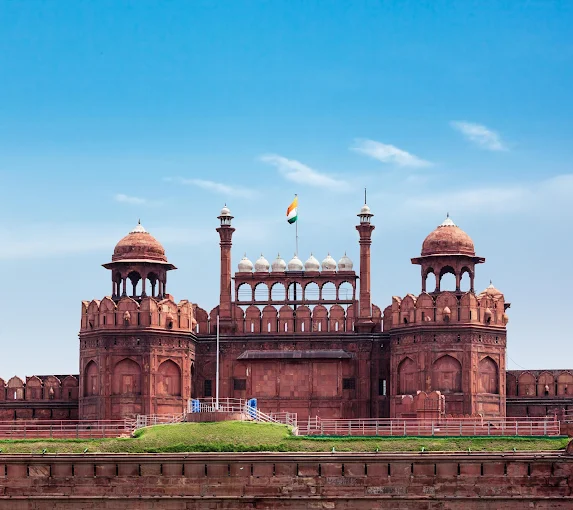
Shah Jahan played a big part in building the walled city of Shahjahanabad. Today, people know this place as Old Delhi. There are busy markets in this area, and you can see big, important buildings like the Red Fort and Jama Masjid. These spots show how great the Mughal rule was for both buildings and culture in old delhi.
The Colonial Era and British Influence
The Mughal Empire started to get weak, and this helped the British gain power. The British came first with the East India Company. By the middle of the 1800s, the British crushed the Indian Rebellion of 1857. Then, the British Crown took control of India. A big change for Delhi happened in 1911. At that time, the British moved their capital from Calcutta to Delhi.
This choice came about because Delhi has a long history and is in the center of the country. British architects Edwin Lutyens and Herbert Baker were asked to make a new, planned city there. This place was called New Delhi in 1927. It became the capital of the British Indian Empire in 1931.
The time of British rule left a lasting effect on Delhi’s buildings and city planning. There are wide roads and large government offices that look very different from the small, twisting streets of Old Delhi. This time shaped the way the city would grow later, and some of its choices still showed up in rules set by leaders like Indira Gandhi.
Post-Independence Developments in Delhi
After India became free in 1947, Delhi was picked to be the nation’s main capital. The Partition of India brought many refugees to the city. This changed the city’s people and culture a lot. At first, Delhi was run as a “Chief Commissioner’s Province.”
A big change happened with the States Reorganisation Act of 1956. It made Delhi a union territory. This meant the central government was in charge of it. For many years, an administrator named by the President ran Delhi.
The push for more self-rule kept getting stronger as years went by. Because of this, the important 69th Constitutional Amendment came in 1991. This gave Delhi its own legislative assembly and made it the national capital territory. The way Delhi is run has kept changing, too. There are still many talks about what power Delhi should have, with leaders like Indira Gandhi and PM Narendra Modi being part of these talks.
Political Structure and Administration
Delhi has a mix of different systems in the way it is run. At the center is the Delhi Legislative Assembly, which is chosen by the people, and a Council of Ministers, led by the Chief Minister. This group speaks for the people living in the city. But at the same time, there is also a Lieutenant Governor, who is picked by the central government. The Lieutenant Governor works as the center’s voice in Delhi. Because of this, the local government of Delhi often has to deal with problems over who controls what. The government of NCT of Delhi and the central government both want to have a say, which leads to many fights over who gets to make the decisions.
The next parts will talk more about the main government groups. You will see how they split power in this special system.
Key Administrative Bodies Governing Delhi
The governance of Delhi takes place through several main groups. Each group has its own jobs and tasks. This system has many layers. It helps Delhi work as both a big city and as the capital of the country. To know how Delhi is managed, you need to know about these groups.
The primary administrative entities include:
- Government of NCT of Delhi: The Chief Minister and the Council of Ministers lead this group. They take care of most of the daily work in the city and make rules or laws using the Delhi Legislative Assembly.
- Lieutenant Governor (LG): The President chooses the LG. He is seen as the top official in Delhi. The LG has control over police, public order, and land matters. The LG can also make big choices about how things are run.
- Municipal Corporation of Delhi (MCD): This is the local government for most of Delhi. MCD looks after things like cleaning, basic schools, and building roads or fixing them in the city.
- New Delhi Municipal Council (NDMC): This group runs the new delhi district on its own. This area includes important places such as Rashtrapati Bhavan and Parliament House.
Division of Powers: Central Government vs. Delhi Government
The way power is split between the central government and the Delhi government is talked about a lot. The Delhi government is chosen by the people. It can make laws and handle many things in the city. But, its power is not as full as a real state government. The central government has more control over some areas.
The Constitution sets aside public order, police, and land for the central government. So, the chief minister and the Delhi government do not manage law enforcement or land use in the city. The central government, one of the branches of the government of india, has the power in these fields. The lieutenant governor handles these roles and reports to the president of india.
For subjects that are on the State and Concurrent Lists, the Delhi government is able to make laws and also use executive power. If there is a conflict or the LG and the elected government do not agree, they can send the matter to the President of India. After this, the central government has the main authority to decide what will happen.
Legislative Assembly and Local Lawmaking
The Delhi Legislative Assembly is the main lawmaking group for the national capital territory. There are 70 members in the legislative assembly. The people of Delhi vote for them every five years.
The assembly can make laws for the state list and concurrent list under the Constitution. But it cannot make laws for public order, police, or land because those three are not given to the assembly.
The Council of Ministers is led by the chief minister. They are all together responsible to the legislative assembly. This means the government needs the support of most members to remain in power. This setup gives a way for representative democracy. It helps the local government of Delhi to look after the needs and worries of its people.
Any bill that the Delhi Legislative Assembly passes must get the approval of the lieutenant governor before it becomes law. The lieutenant governor can agree to the bill, say no, or send it to the President for a look. This means that the central government has a say in the lawmaking for Delhi.
Timeline of Changes in Delhi’s Political Status
Delhi has seen many big changes in its political status in the last hundred years. It started as a province when the British were in India. Now, it is known as the National Capital Territory. These changes show how the way India is run has shifted over time. Important legal steps and rules have helped shape this path.
Each change tried to keep Delhi as the capital of India while also looking at what people living there wanted. The most important change was the 69th Constitutional Amendment. It tried to solve the long fight about how Delhi should be run.
Here is a short timeline of the key changes:
| Year | Event | Description |
|---|---|---|
| 1911 | Capital Shift | The British government shifted the capital of India from Calcutta to Delhi, establishing it as the new center of power. |
| 1956 | States Reorganisation Act | Delhi was designated a Union Territory, to be administered directly by the President of India through an administrator. Its Legislative Assembly was abolished. |
| 1966 | Delhi Administration Act | A Metropolitan Council with limited powers was established to provide a form of representative government for Delhi. |
| 1991 | 69th Constitutional Amendment (Article 239AA) | Delhi was given special status as the National Capital Territory (NCT), with its own Legislative Assembly and Council of Ministers. |
| 2021 | GNCTD (Amendment) Act | The central government passed an amendment that clarified the role of the Lieutenant Governor, stating that “government” in Delhi means the LG. |
Delhi vs New Delhi: Key Differences
A lot of people get this wrong, but Delhi and New Delhi are not the same. The main difference is in their size and what they do. Delhi, which is called the national capital territory of Delhi, is a big union territory. It has many different districts in it. New Delhi is one of those districts. It is also where the capital of India is found. You can say New Delhi is the small, main center in the very big area of Delhi.
It is important to know this difference if you want to understand the city’s geography and how it is run. Let’s look at how the city is defined, what jobs it has, and what makes each part feel special.
How Delhi and New Delhi Are Defined
The words Delhi and New Delhi have different meanings based on history and government. Delhi is the name for the whole national capital territory. It is a big city space that takes up around 1,500 square kilometers. This union territory has old areas and new places mixed together. So, the city is very large and full of old and new things.
New Delhi is a small part inside the NCT. It is one of the 11 districts of Delhi. The British made a plan for New Delhi and built it in the early 20th century. They wanted New Delhi to be their main capital. They made it so the main places of power would be in New Delhi.
Today, New Delhi is still the capital of the Republic of India. You will see the central government here, with buildings like the Parliament of India and where the President lives, within the city. New Delhi is the main capital city. The city of Delhi is bigger, and New Delhi is inside it.
Administrative Roles of Delhi and New Delhi
The administrative jobs in the National Capital Territory of Delhi and New Delhi are not the same. Each has its own duties. Most parts of the National Capital Territory of Delhi are managed by the Municipal Corporation of Delhi. The Municipal Corporation of Delhi takes care of important services for people. It helps with keeping the area clean, offers healthcare, and looks after things like road and building upgrades. Many people in different parts of the city depend on it for these services.
New Delhi is the national capital. A lot of important people live in this city. It has a different group in charge called the New Delhi Municipal Council (NDMC). The NDMC looks after everything in the area. It keeps things like roads, government buildings, and famous sites in good shape. This part of new delhi is special because it has new delhi municipal looking after services and places that matter most.
This split can be seen in the city’s buildings and roads too. For example, you can find the New Delhi Railway Station in the center of the city. But the public transportation system is made for all of Delhi, not just New Delhi. The Delhi Municipal Corporation takes care of services for most people. NDMC looks after the special needs of the main part of New Delhi.
Cultural and Functional Distinctions
Beyond how they are run, New Delhi and Old Delhi are different in culture and feel. Old Delhi is in the bigger area of Delhi. It is full of life and packed with tiny roads, old buildings, and busy shops. You see a lot of the area’s Mughal past here. People know Old Delhi for street food, traditional shops, and how they celebrate religious festivals.
New Delhi is known for having wide streets and green parks, with trees along the roads. You can see big buildings from the colonial time in this area. The place is planned in an organized way. New Delhi serves as an area where you find important offices and government buildings. Most of the country’s main political groups are here.
Here are some key distinctions:
- Architecture: Old Delhi stands out because of the many Mughal buildings. In New Delhi, you can see the city has more British-style design.
- Pace of Life: There is a lot going on in the city all the time because Delhi is so busy. But New Delhi feels calmer and more set up than the rest of the city, which can feel loud and packed.
- Function: New Delhi is where the country’s top leaders work. In the city, other areas be home to neighborhoods, shops, and places with long history.
- Traditions: The city shares many ways of living, but Old Delhi is known for keeping old customs and foods alive.
Geography and Map of Delhi
Delhi is in northern India. The city does not touch the sea. It sits at the center and is surrounded by Haryana on the north, west, and south sides. Uttar Pradesh is to the east. The Yamuna River splits the city. One side is to the east. The other is to the west. The city is the capital of India. The borders of Delhi are important for the country. All around, there is a big plain. This plain has helped the city grow a lot. Now, it is one of the biggest urban areas in the world.
In this part, we will talk about Delhi’s districts. We will look at its well-known places. We will also go over some problems with its environment.
Regional Boundaries and Districts
Delhi has clear regional boundaries on its administrative map. The whole national capital territory has 11 districts. A District Magistrate manages each area. These districts then split into tehsils. This setup makes it easy to handle the city of delhi.
Some of the main districts are North Delhi, South Delhi, East Delhi, West Delhi, and Central Delhi. The famous New Delhi district is also one of these 11. It is very important because it is the nation’s capital. These areas are not only for making things work easier. They often show the different parts of the city, each with their own culture and way people make a living.
Delhi shares its borders with two nearby states. Haryana is to the north, west, and south of Delhi. Uttar Pradesh is on the east side, across the Yamuna River. This spot makes Delhi an important way to get into North India.
Landmarks and Significant Urban Areas
Delhi is full of landmarks. These places show the rich past and bright present of the city. You can find them all over, from old lanes in Old Delhi to big streets in New Delhi. These spots are not just for visitors. They are a big part of what makes the city what it is.
Many of the most well-known places are in New Delhi. This shows the city’s role as the center of power. There is a big difference between the old and new in the city. This mix is one of the most interesting things about the city.
Here are some of the most significant landmarks:
- India Gate: India Gate is a war memorial in New Delhi. It stands in the middle of the city. It honors Indian soldiers.
- Rashtrapati Bhavan: Rashtrapati Bhavan is where the President of India lives. It shows beautiful colonial style. It is one of the key places in New Delhi.
- Old Delhi: Old Delhi has many places to visit. There is the Red Fort, Jama Masjid, and lively markets such as Chandni Chowk.
- Qutab Minar: Qutab Minar is a tall minaret and a UNESCO World Heritage Site. It is a good example of old Indo-Islamic building style.
- Other important places you can see in New Delhi are Humayun’s Tomb, Lotus Temple, and busy transport spots like Jawaharlal Nehru Stadium and Anand Vihar Terminal.
Environment, Climate, and Air Quality
Delhi is growing fast, but this has made big problems for the environment. The city has very hot summers, cold winters, and a rainy season that is important for water. The most serious problem in the city is the air. Air pollution gets very bad, especially in winter, and can be dangerous to people.
Many things cause the air in the city to be bad. Some of the main reasons are car exhaust, smoke and waste from factories, dust from building sites, and farmers burning crop leftovers in nearby states. The city is landlocked, so the air has nowhere to go. This makes all the pollution stay over the urban areas and form a thick cloud of smog.
There are steps taken to fight this problem, like getting more people to use public transport and putting in stronger rules for what cars and factories put into the air. But even with this, air pollution is still a big health and environment problem for many people who live and work in Delhi. It affects their life and how they feel every day.
Demographics and Population Facts
Delhi is one of the cities in the world that has the most people living in it. The city has people from many cultures, who speak different languages, and follow many religions. This shows that the city draws people from all parts of India.
The city has grown quickly because many people move here all the time. This has made the city more crowded and led to busy urban life. The estimated population keeps going up. This brings new chances for people, but it also puts pressure on roads, housing, and other public services in the city.
Let’s talk about how many people live in the city right now. We will also look at the faiths people follow and the languages they speak in the city. There is movement in and out of the city, which changes it too.
Current Population Estimates
Delhi is a big city, and more people keep moving here every year. There are now close to 20 million people living in the national capital territory of Delhi. Some say even more people live in the whole metropolitan area. This makes Delhi one of the cities with the most people in the world, with only Tokyo sometimes having more people.
There are a lot of people living in the city. Many people live in places like North Delhi, where it gets very crowded. Because of this, there is a lot of pressure on things that people need. This includes housing, water, electricity, and public transport.
The city of Delhi has a population that keeps changing. More people move to the city of Delhi from other parts of the country. They come because they want jobs and better lives. This change is a big part of the city’s life. It shapes who lives in the city and how fast it grows.
Major Religions and Languages
Delhi has people from many places. You can see it in the many religions and languages people speak in the city. The city is where different groups come to live together. This mix of cultures brings several types of festivals, ways of living, and traditions. It makes daily life rich and full of colors for all who are in the city.
The city has people from many faiths. The main ones are Hinduism, Islam, Sikhism, and Christianity. There are also smaller groups of Jains, Buddhists, and some others. You can see this mix in the many temples, mosques, gurdwaras, and churches you find all over the city. Major religious festivals from each faith are celebrated with much joy.
In languages, here are the most common ones:
- Hindi: The most widely spoken language. It is also an official language.
- English: Used a lot in business, government, and schools.
- Punjabi: Many people speak this language.
- Urdu: This language has a long history and is important in Old Delhi.
Migration Trends and Urbanization
Delhi is seeing a fast rise in the number of people living there. A big reason for this is people moving to the city from other places. For many years, the city has pulled in people from all parts of India, mainly from states like Uttar Pradesh, Bihar, Haryana, and Rajasthan. A lot of these people come to the city to find better jobs, education, and a good life.
The city of Delhi has seen more people coming in all the time. Because of this, new places to live and small towns have started to show up. There is a need to give space to more people, so these areas help with that. The city of Delhi now covers places that are out on its edge.
While a lot of people have moved to Delhi for work, this has helped its economy grow. At the same time, it has put big stress on things like roads and public services in the city. To handle all these new people, Delhi has to figure out how to give them good homes, clean water and toilets, and enough ways to travel. These things are some of the largest problems that Delhi’s leaders have to deal with now.
Economy and Infrastructure
Delhi is not just the capital of India. It is also one of the main economic drivers in northern India. The city has many businesses. Some of the big ones are manufacturing, IT, retail, and services.
To help the economy grow, Delhi has strong infrastructure. There is the Delhi Metro and the Indira Gandhi International Airport. These help people get around and goods move fast. The city also works hard to make sure its public services, like schools and hospitals, can support all the people who live there. Each year, these services grow to keep up with what the city needs.
Let’s take a look at the big industries that keep the city growing. The city also has huge infrastructure. This is what helps it run every day.
Key Industries and Economic Drivers
Delhi has a strong economy. It plays a key role as a big business center in India. The city has always had many small-scale industries that make different types of goods. These goods are light engineering machines, car parts, clothes, and home electronics.
In the last few years, the economy has moved toward high-tech and service jobs. The city now plays a big part in the fields of information technology (IT), phones, and jobs that use IT. This change is part of a plan to help the city grow with clean industries that need people with the right skills.
The service sector in the city of Delhi is big. It covers finance, retail, and tourism. Government jobs also help Delhi’s economy a lot because the city is the capital. The city of Delhi has a mix of older factories, new tech companies, and many service jobs. This mix makes Delhi’s economy strong and able to handle changes.
Transport Networks: Road, Rail, Metro, and Air
Delhi has one of the biggest and newest transport systems in India. It is made to help the many people who live there. The city is easy to get around by road, by train, and by plane. This makes the city a key place for travel in the entire country.
Key parts of its transport system are:
- Delhi Metro: The Delhi Metro is a fast and modern train system. It helps people in the city go from one place to another easily. It connects far areas of new delhi and lets people travel without using the road a lot.
- Roads: There is a big road network in the city. The roads include the Outer Ring Road and Inner Ring Road. There are also many flyovers and underpasses that help cut traffic. This makes travel in new delhi smooth and better.
- Railways: There are three big railway stations in the city. These are New Delhi Railway Station, Delhi Junction, and Nizamuddin Railway Station. They help new delhi connect to many parts of india. The main bus stations like Sarai Kale Khan and Anand Vihar Terminal also make it easy for people to move in and out of the city.
- Air: The Indira Gandhi International Airport is a very busy airport. It has flights to and from many parts of the world. Indira Gandhi International also lets people travel all over india and the globe. This airport is a main way for people to get in and out of new delhi.
Education and Public Services
Delhi is be one of the top places for study in India. The city has many good universities, colleges, and schools. A lot of people in Delhi go to school, from the start up to research. The directorate of education runs the city’s public school system. They work hard to make sure more people can go to school and that learning is better for all.
Public services in Delhi are run by many government groups. They help support the needs of a big population. These services give care through government hospitals and clinics. People in Delhi also get water and electricity through these public services.
The city of Delhi has worked hard to make public services better. But because there are so many people in the city, there are still some problems. The city keeps working to add new roads and improve other things that people need every day. They want to make sure all residents in the city, and those living in the suburbs, can get these important services. The total length and width of these services are checked often to see how they can be made better for everyone.
Delhi in India’s Culture and Heritage
Delhi’s culture is full of life and color, and it shows the city’s long history. The city stands out because many rulers have shaped it through the years, from the time of the Delhi Sultanate to now. Today, Delhi is open to people from all walks of life. You can feel its rich past when you visit old buildings, join in busy festivals, and try tasty food. The city has been the capital for a long time, so it mixes old ways, new ideas, and everything in between. That’s what makes it the heart and soul of India’s culture.
Let’s take a look at the festivals, traditions, and old buildings that give Delhi its special feel and culture.
Festivals, Cuisine, and Traditions
Delhi is full of life and energy, and you can feel it in the way the city celebrates its festivals, food, and old customs. It is a big city where people from all over come together. The city marks every big Indian festival with the same excitement. You will see Diwali, Eid, Christmas, and Gurpurab being enjoyed by all. The city also puts on several big events during the year. These include tourism festivals like the Qutab Festival and the Mango Festival. These events help everyone see and feel the city’s special culture and way of life.
The food in the city of Delhi is famous. Many people talk about its street food. You will find tasty snacks like chaats in Chandni Chowk. You can also enjoy juicy kebabs in the city. If you love food, this place is a great choice. Food in Delhi comes from Mughal, Punjabi, and many other regions. These flavors joined together over many years.
Here’s a glimpse into its cultural offerings:
- Festivals: All communities in the city come together to celebrate big religious festivals. There are also cultural events run by the government.
- Cuisine: The city is known for street food, Mughlai dishes, and many kinds of sweets. Its food offerings are rich and full of flavor.
- Traditions: There is a blend of old customs and new ways of living. This mix shows how their people come from many different backgrounds.
- Arts and Crafts: The city stands out for its traditional crafts and arts. Places like Dilli Haat show beautiful items from across India.
Historic Sites, Museums, and Architecture
Delhi has many old buildings, places, and museums that show how the city has changed over time. The city has all kinds of buildings. There are old, Mughal, colonial, and modern styles that you can see everywhere. These places are more than just old things. They help make the city what it is today.
The Mughal era gave Delhi many famous places. You can visit the Red Fort and Jama Masjid to see their beauty. Humayun’s Tomb is also there and it is calm and peaceful.
Later, the British built New Delhi. They left important buildings, like Rashtrapati Bhavan, Parliament House, and India Gate.
Delhi has many museums that keep the story of its history and art alive. A place like the Qutab Minar shows early Indo-Islamic architecture in the city and it is part of the UNESCO World Heritage. There are new buildings here too that people know well, like the Lotus Temple. The Indira Gandhi International Airport also stands out as an icon in its own way. Each one gives something special to the look of the city.
Delhi’s Role in Modern Indian Society
Delhi is very important in modern Indian society. It is the capital of India. The city is at the center of the country’s political life. You will find the Parliament, the Supreme Court, and all central government offices here. The big decisions that guide the country are made in Delhi.
Delhi is more than just a political place. The city is a big center for business and industry, helping North India grow. A lot of people come to study here, not just from different parts of India but also from other countries. Delhi shapes the culture too. The city sets new trends in things like clothes, the media, and art, and many people across India follow them.
Delhi is a city with old customs and new ways of life. There are problems like the air not being clean and too many people living there. Still, Delhi stands as a sign of hope for India. You can feel how strong and important this city is to the country. Delhi isn’t just another city, but the heart of today’s India.
Conclusion
Delhi is different from other places in India. It is a union territory and has an important spot in the country’s history and culture. As a union territory, it has a big part in business, learning, and government. People here come from many backgrounds. The city’s strong roads and buildings help it grow and move forward. When you look at Delhi’s past and at the things it faces now, you understand more what makes it special. If you live here, come to visit, or just love Indian culture, you will find there is much to see and feel in Delhi. If you want to know more about Delhi or have any questions, you can ask for help and advice anytime.
Frequently Asked Questions
What powers does the Delhi government have compared to other states?
The Delhi government is run by the chief minister. This government, called the Government of NCT of Delhi, has powers to make laws and carry out actions in several areas, much like a state does. But there are some things it does not manage. The government of NCT of Delhi does not get to control the police, public order, or land. These are handled by the central government. The lieutenant governor deals with these subjects for the Delhi area.
What is the difference between Delhi being a city and a state?
Delhi is not just a city, but a union territory of India. It has its own legislature, but it is still not a full state. The central government is in charge of main admin areas. This setup fits because Delhi is the capital of India. So, people call it the national capital territory.
Is calling Delhi a state technically correct?
No, you should not say that Delhi is a state. It is officially called a union territory. The full name is the National Capital Territory (NCT of Delhi). The government made this change with the 69th Amendment. Delhi has some powers like a state, but it is still a union territory at the end.




