Key Highlights
- The air quality in Delhi often becomes dangerous. The Delhi air quality index shows a high amount of particulate matter in the air.
- It is important to know about real-time data. This helps you protect yourself from the bad health effects that come from air pollution.
- The city’s air quality crisis mainly comes from cars, factories, and burning crops at certain times of the year.
- Pollution gets worse between October and January. This is because of the way weather changes and the way farms work in these months.
- The government has taken steps to help, but it is still important to watch the air quality and take the right actions when needed.
Introduction
Welcome to your guide on Delhi’s air quality. The air in the capital city of India is a big concern for many people. A lot of people feel the impact of bad air pollution every day. It is important to know about the Delhi air quality index. Knowing about this will help you take care of your health. In this article, you will read about real-time air quality data. You will learn about the big problems in the air and what can be harmful to you. There are also some simple tips on how to stay safe and feel good as you move around. With the right steps, you can keep up to date with the air quality and protect yourself in the city.
Real-Time Air Quality Index in Delhi
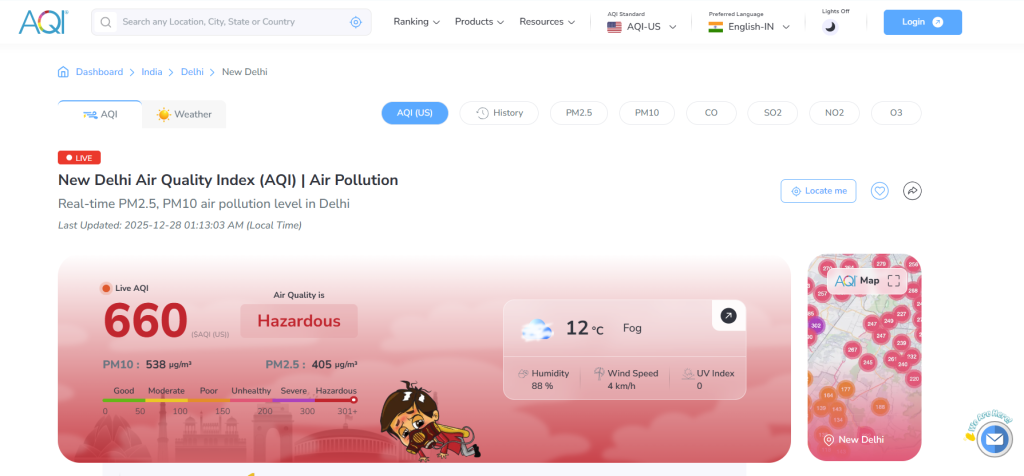
Have you ever thought about what the air is like around you right now? The real-time air quality index can tell you this. The air quality index (AQI) is a simple number. It shows if the air is clean or has pollution. It takes a lot of air quality data and puts it in a form that is easy for people to read and understand.
Watching the current air quality is important. It helps you choose what to do every day. When the air quality is bad and the AQI is high, you should be careful. It shows that you may need to protect your health. Now, let’s talk about what these numbers mean and how you can read them.
Interpreting Current AQI Values and Their Meaning
It is easy to understand the air quality index. The scale starts at “Good” and goes up to “Hazardous.” If the level is between 0 and 50, the air quality is good. It is safe for everyone to join in outdoor activities at this level. But if the number gets higher, there can be more health risks. For instance, the current air quality index in Delhi is often in the “Unhealthy,” “Very Unhealthy,” or sometimes even “Hazardous” range. This is seen most often during the winter months. It is important to know the current air quality before going outside.
When AQI levels are in the “Unhealthy” range (151-200), people in sensitive groups can feel health effects right away. If AQI goes higher than this, everyone can be at risk. A “Hazardous” level (301 or more) means even short exposure can bring serious health issues to anyone.
So, you need to check real-time data before you plan your day. If the AQI is high, it is better to limit outdoor activities or not go out if you do not have to. A safe AQI for outdoor activities in Delhi is less than 100. If you are more at risk, it should be under 50.
Latest Updates and Trends in Delhi’s Air Quality
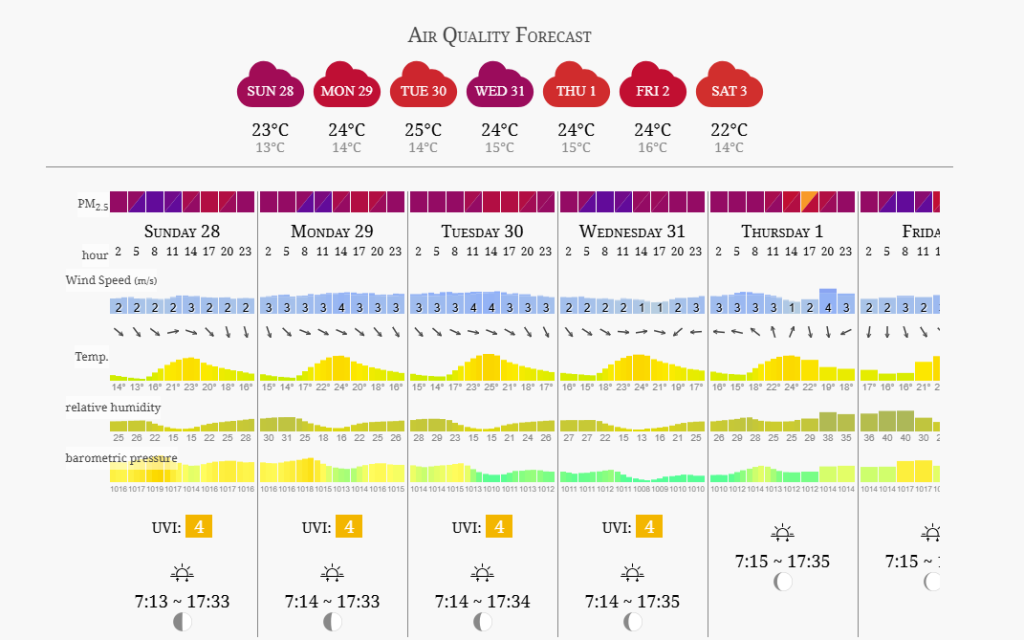
Delhi’s air quality does not stay the same. It can go up and down through the day and from one day to another. You might see that the current air quality is often worse in the morning. The air can get a bit better as the day goes on. The change in temperature, wind, and traffic is the reason for this. By checking AQI trends, you can know more about the ups and downs in air quality each day.
Looking at air quality data from today and comparing it to past days can help you find patterns. For example, you might notice that air quality gets worse, with more pollution, as winter comes. Some key trends you should watch for are:
- The air gets more dirty early in the morning and late in the evening.
- The number on the AQI meter goes up fast after festivals or when farms burn crops.
Official agencies often put out alerts or warnings about air pollution when the AQI in Delhi is likely to be very high. These warnings are a part of steps like the Graded Response Action Plan (GRAP). They tell people to be careful and do things like stay indoors.
Understanding the Major Pollutants in Delhi
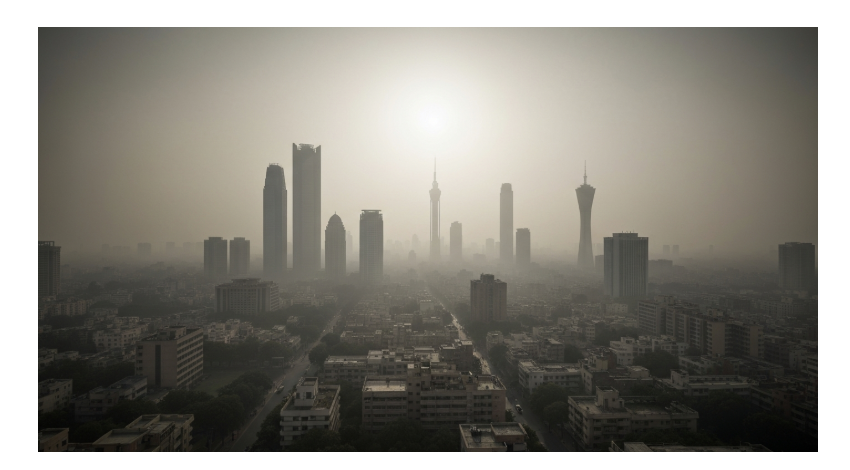
The smog in Delhi is made of many bad things in the air. The biggest problems for the air quality in the city are things like particulate matter, toxic gases, and some other harmful chemicals. All these pollutants come from many different places. This mix makes air pollution in Delhi hard to deal with.
Particulate matter and dust pollution are big problems in Delhi. They can hurt people’s health. To really know what is happening with Delhi’s air quality, you need to learn what these pollutants are. It also helps to know where they come from. This will give you a better idea about the full air quality challenge in the city.
Common Air Pollutants: PM2.5, PM10, NO₂, SO₂, CO, and Ozone
The main things making Delhi’s air quality bad today are a group of harmful stuff that people watch closely. The worst of these is PM2.5, which is also called fine particulate matter. These small bits can get into the lungs and the blood. They can cause big health problems for people. There is also PM10. This is particulate matter made up of bigger pieces, but it can still make your eyes, nose, and throat feel sore.
There are other big things too that add to the whole problem of pollution. Some of these are:
- Nitrogen Dioxide (NO₂): This mainly comes from cars and trucks. It can make it more likely for people to have breathing problems.
- Sulfur Dioxide (SO₂): This gas comes from burning oil, coal, or gas. It can make your throat feel sore and can make asthma worse.
- Carbon Monoxide (CO): This gas has no smell. It comes from things that burn but do not burn all the way. A lot of this gas can give people a headache or make them feel sick.
- Ozone (O₃): When ozone is close to the ground, it can make breathing problems worse for some people.
Together, these things mix in the air and make the dirty air people know in Delhi. The small dust in the air, called PM2.5, is most times the reason there are high AQI numbers in the city.
How Pollutant Levels Are Measured and Tracked
Have you ever thought about where the AQI numbers come from? A network of stations tracks air quality in the city. These stations are placed in many different spots so they can get good data from all areas. Each one checks for several pollutants in the air, giving continuous data readings. The air quality index in Delhi is updated every hour. This lets you see a near real-time view of the air you breathe with the most current air quality information.
This air quality data is first collected in its basic form. Next, it is worked on and turned into the AQI number you see on apps and the website. The main sources for Delhi’s air quality data are government sites. These include the Central Pollution Control Board (CPCB) and SAFAR, which stands for System of Air Quality and Weather Forecasting and Research.
Many private platforms, like IQAir, collect good data from many trusted sources. When you use these, you get the right facts to help you make better choices for your health about how much pollution you are around each day.
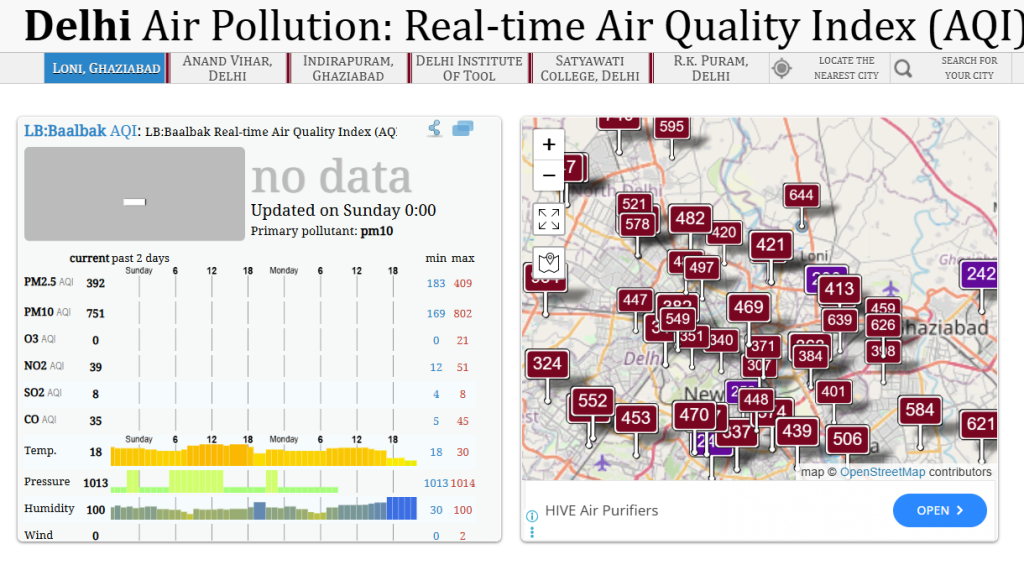
Location-Based AQI: Mapping Pollution Across Delhi
Air pollution is not the same in every part of a city the size of Delhi. Some places have a lot more air pollution than others. This can be because of things like heavy traffic, factories, or the amount of plants and trees. This is why having air quality information for different places, and using AQI mapping, helps people understand ambient air pollution much better.
When you look at an air quality map, you get to see where the air is not good and where it is cleaner. This helps you make better choices. You can pick a route with less pollution when you go to work. You can also choose a good spot for a weekend outing with family or friends. Now, let’s see which places usually get the highest and lowest air quality readings.
Areas with Highest and Lowest Real-Time AQI
In Delhi, some neighborhoods always have very bad air quality. These are often some of the most polluted places in the world. Places with many factories or a lot of traffic, such as Anand Vihar, Jahangirpuri, and Mundka, have the worst air. The city of Ghaziabad, which is near Delhi and has many factories, also adds to the dirty air in the region. The air quality in these areas is often much worse than in other places.
Places where there is more green space and less traffic usually have the best air quality (AQI). Lodhi Road, with lots of trees, and spots near IIT Delhi often show better air quality than the average for the city. This shows that pollution in a place can change a lot from one area to another, depending on what is around you.
Here’s a quick look at how the AQI can change from place to place:
| Location | Typical AQI Category |
|---|---|
| Narela, Rohini | Hazardous |
| Anand Vihar, Dwarka | Very Unhealthy/Hazardous |
| Chandni Chowk | Very Unhealthy |
| IIT Delhi, Safdarjung Enclave | Unhealthy/Moderate |
How to Monitor Local AQI for Landmarks like India Gate
If you plan to visit a well-known place like India Gate, it’s good to check the air quality first. You can find air quality data on several apps and websites. They let you type in the place you want to visit and show the air quality there. This way, you know more about the risks before you go out.
To see the real-time AQI for places like India Gate in Delhi, you can use apps like AirVisual or AccuWeather. Just type “India Gate, Delhi” into the search bar. The site will show you the current data readings for main pollutants, like PM2.5 and PM10. You will also see the overall AQI.
This information is very helpful, especially if you have children or older people with you. Knowing about the air quality in the area can help you decide what to do. You might need to make your visit shorter, put on a mask, or think about coming back another time when the air quality is better.
Historical Perspective on Delhi’s Air Quality
Delhi has been facing air pollution for a long time. When you look at air quality data from past years, you can see that the problem is not new. There are trends that show the city has been dealing with bad air for years. Even though the annual level of air pollution does go up and down, Delhi still stays as one of the most polluted cities in the world, mainly because of high particulate matter in the air.
Knowing about these past trends helps us see the current situation in a better way. It shows us how things like more people or changes in rules have made a change in the air we breathe today. Let’s take a look at some of these patterns and the things that have changed them over the years.
Decade-Long Trends and Seasonal Patterns in AQI
When you see Delhi’s air quality data across the course of the year, you will spot a simple trend. The air quality gets better during the monsoon season from July to September. Rain at this time helps wash away much of the pollution from the air. But when winter starts to come, things change a lot. The pollution level goes up. This is one of the biggest patterns in Delhi’s air quality during the year.
From October, pollution starts to rise. It gets worse from November to January. In these months, you will often see thick smog in the city. The PM2.5 numbers are very high and can harm people. In November 2019, the PM2.5 level was over 220 µg/m³. By February, it dropped to about 84 µg/m³.
When people look at air quality in Delhi today and compare it to other days or past years, they see that it sometimes gets a bit better for a short while. But in winter, the air gets much worse, and this happens every year. This big jump in pollution during winter is a major part of why Delhi still has many air quality problems.
Key Events That Influenced Past Air Quality Crises
There have been several times when there was a catastrophic rise of pollution levels in Delhi. The air quality got so bad that it turned into a big crisis. When this happens, the government has to take a drastic measure. Sometimes, this means they call a public health emergency.
For example, in November 2019, the government had to shut schools. They also stopped all construction activities. This was done to keep people safe from the bad air.
The main things that cause these problems usually come from several things coming together at one time. This can make pollution much worse. The two biggest reasons are:
- Post-Harvest Crop Burning: After the harvest, people in states near Delhi burn crops on a large scale. This sends a lot of smoke into the air that moves into Delhi. The burning of crops at this time is a big reason for the smoke.
- Weather Conditions: In winter, the wind is slow, and it is cold. This keeps dirt and smoke close to the ground, so they do not spread out. The burning of biomass, like wood and other stuff for heat, also makes the problem worse.
These events keep making the air quality worse in Delhi. Many times, it gets so bad that it is called “Hazardous.” This makes it hard for people to go on with their daily life. It also gives big health risks to millions of people.
Health Impacts of Delhi’s Air Pollution
Breathing the air in Delhi can do more than just make you cough or feel a sore throat. There is a high level of pollutants in the air. These can bring health effects that are both short-term and long-term. Some people get respiratory problems right away. Over time, others may get serious health effects that can lead to chronic diseases.
Conditions like asthma and chronic bronchitis often get worse when the air quality is bad. Being around dirty air for a long time can also lead to worse problems. Some of these problems are grouped under the COPD term (Chronic Obstructive Pulmonary Disease). Now, let’s look at how this affects people from different groups.
Effects on Vulnerable Groups: Children, Elderly, and Patients
Bad air quality is dangerous for everyone. But the health effects are worse for people who are more at risk. These include children, older people, and those who already have health problems. In Delhi, they feel these health effects the most. Children are in more danger because their lungs are still growing. Also, they breathe in more air compared to their body size.
The elderly and people with problems like asthma or heart disease can feel worse because of polluted air. It can make their symptoms get bad very fast. Small PM2.5 particles are very risky. They get deep into the lungs and even go into the blood. This can lead to chronic obstructive pulmonary disease, heart attacks, and sometimes lung cancer.
How bad is the air quality in Delhi? When the pollution level is “Very Unhealthy” or “Hazardous,” it can quickly harm people in these groups. It is important for them to take more steps to keep safe.
Tips to Reduce Exposure and Stay Safe
It is good to know the risks, but what really keeps you safe is to take the right steps to lower your exposure. When the air temperature is low and trapping pollutants, and the AQI is high, small changes to your daily actions can help a lot. If the AQI is over 100, be careful with outdoor activities. An AQI under 50 means it is safe to be outside.
Here are some easy tips that can help you, your family, and your loved ones stay safe:
- Check the AQI daily: Before you make plans for outdoor activities, see what the air quality is like. Go outside when the air is better.
- Wear a high-quality mask: If you need to go out on bad air days, put on an N95 or N99 mask.
- Use an air purifier: A good way to get cleaner air at home is to use an air purifier with a HEPA filter.
- Keep windows closed: When pollution is high, keep your windows and doors closed. This helps stop dirty air from getting inside.
- Avoid strenuous exercise outdoors: If the air quality is poor, do not work out outside. Try to move your workouts indoors instead.
These small steps can really help lower the number of bad things you breathe in. They help you stay in good health.
Main Causes Behind High AQI in Delhi
Delhi has a high level of pollution that comes from many things, not just one cause. This is because many things work together to make the air bad. The city has a high concentration level of pollutants, and this AQI stays above safe levels for most of the time. The main causes are human actions mixed with the land features and weather in the area.
This mix makes a hard place for people. The air pollution gets stuck in the air. This is why you see bad smog at some times in the year. To fix the problem, you have to look at each thing that adds to air pollution and know more about it.
Vehicular and Industrial Emissions
A large part of the accumulated pollution in Delhi comes from busy streets and places where factories are. A big reason for this is the smoke from cars and other vehicles. There are more than 11 million cars and other vehicles in the city. This means that many vehicles let out a lot of dirty air every day, adding PM2.5, nitrogen oxides, and carbon monoxide into the air.
Industrial emissions add to the problem. Factories and power plants near the city give off a lot of pollution. They release sulfur dioxide and other bad chemicals into the air. As more people move to Delhi and as its commercial infrastructure gets bigger, these sources cause even more air pollution.
Both vehicles and factories cause most of the air pollution that affects the air quality in Delhi today. Cars and other vehicles are behind about 41% of the city’s air pollution. This means traffic is a big reason for bad air quality. So, it is often the main thing the government tries to fix when making new rules or plans.
Crop Burning, Construction Dust, and Seasonal Factors
Apart from traffic and factories, there are also other big reasons for Delhi’s pollution. Some of these happen during certain times of the year. Farmers often burn their crop stubble in nearby states. They do this for agricultural use to clear land after the harvest. This practice sends a lot of smoke into the air, which then comes to Delhi.
Construction dust is a big reason for more particulate matter in the air. It gives off both coarse particulate matter (PM10) and fine dust. There is always some new development in the city, so this is not just a one-time problem. This issue gets worse because of changes in the weather at different times of year.
- Winter Inversion: In the winter, cold air holds the smoke and other bad stuff near the ground. This does not let it spread out.
- Wind Patterns: Wind comes from the northwest and brings smoke from burning farms right over the city. This makes the air worse.
These things come together to make air quality in Delhi bad. They are the main reason for most of the pollution in the air.
Government Initiatives and Public Policies
Many things have been done by the government because air pollution gets very bad at times. These government steps and rules help with air quality. They aim to stop air pollution before it starts and give fast help when the air gets too harmful. A drastic measure has sometimes been used if there is a time when air pollution gets really bad.
The challenge to get clean air in Delhi is big. Still, these plans show people are serious about making the air better for a long time. People still talk about how well these plans work. But these steps are the main way the city is trying to get clean air. Let’s look at some of the big plans.
Overview of Graded Response Action Plan (GRAP)
One of the most important tools to manage air quality in Delhi is the Graded Response Action Plan, or GRAP. This plan works like an emergency tool. It comes into action when air pollution goes above some limits. You can think of it as a guide that shows what steps to take when the air gets very bad.
The plan has several steps to follow as the air quality gets worse. For air that is in the “Poor” to “Moderate” range, the steps can be things like cleaning roads with machines. When the air quality becomes “Severe” or goes above that, a drastic measure must be taken. This can mean stopping all construction work, closing brick kilns, and saying no to most trucks entering the city.
When you hear about alerts or warnings about air pollution in Delhi, it is often because a stage of GRAP has started. This plan helps make sure there is a clear and quick way to keep people safe when air pollution levels go up.
Odd-Even Scheme, BS-VI Standards, and Policy Effectiveness
The government does more than use emergency actions. It has started several long-term programs as well. The Odd-Even scheme is one of the most well-known plans. This rule lets people use their private cars based on the numbers on their license plates. The idea is to cut down on traffic and lower car emissions on days when air is bad.
Another big step is that the whole country moved to Bharat Stage VI (BS-VI) emission standards. This rule says that cleaner fuel must be used. It also means vehicles should use better engines that give off much less pollution. This is an important part of making air quality better for a long time.
The way these rules work is often discussed, but they are one part of a bigger plan. This includes the National Clean Air Programme (NCAP). The goal is to cut down particulate matter by 20-30% by 2024. All these steps together are helping the air quality in Delhi slowly get better. The city is seeing some progress toward clean air.
Comparing Delhi’s Air Quality with Other Global Cities
When you look at how cities around the world rank, Delhi comes up a lot on lists of the most polluted cities. It is often at the top of these lists. This shows how serious the air quality issue is there. A big reason for this is the city’s landlocked geography. This puts Delhi at a distinct disadvantage. The air also gets worse because of pollution from other areas nearby.
This look at other cities is not only about where they stand in the rankings. It helps us see what big cities have done to deal with the same problems. When we find out what has worked, and what has not, Delhi can learn a lot for its path to better air.
Worldwide Rankings and Lessons from Other Metros
Delhi gets listed among the most polluted places in the world. In 2019, it was the 5th worst city when you look at PM2.5 levels. This puts Delhi with other big cities in South Asia that also have a lot of pollution. So, it shows that pollution is a big problem not only in Delhi but for the whole area around it.
Many big cities around the world, such as Beijing, have done a lot to cut down on pollution by using tough rules. Some examples are closing coal plants, limiting how people use cars, and putting a lot of money into public transport. What these cities show is that real change can happen only when there is ongoing action in several areas at once.
Let’s see how the AQI in Delhi compares with other big cities. This helps show why Delhi is still one of the most polluted cities.
| City | Country | Typical Winter AQI Range |
|---|---|---|
| Delhi | India | 300 – 500+ |
| Ghaziabad | India | 300 – 500+ |
| Beijing | China | 50 – 150 |
| London | UK | 20 – 70 |
How India’s Approach Differs Internationally
India’s way of dealing with air pollution is a bit different from what other countries do. Other countries often use strong rules that come from the top. In India, the government mixes big, national plans with actions made just for each city. The National Clean Air Programme (NCAP) is a good example of this. It makes goals for more than 100 cities instead of setting one rule for the whole country. This helps each city work toward clean air in its own way.
This decentralized AQI rule lets places make their own plans. It helps in making solutions fit what people need. But, it can also cause differences in how people follow and check these rules. India’s air quality rules are not as tough as the ones from the World Health Organization. For instance, the World Health Organization’s guide for PM2.5 for one year is much lower than what India asks for.
This shows there is a gap between what India aims for and what health groups across the world say is good. To help everyone in the country have clean air, India will need to close this gap. This is an important part of India’s plan for the future. It is about making sure that people can breathe safely.
Conclusion
To sum up, it is very important for people living in Delhi or those visiting the city to know about the air quality. By using real-time data about the AQI and learning which pollution sources are harmful, you can take steps to protect yourself and your family. A look at the past shows us the progress the city has made, but it also points out that there are still big challenges, especially in months when there is more pollution. You should keep an eye on what the government is doing and check local air quality updates. This will help you make good choices each day about what you do outside. If you want more help or tips on dealing with air quality, you can ask experts for advice. They can show you the best ways to stay healthy in Delhi’s changing air.
Frequently Asked Questions
How often is Delhi’s AQI updated, and where can I find official data?
Delhi’s air quality index is updated often, usually every hour. This helps you get data readings in near real-time. You can find air quality data from main sources, like the CPCB and SAFAR websites. Reliable apps, such as AirVisual, also bring all this air quality index information together. This makes it simple to check the Delhi air quality index during the day.
What AQI level is considered safe for outdoor activities in Delhi?
A safe AQI level for outdoor activities is between 0 and 50. This is called “Good.” If the AQI is between 51 and 100, it is seen as “Moderate” and is usually fine for most people. But if you are sensitive to air pollution or have health problems, you should be careful. When AQI goes over 100, the chances of health effects from air pollution go up. It is a good idea to limit or stop outdoor activities that take a lot of effort.
Do AQI levels fluctuate significantly during the day in Delhi?
Yes, the AQI in Delhi changes a lot during the day. Air pollution is at its highest in the early morning and late evening. This is because the air temperature is lower and there are more cars on the road. In the afternoon, air pollution can get a little better. When the day gets warmer and the wind starts to blow, it helps move the dirty air away.
Should I cancel my trip to Delhi due to air quality?
Whether you should cancel your trip depends on your health and the time of year. If you have respiratory problems, it is risky to visit in peak pollution months from October to January. If you still want to go, watch the air quality index every day. Limit your outdoor activities when the air quality is bad. You should also carry N95 masks with you to stay safe.
How is the air quality and level of pollution in Delhi?
The air quality in Delhi changes a lot. It can be better and even moderate during the monsoon. But the annual level of pollution is still high. The current air quality often gets into the “Unhealthy” or even “Hazardous” range, mainly in winter. This makes Delhi one of the most polluted big cities in the world.
How bad is the air quality in Delhi?
The air quality can get very bad, which can cause serious health effects. Bad air pollution can make breathing problems like asthma and chronic bronchitis worse. When the air pollution is high, even healthy people can feel it is hard to breathe. If you breathe in bad air for a long time, it can also lead to other health problems and people may not live as long.
What is the AQI level of Delhi Kitna Hai?
“Delhi ka AQI kitna hai?” translates to “What is Delhi’s AQI level?” If you want to see the air quality in Delhi, go to a real-time air quality index website or open an app. The site will give you live data readings from stations across the city. The numbers show the level of air pollution in Delhi right now. This is the best way for people to check the air quality at any time.
How is the air quality in Delhi improving in 2024?
Delhi’s air quality is getting better slowly. The government is taking steps like the Graded Response Action Plan (GRAP). There is also a move to BS-VI vehicles. Limits are also put on smoke from factories. Even though there are still some issues, these plans want to lower air pollution in the city. The main aim is to reach the target of the National Clean Air Programme for clean air.
What is Delhi’s pollution ranking?
Delhi is often found at the top of lists ranking the most polluted cities in the world. The air quality index in Delhi, especially for PM2.5, is very high. This puts the city in the top 10, and sometimes the top 5, of the most polluted capital cities. This shows the distinct disadvantage Delhi faces when it comes to air quality.
What is the current air quality in Delhi?
To know the current air quality in Delhi, you need to look for a real-time source. The Delhi air quality index changes every hour. A good way to stay updated is to use apps or websites that give live air quality data. This way, you get the latest air quality index and know about air pollution levels before you go outside.
Where is the cleanest air quality in Delhi?
It is not easy to find clean air in Delhi. But the places with many trees and less traffic, like Lutyens’ Delhi or Safdarjung Enclave, often have the best air quality. These parts usually show lower AQI numbers than areas with factories or lots of cars. The air quality can really change a lot depending on where you are in the city.