

Key Highlights
- Chandigarh is a union territory. It is run by the central government.
- The city is the capital for Punjab and Haryana. It is their main center for offices.
- Chandigarh is known all over the world for its city planning. Le Corbusier, a Swiss-French architect, made the design for it.
- A big part of Chandigarh’s plan is the Capitol Complex. This spot is a UNESCO world heritage site.
- The city came to be when India was split in two during the partition of India. A new capital was needed after this change.
Table of Contents
Introduction
Have you ever thought about why Chandigarh is special? This city sits in northern India. It is not just a nice place to stay, but it also has a unique status. Chandigarh is one of the eight Union Territories in India, so the central government runs it right from the top. This sets it apart from the usual states in our country and even from the other UTs that you may hear about. In this text, we will look at what makes Chandigarh’s position different and how it got this way.
Historical Background and Status of Chandigarh
The story of Chandigarh starts with the painful partition of India back in 1947. When British India got divided, the old capital of Punjab was Lahore. But Lahore became a part of Pakistan. So, the Indian state of Punjab was left with no capital city.
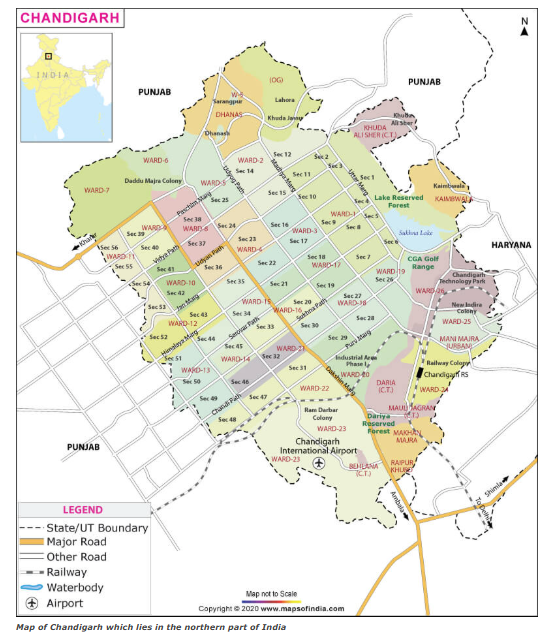
To deal with this problem, the Indian government chose to start building a new city from the ground up. The “foundation stone of the city” was laid for this reason. This city was meant to be more than just the new capital of India. It was built to show the world that India is modern and looking ahead as an independent country.
Formation and Reasons for Union Territory Classification
Chandigarh is a union territory and not a state because of changes made in 1966. At that time, the big state of Punjab got split into two new states. Punjab was for people who spoke Punjabi. Haryana was for people who spoke Hindi. Both Punjab and Haryana wanted the city of Chandigarh. This strong wish from both sides was the main reason why Chandigarh became a union territory.
To settle this dispute, the central government of India came up with a special solution. They did not give the city to just one state. Instead, they made it a union territory. Because of this move, Chandigarh became the capital for both Punjab and Haryana. The government of india set it up this way, and now Chandigarh is still the capital for both states.
This plan put the city under the control of the central government. The central government watched over the city to help keep it fair for both of the state governments. The idea was to keep peace and make sure there was balance in the area after the state’s borders were changed.
Timeline: From Inception to Present-Day UT Status
Chandigarh’s path to where it is now has a lot of key steps. After the foundation stone of the city was put in place, work on development went fast. But the full administrative status for Chandigarh came later. It has been a union territory since November 1, 1966. This change happened during the time of reorganization of the state of Punjab.
This change put the city under the direct control of the central government. The city has been in this position for over fifty years. People have talked about this and made several agreements over time. One of those was in a previous year which talked about giving the city to Punjab. Still, the city kept its status as a UT.
Here is a quick look at some big moments in Chandigarh’s history.
| Year | Event |
|---|---|
| 1953 | Chandigarh was officially inaugurated as the capital of Punjab on October 7. |
| 1966 | The state of Punjab was reorganized, and Chandigarh became a Union Territory and the shared capital of Punjab and Haryana on November 1. |
| 1970 | Prime Minister Indira Gandhi announced that the city would be transferred to Punjab, but this was never implemented. |
| 2016 | The Capitol Complex was declared a UNESCO World Heritage Site, recognizing its architectural significance. |
Chandigarh’s Administrative Structure as a Union Territory
Chandigarh is one of the union territories of India. Its administration is not the same as a state. The central government, based in New Delhi, controls it. The President of India picks an Administrator to manage Chandigarh.
One thing that makes this setup different is the way the Governor of Punjab also acts as the Administrator of Chandigarh. This means there is a direct connection between Punjab and how the union territory is run. Because of this, the way it is governed stands out from other places. In this part, we will take a closer look at how this model works and talk about the dual capital role.
Governance Model and Role of the Administrator
The administration of Chandigarh is quite simple. The city comes under the direct control of the central government. The central government chooses an Administrator. He is the main person in charge of how things run in Chandigarh. The Administrator holds all the top power. There is no chief minister or elected cabinet, like in other states. The Administrator handles the city’s work. There is also an Advisor and some other officials who help with daily matters.
This Administrator is chosen by the President of India, not through elections. It is a tradition that the governor of Punjab takes up this job. In July 2024, Gulab Chand Kataria is both the governor of Punjab and the Administrator of Chandigarh. He and his team help run the city for India and Punjab.
This setup lets the central government keep control of the city’s planning, development, and law and order. It helps keep the city the way the planners wanted it. The system is made to let the central government manage things in a simple and organized way.
Dual Capital Function: Serving Punjab and Haryana
Yes, Chandigarh is the capital city for both Punjab and Haryana. This is a very important thing to know about the city. In 1966, the state of Punjab was split. Both Punjab and Haryana wanted Chandigarh as their capital. The central government decided that both states could share Chandigarh.
You can see the shared status in the city’s layout. The Capitol Complex is home to the legislative assemblies, secretariats, and high courts for both Punjab and Haryana. This setup lets both state governments work from the same city. But, the city is not a part of Punjab or Haryana.
This way of doing things is not found anywhere else in India. Some other places, like Delhi, are union territories and have their own government. But no other city has two capitals like Chandigarh does. This shows the political and administrative deal that made Chandigarh different from other places.
Unique Features of Chandigarh Compared to Other Union Territories
What makes Chandigarh stand out from other union territories of India like Delhi, Puducherry, or the Andaman and Nicobar Islands? The main thing is that Chandigarh is one of the earliest planned cities in India after it got its independence. A big part of what makes it special is its master plan. The plan is famous for its good urban design and was made by the well-known architect Le Corbusier.
This focus on how things are built and the way people live here makes Chandigarh stand out. Its Capitol Complex is a world heritage site by UNESCO, which Daman & Diu and other UTs do not have. The other areas may have places of history or places with nature, but people know Chandigarh for its new and well-planned look.
Special Laws and Government Policies in Chandigarh
Yes, there are special laws and policies made only for Chandigarh. These rules help keep the city’s special look and feel. From the start, the city has had strong rules. These stop messy growth and help keep the plan made by the first planners. The central government makes sure these rules are followed.
These rules have been in place since 1952 to manage how the city and its nearby areas grow. The main aim was to keep the green spaces safe and protect the style of buildings and how sectors are planned. These rules help Chandigarh stay clean and green. This is why, out of all places in India, Chandigarh is still one of the greenest cities.
Some examples of these special policies include:
- There be strict rules for building that control how places look and how tall they get.
- Zoning rules split living, business, and factory areas from each other.
- Some laws protect old buildings and keep open parks safe.
- There be rules to stop building too much on the edge so that city keep its green area.
How UT Status Influences Urban Planning and Tourism
The union territory status helps Chandigarh’s urban design and tourism in a good way. Because the central government gives direct funding and manages the city, it can take care of the master plan made by Le Corbusier. This stops building that is not controlled and keeps the city looking nice. So, Chandigarh stays attractive for tourists.
This careful work to keep things as they are lets people see the city like the original planners wanted. The city has good roads, clean streets, and lots of green spaces because it is a UT. These things make it a good place to visit for people who like architecture, modern history, and the way cities are built.
The city is known for being nice and neat. This helps bring in many visitors. The area’s main sights also get more people because of this.
- The Capitol Complex is a world heritage site listed by UNESCO.
- The Rock Garden is one of a kind. It is made from things people threw away.
- Sukhna Lake is here, and the gardens around it are great to walk in.
- The sectors in the city are planned well. The roads have a lot of trees, which makes it feel calm and nice.
Conclusion
In the end, Chandigarh is called a Union Territory for a reason. The name is not just a label. It shows the city’s special past and the way it helps both Punjab and Haryana. The way in which it is ruled is also different. There are special rules for city planning and tourism in Chandigarh. This is why Chandigarh is not like other Union Territories in India. If you know how it works, you will see how much it has changed through the years. If you want to know more or have questions about Chandigarh as a Union Territory, feel free to ask for more information.
Frequently Asked Questions
Why was Chandigarh chosen as a union territory instead of becoming a state?
After Punjab was reorganized in 1966, Punjab and Haryana both wanted Chandigarh. The Government of India made Chandigarh a Union Territory. Now, Chandigarh is the capital for both Punjab and Haryana. It is run by the central government of India.
Is Chandigarh officially listed among the union territories in India?
Yes, Chandigarh is one of the eight union territories of India. The central government in New Delhi manages it, just like the way other union territories of India are run. Chandigarh is not a part of Punjab or Haryana. It stands alone with its own identity, different from these states.
Does Chandigarh have any specific administrative privileges or differences from other UTs?
Chandigarh acts as the capital for both Punjab and Haryana. This is what sets it apart from other places. A special rule here is that the Governor of Punjab is usually the one who works as the Administrator of the union territory. This does not happen in other union territories, where they have their own administrators or lieutenant governors.




