
Key Highlights
- You can get to know the two main gorilla species. These are the Eastern gorillas and the Western gorillas. Both of them have four subspecies.
- You will find out about the places where different gorillas live, such as the mountain gorilla, Eastern lowland gorillas, western lowland gorillas, and the rare Cross River gorilla.
- You will learn why these great apes, like the mountain gorilla and cross river gorilla, are now considered endangered species. Some of the big worries are habitat loss and poaching.
- You will read about how gorilla families live together. A dominant silverback leads and protects them in a strong group.
- You will see how gorilla conservation has become one of the most important conservation efforts. Many people work hard to keep these primates safe for all of us and for future generations.
Introduction
Welcome to the world of the African gorilla. These great apes live only in the forests of central Africa. Gorillas are strong but mostly calm animals. They share about 98% of our DNA, so they are close to us in many ways. There are several gorilla species living in tropical and mountain areas. When we learn about them and the problems they face, we start to see why they need our help. Let’s take some time to get to know more about these amazing animals.
Understanding African Gorillas: Species and Subspecies
Did you know there be two main types of gorilla species? The eastern gorilla and the western gorilla. Each gorilla species is split into two different gorilla subspecies. So, we get four types of gorillas found in Africa. This way, people who work to protect gorillas can work with the special needs of every group.
The Eastern Gorilla has two types. One is the Mountain Gorilla, and the other is the Eastern Lowland Gorilla. The Western Gorilla also has two types. One is the Western Lowland Gorilla, and the other is the rare Cross River Gorilla. Every one of these gorillas lives in its own area. Some are in the high mountains, while others live in thick rainforests found in low lands. Now, let’s learn more about each group.
Mountain Gorillas: Traits and Habitats
Mountain gorillas, also called gorilla beringei beringei, are the most famous type of gorilla beringei. They live in the forested mountains of Africa. These gorillas have thick and long black hair. This helps keep them warm in the cold air found in their mountain homes. Their special hair is one of the first things people notice about them. It is very important for life in the high places where they live.
Mountain gorillas have shorter arms than other gorillas that live in the lowlands. You can find them in the amazing Virunga Mountains. This group of volcanoes crosses the borders of three countries. These special apes only live in some safe places. You may see them at Volcanoes National Park in Rwanda, Virunga National Park in the Democratic Republic of Congo, and Bwindi Impenetrable National Park in Uganda. The Virunga Mountains and these parks are known for protecting mountain gorillas. These places help to keep them safe in the Democratic Republic of Congo and nearby areas.
Thanks to hard work in saving these animals, the number of mountain gorilla is getting bigger. This rise brings hope to many people. Protecting them in national parks is very important. It helps them live well in their natural habitat and gives them a better chance to keep growing.
Eastern Lowland Gorillas: Characteristics and Range
The Eastern Lowland Gorilla (Gorilla beringei graueri), is also called Grauer’s Gorilla. This is the largest gorilla subspecies you can find. The eastern lowland gorilla stands out because of its strong body, short muzzle, and large hands. Their hair is black like mountain gorillas, but it is shorter. This short hair fits well for living in lowland forests, where it is warmer.
These gorillas live only in the eastern area of the Democratic Republic of Congo. You can find them in thick rainforests, mainly in places like Kahuzi-Biega National Park and Maiko National Park. Their numbers have gone down a lot over the years. This is because of habitat loss and trouble in the region. The democratic republic is trying to keep these gorillas safe, but there is still a lot to do.
The eastern lowland gorilla used to live in more than 81,000 square miles. Now, its home is much less than that. There are groups trying to help save the eastern lowland gorilla. They want to keep the remaining animals and their forests safe from bad things like poaching and illegal mining.
Western Lowland Gorillas: Distribution and Overview
The western lowland gorilla is the largest group of gorilla subspecies. You can often see the western lowland gorilla in zoos, since it is the one most people find there. This type of gorilla is a bit smaller than eastern gorilla gorilla cousins. The western lowland gorilla usually has a brown-gray coat. Many of them also show a reddish color on their head.
These gorillas live in the tropical woods found in West Africa and Central Africa. You can find them in places like Cameroon, the Central African Republic, Gabon, Equatorial Guinea, and the Republic of the Congo. Even though there are more of them than other types, they have lost around 60% of their number in the past 25 years.
Poaching is one of the major threats to them. Diseases like the Ebola virus also hurt their numbers a lot. These hit their populations hard. They live in some of the densest forests in Africa. Because of this, it can be hard to count how many there are. But what we do know is that they face big challenges to survive.
Cross River Gorillas: Rarity and Unique Features
The Cross River Gorilla (Gorilla gorilla diehli) is the rarest type of gorilla. There are less than 350 of them left in the wild. This makes the cross river gorilla critically endangered. They live in a small area full of forested mountains. Their home is close to the border between Nigeria and Cameroon, near the Cross River.
This subspecies is shy and hard to find. It can be tough for people to study them because of this. These gorillas like living in small groups. They act more aggressive toward people because they often run into humans and are not treated well.
When you look at them, you will see that they have a bit smaller skull and shorter jaws. This is different from the western lowland gorillas.
Their biggest problem is habitat loss. When forests get cut down for farming and wood, it breaks their homes into small parts. This makes it hard for them to find other gorillas and causes them to be less strong as a group. A lot of conservation efforts from governments and groups like the WWF are working to help these gorillas. They are trying to keep them safe so that they do not disappear.
Natural Habitat and Geographic Distribution
The natural habitat of African gorillas is different for each type. These great apes live only in the forests of central parts of sub-Saharan Africa. You can find them in thick rainforests in low areas. They also live on steep mountain slopes in places with volcanoes.
Each gorilla group stays in an area called a home range. This home range can cover several square miles and gives them space to live. A lot of these important places are set in national parks. These parks help keep the gorilla safe and are key to their life. Now, let’s see what sort of places they live in and the countries where you can find them.
Rainforests and Mountainous Regions
Gorillas live in forests. They move easily among trees and thick plants. Western lowland and eastern lowland gorillas feel at home in tropical rainforests. The forests give them plenty of food all year. The gorillas eat leaves, stems, and fruits.
Mountain gorillas live much higher up, usually between 8,000 and 12,000 feet. You find them on the cool, misty mountain slopes of the Virunga Mountains and in the Bwindi Impenetrable Forest. These forested mountains have thick plants and trees. These include bamboo and giant celery, which are a big part of what they eat.
These habitats are in national parks. Some of them are Virunga National Park and Mgahinga Gorilla National Park. The protected areas give gorillas a safe place to live. Gorillas there can be safe from people. The areas help the gorilla groups stay together and grow. They let the gorillas be in a better environment.
Countries Home to African Gorillas
African gorillas live in several countries in Central, West, and East Africa. The places where you can find them depend on the type of gorilla. For example, mountain gorillas are known to live in only three countries. You can see them in Uganda, Rwanda, and the Democratic Republic of Congo. The Democratic Republic of Congo is in East Africa.
Western lowland gorillas have a big range across Central and West Africa. You can see them in countries like Angola, Cameroon, Central African Republic, Republic of the Congo, Equatorial Guinea, and Gabon. The eastern lowland gorilla is only found in the eastern part of the DRC. The rare cross river gorilla lives in a small area along the border between Nigeria and Cameroon.
Here is a simple look at where each kind of subspecies lives:
| Gorilla Subspecies | Countries |
|---|---|
| Mountain Gorilla | Rwanda, Uganda, Democratic Republic of Congo |
| Eastern Lowland Gorilla | Democratic Republic of Congo |
| Western Lowland Gorilla | Angola, Cameroon, Central African Republic, Republic of the Congo, Equatorial Guinea, Gabon |
| Cross River Gorilla | Nigeria, Cameroon |
How Gorillas Adapt to Their Environments
Gorillas are able to do well in their homes because of unique features. Mountain gorillas have thick, long hair that keeps them warm in the cold air found high in the mountains. They also have big and strong bodies. Most of the time, they stay on the ground. This helps them live better in the places where they are found. Usually, they spend the day looking for plants to eat.
Many of these primates feel a lot of pressure now. Habitat loss is making it hard for them to live like they used to. As more people move into new places, the home range for these animals gets smaller. Some groups end up alone and cut off from others. This means gorillas sometimes go up mountain slopes that are higher and colder. Living in these new spots can change their health and what food they get.
This is where conservation efforts really matter. When organizations work with local communities, they help set up buffer zones. They also encourage people to make a living in ways that do not harm wildlife. This helps lower problems between people and wild animals. These steps make sure gorillas have room and food to live and grow. It helps them stay safe for many years.
Physical Features and Adaptations
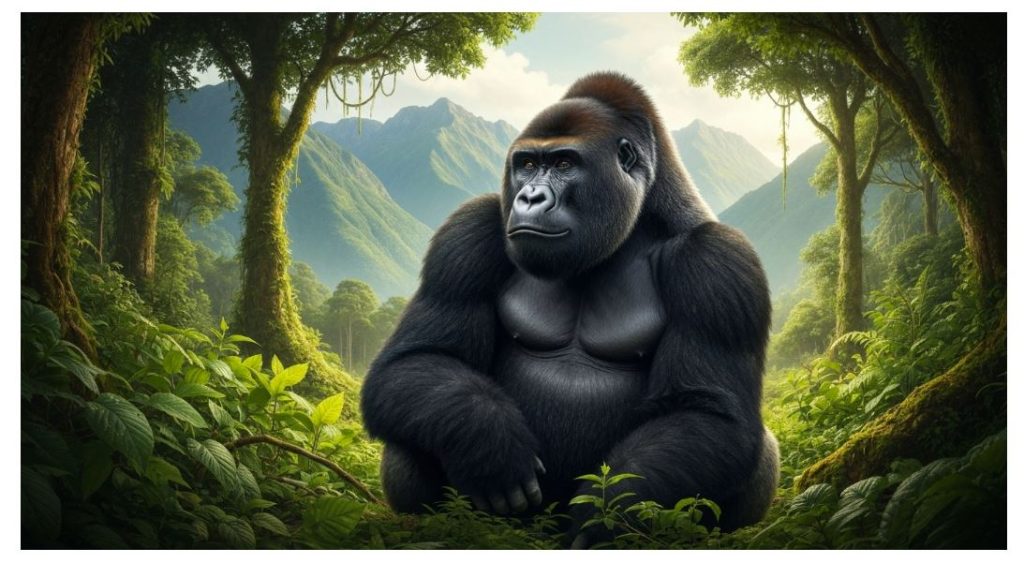
The physical presence of a gorilla can make anyone feel amazed. Adult gorillas have a strong body with big muscles in the arms. Their chest is huge and they have large hands and feet. A short muzzle and dark eyes show on their face and make them look full of feeling. Their bodies are covered in black or brownish hair.
These things are not only made to look good. They help gorillas live and do well in the African forests for many years. A gorilla’s strong jaws and skillful hands help it survive. Every part of its body is there for a reason. Now, let’s look at their looks and how their bodies help them live in this place.
Size, Strength, and Appearance
Adult male gorillas stand out because of their big size and great strength. In the wild, adult male gorillas usually weigh from 300 to 485 pounds. Females are much smaller than the males. These male gorillas have black or brownish hair all over, but their faces, hands, and feet do not. They are easy to spot with their short muzzle, big nostrils, and thick body.
When male gorillas get older, their backs start to show a bright patch of silver hair. This is why they get the name “silverbacks.” The dominant silverback is the one that leads the family group. You can tell he is in charge by looking at his size. He is much bigger than the other male gorillas in the group.
Gorillas can be up to 10 times stronger than people. They use their powerful arms and large hands to walk, climb, and find food. Even though they have a lot of strength, they are calm and peaceful most of the time. Gorillas use their power to defend themselves and keep their family safe.
Unique Physical Adaptations for Survival
Gorillas have some special traits that help them live well in the forest. They have strong jaws and big teeth. These are made to chew hard plants like stems, bark, and roots. A lot of their food comes from these things. That means they can get enough to eat in places where other animals might not find much food. This way, gorillas can survive better than most in their home.
Another thing that helps gorillas is their hands. Gorillas, like humans, have thumbs that move opposite of their fingers. This lets them use their fingers well, so they can pick up food, make nests, and look after their babies. Gorillas walk on their knuckles. This way of walking, called knuckle-walking, keeps the soft part of their fingers safe and gives them balance as they go around in their home range.
These physical features help them stay alive, especially with habitat loss being a big problem. They can eat many types of plants, and this lets them deal with changes in where they live. Still, even these things can only do so much if the forests they live in keep disappearing.
Lifespan and Growth Stages in the Wild
Gorillas usually live for around 35 to 40 years in the wild, but some may reach up to 50 years. You can see that their growth is interesting. A newborn gorilla weighs just four pounds. It fully depends on its mother at this time. Gorillas grow fast when compared to human babies. In just a few months, they start to crawl. Soon after, they ride on their mother’s back.
Infants start to eat other foods at about age three. At this time, they get more independent. Females in the gorilla family reach sexual maturity at around ten years old. Males take more time and mature at about fifteen. Younger males, called blackbacks, usually stay in the group where they were born until they feel ready to go and make their own gorilla family.
When a male gorilla grows up, he gets the famous silver hair on his back. At this point, he becomes a silverback. He can choose what to do next. Sometimes, he will try to challenge the dominant silverback. At other times, he may decide to go live alone. He could also join a group with other males who do not have female partners yet. Later, he may try to get females to start his own family group. This whole way of life helps make sure the species will go on.
Diet and Feeding Behavior
What do you need to feed a gorilla that weighs 400 pounds? You need a lot of plants! Gorillas eat mostly plants. They live in forests where they find their food and their diet is full of herbs. They spend much of their day looking for food. A gorilla eats leaves, stems, fruits, and sometimes even a few insects.
This diet is important for the energy of gorillas. It also is a big part of gorilla health. When people make their homes smaller, the food they get can change. Knowing what they eat can help us see how much they need the forest.
Herbal Diet: What Gorillas Eat Daily
A gorilla eats plants almost every day. It does not eat much else. They like to eat many parts of plants. An adult male gorilla can eat up to 40 pounds of plants in one day. This plant diet gives them all the things they need to stay strong and healthy.
Their food depends on what they can find where they live, but it usually has:
- Leaves, stems, and shoots
- Roots and wood
- Thistles and celery
- Fruits
Gorillas do not often need to drink water. The fruits and plants they eat have a lot of water in them, so this gives the gorillas most of what they need. They also get some water from morning dew on the leaves. This is very important for gorillas, especially if they live in a place where there is not much open water. Eating this kind of food helps to keep them healthy.
Foraging Habits and Seasonal Variations
Gorillas use a lot of their time each day looking for food. A silverback leads the group as they move around their home range, searching for the best places to eat. They do not look for food in random spots. Gorillas know their home range well, and remember where to find plants and when those plants will be there.
Their diet can go up and down at different times of the year. Sometimes, they eat a lot of fruit when there is plenty of it around. At other times, they switch to leaves, stems, and bark when that is what they can get. There are also differences in what gorilla species like to eat. For example, lowland gorillas eat more fruit than the ones that live in the mountains.
This way of eating helps them survive. It lets them change what they eat based on what food is there during different times of the year. As they look for food, they also do something good for the forest. They spread seeds, which helps keep the forest healthy.
The Role of Diet in Gorilla Health
A good diet is very important for the health of a gorilla. It helps them have enough strength and energy. A healthy diet can even help them have offspring. Gorillas eat many types of plants. This food gives them a good balance of proteins, fiber, and vitamins. A plant-based diet helps keep gorillas strong and keeps them healthy for a long time.
When their home in the forest is changed or harmed, it can take away the plants they eat. This is bad for their health. Cutting down trees and people moving into these areas can make sure there are less types of plants for the gorillas. It can also push them into smaller places. That can make it hard for them to get enough food and can even make them sick. This is why conservation efforts matter so much. They help to save the forests, so gorillas can live better and be healthy.
By protecting the places where gorilla species live, conservation programs make sure that these animals can find the food they need in the wild to stay healthy. Teams work with local communities to set up ways to use the land that do not harm nature. This is important because these forests are key to the health and life of gorillas.
Social Structure and Gorilla Behavior
Gorillas are very social and stay in close family groups. A gorilla group can be small with just a few gorillas or big with up to 40 members. A family like this always has a leader. The leader is an adult male called the silverback gorilla. He looks after the group and leads them.
The way the group lives together is interesting. There is a strong connection between the main male, which is called the silverback, and the female gorillas. The young ones like to play with each other. If we want to help save gorillas, we need to know about how they live as families. Let’s look into how the families are led and how the gorillas get close with one another.
The Leadership of Silverback Gorillas
The dominant silverback is the leader in the gorilla family. He is the one in charge and keeps the gorilla group safe and stable. It is not only about his strength. He also makes all the main decisions and protects everyone. So, the rest of the gorilla family relies on him.
A silverback has many important jobs, including:
- Leading the group to places where they eat and sleep.
- Helping to solve fights between others in the group.
- Keeping the family safe from dangers like leopards, poachers, or other silverbacks.
- Being a dad to babies in his group and watching over them.
Even though the silverback looks huge and strong, he is often a gentle leader. When there is trouble, he likes to show he is in charge by beating his chest, tearing plants, and roaring loudly. He does not use violence as much. What he wants most is to keep his gorilla family safe. If it comes to it, he will give up his own life so they can stay protected.
Family Groups and Social Bonds
The bonds in a gorilla family are very strong. At the center of the gorilla group is the close tie between the silverback and the grown females. The females are loyal to their leader, and this keeps the gorilla group steady. The female will usually be the first to show she is ready to mate when the time is right for her.
Young gorillas grow up in a caring and safe place. Their mothers give them a lot of care. Other family members also join in and play with them. These things that they do together are very important for the young gorillas as they grow up. They help the young ones learn the skills they will use when they become adult gorillas. The whole group works together to look after the young and keep them safe.
When the females in a gorilla group grow up, they often leave their birth group. This helps stop inbreeding in the family. The males may stay instead. If a male stays, he will live in the group under the dominant silverback. The young male waits for a time when he can take over the group or go out and start his own family. This way of moving between family groups keeps the gorilla population strong and healthy.
Communication and Cognitive Abilities
Gorillas are one of our closest relatives. They show good skills in talking and thinking. A gorilla group uses many ways to talk to each other. They make sounds, move their bodies, and use their faces to show feelings. A gorilla group is not quiet. You will hear grunts, barks, and hoots when they talk and spend time together.
Gorillas are one of the great apes, and you can see their cleverness in the way they act. They feel things much like people do. For example, gorillas can show sadness, and they can also laugh. They know how to solve problems and use tools while they are out in the wild. Gorillas build a new nest every night. Making these new places to sleep needs planning and skill.
Gorillas are seen as calmer and more peaceful than chimpanzees. People often say gorillas have more stable social groups. Their minds help them keep strong ties with others in their groups. This intelligence makes our bond with these amazing animals feel deeper.
Conservation Status: Why Are Gorillas Endangered?
All species and subspecies of gorillas are now at risk. They are either endangered or critically endangered. For many years, their numbers have gone down. This is mostly because of problems caused by people. The biggest reasons are hunting, sickness, and loss of where they live. If we do not act soon and do well with gorilla conservation, there is a chance to lose these amazing primates forever because of habitat loss.
The challenges are big. They go from the illegal wildlife trade to people moving into the forests where gorillas live. Let’s look at these problems more closely. This can help us see why gorillas are now in a dangerous spot.
Poaching and Illegal Wildlife Trade
Poaching is still one of the worst threats to gorillas. People hunt gorillas for their meat, called bushmeat. Others want gorilla body parts to sell on the illegal wildlife market. Gorillas do what they can to protect their babies. So, when poachers want to take an infant, they often end up killing the whole family to get it.
Poaching is very bad for this endangered species. Gorillas cannot have many babies. A female gorilla only gives birth to one baby every four or five years. So, if even a few gorillas are lost, it hurts the group a lot. The small population of gorillas finds it hard to come back from this loss.
Gorilla conservation organizations team up with local police to do anti-poaching patrols. They also keep an eye on gorilla groups to help guard them. But, in many areas where wild gorillas live, political problems and not much money or tools make it hard. This is why, for them, it is always tough to save gorillas from this problem that does not go away.
Habitat Loss and Fragmentation
Maybe the biggest threat to gorillas is habitat loss. As more people live in the area, they clear out forests for farming, timber, and mining. This removes the places where gorillas can live and breaks up big forests into small pieces. Now, these animals are left with only a few spots to live, and their homes become cut off from each other.
This breaking up of the forest is very bad for the long-term survival of this endangered species. It keeps some gorilla groups stuck in small forest “islands.” They cannot meet other groups. This keeps them apart. Because of this, the gorillas start mating with close relatives. The group has less genetic variety. This makes the endangered species weaker against illness and changes in the environment.
Many conservation efforts are to keep these forests safe and put them back together. People work on reforestation projects and build wildlife corridors. These steps help link gorilla groups that live far from each other. When gorillas can move around, they stay healthy and have a better gene pool. Good gorilla conservation is about saving the big forests where they live. If we take care of these places, we help these animals and other living things too.
Disease and Human-Wildlife Conflict
Gorillas have a lot of DNA like people. This means they can catch many of the same sicknesses we do. A cold or the flu may not feel like not a big problem for us. But, it can really hurt or even kill a gorilla. Some diseases like Ebola have killed many gorillas in just a short time. As tourism grows and people move closer to where gorillas live, the chance for these diseases to spread is now going up.
This closeness often causes problems between people and wildlife. Sometimes, gorillas go onto farmland to look for food. This brings them into contact with local communities who rely on these crops for their living. When this happens, it can lead to people hurting gorillas or putting more stress on their small numbers.
Successful gorilla conservation programs understand that they need to work with local communities to help protect gorillas. These programs help by teaching people how to travel in ways that be safe for animals. They also give health education and work on other ways people can make money. With these steps, the threat of diseases and fights can go down. When people and gorillas find ways to live together, both can do well. Gorilla conservation is better when local communities be a big part of the plan.
Conclusion
In the end, getting to know African gorillas is about more than seeing how beautiful they are. It is also about knowing the big challenges they face. Gorillas have their own ways of living and spend time in many different places. These amazing animals are very important for the places they live. The more we learn about how they act, what they eat, and the conservation efforts they need, the more we see that helping them is up to us.
We can each do our part to help African gorillas stay safe and healthy. A good way to get involved is by joining conservation efforts or backing groups who work to help them. When we work together, we can help African gorillas and make sure their wonder lasts for many years. Then, people in the future can still see these gorillas in Africa.
Frequently Asked Questions
How many African gorillas are left in the wild?
The overall population of African gorillas is hard to find exactly, but all of them be endangered species. There are over 350,000 western lowland gorillas. At the same time, there are only about 1,000 mountain gorillas. Cross River gorillas are even fewer with less than 350. These numbers show how important it is to have strong conservation efforts in national parks and protected areas for these animals.
What can individuals do to help protect gorillas endangered in Africa?
You can help with gorilla conservation by giving money to groups like the Dian Fossey Gorilla Fund or the African Wildlife Foundation. If you visit national parks, try to go with tour operators that give support to local people and take part in conservation efforts. Talking to others about what these gorillas go through can also make a good impact.
What are some fascinating facts about African gorillas?
Gorillas be one of our closest relatives. The animal shares about 98% of the same DNA as we do. A dominant silverback gorilla leads the family and keeps them safe. Each gorilla species is special and not the same. For example, the mountain gorilla lives in high forests. You can find them in Bwindi Impenetrable National Park. This place is different from any other for gorillas.




