Temples Around the World

“Discover the most iconic temples around the world—spanning cultures, religions, and centuries. Explore sacred spaces from Asia to the Americas, uncovering their history, architecture, spiritual significance, and the traditions they uphold.”
Krishnam Vande Jagadgurum in Sanskrit: A Spiritual Insight
by
varansi@gurugovindmaheesh.com
|

Krishnam Vande Jagadgurum in Sanskrit: A Spiritual Insight

Shiv Chalisa: Read the Sacred Prayer for Lord Shiva
by
varansi@gurugovindmaheesh.com
|

Shiv Chalisa: Read the Sacred Prayer for Lord Shiva

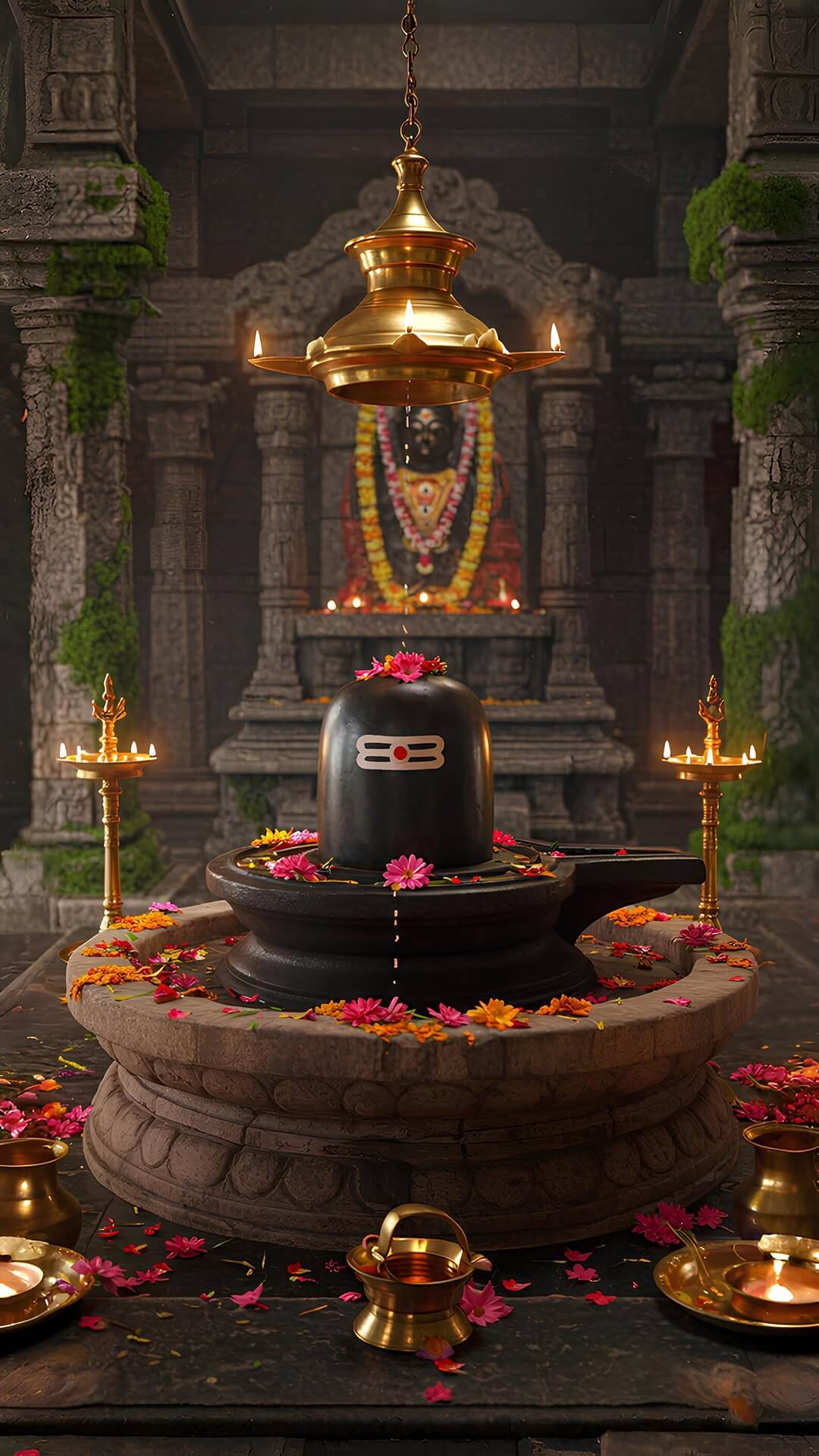
Lingam | Hinduism, Shiva, & Worship | Things You May Not Know About Key Highlights Here are the main things to know from what we found out about the Shiva Lingam: The Sanskrit word ‘linga’ mainly means a "sign" or "mark." People often think it means something else, but that is not true. The Shiva Lingam is a deep symbol in Hinduism. It shows the formless and spread-out awareness of lord Shiva. In hindu mythology, the lingam is talked about as a cosmic pillar of light. This shows how lord Shiva is above everything. There is archaeological evidence. A good example is the gudimallam lingam. It goes back to ancient India. You can find many types of lingams. There are the twelve special Jyotirlingas. Also, there are Mukhalingams that have faces of lord Shiva carved on them. Introduction The Shiva Lingam is seen as the most sacred symbol in Hindu mythology. A lot of people do not know what it really means. The true meaning goes much deeper than its physical form. For many people, the Shiva Linga is not only an idol to them. It is an abstract or unique representation of Lord Shiva. Lord Shiva is the supreme being who has no fixed shape and he is everywhere. This symbol lets people focus during worship and helps them feel close to divine thoughts. Have you ever stopped to think about what makes this powerful emblem so special? Origins and Etymology of the Shiva Lingam The history of the Shiva Lingam goes back a long way. Its story comes from ancient texts. The term linga is a Sanskrit word. It means a mark or a symbol. For many years, people have misunderstood what linga really means, especially in the last few years. Ancient scriptures like the Shiva Purana use the word "lingam" to show a sign that helps people know what something is. At first, people saw the Shiva Lingam as just a sign. But over time, it came to stand for the formless divine. We will look at how the meaning of the Shiva Lingam changed in history. Historical Roots in Hinduism Archaeological evidence shows that people may have worshipped objects shaped like lingams some thousands of years ago. Some scholars say that findings from the indus valley civilization, like cylindrical stones at Harappa and Mohenjo-daro, could be early lingams. But, there is still debate among experts about this. There is not enough proof that these stones were used in worship. The Gudimallam Lingam is a key part of history found in Andhra Pradesh on the Indian subcontinent. People say it comes from the 3rd or 2nd century BCE. It is one of the oldest lingams still used in worship. There is a realistic carving on it, showing what some believe to be an early form of Shiva. A dwarf figure is below this main figure. This change from what might be ancient signs to clear shapes in shiva temples shows how people’s idea and view of the Lingam has grown stronger over thousands of years. Now, it is a big part of worship in Hinduism. Meaning of ‘Lingam’ in Sanskrit and Ancient Texts To really understand the deep meaning behind the Shiva Lingam, you should first know what the word lingam means. In its most basic form, the Sanskrit word "lingam" stands for a "mark" or a "sign." It helps us to see one thing from another. The old texts use the word to explain that the way you know a baby's gender is by its "linga." Because of this, the word lingam later became linked to the male organ. The main meaning of the word lingam in the ancient texts, like the linga purana, is a symbol. The word lingam is a sign of the formless and unseen Divine. It acts as a point to focus on something that we can't fully understand. A long time ago, the wise people used this plain and simple shape in these ancient texts to help people remember that the god is beyond any fixed form or traits. The term linga, talked about in many ancient texts, can mean more than just a "mark." Evidence or Proof: A sign that shows the existence of something greater. It may help people think about the idea of a higher power. Symptom: A long time ago, in early medical texts, 'linga' meant signs that show if a person has an illness. Emblem: A symbol or mark that stands for an idea, such as how the universe makes new things. Philosophical Symbolism of the Shiva Lingam Beyond where it comes from in history, the Shiva Lingam has a lot of deep meaning. People see it as a sign of absolute reality and the unlimited nature of the supreme lord. One strong symbol is the lingam as a pillar of light or a pillar of fire. It stands as a cosmic pillar of light with no start or finish. This idea shows how Shiva has no limits and is always present. The Lingam stands for this endless spirit. It is a sign you can see in the world, but it also points to a truth that is not seen. The Lingam connects what we feel in life with a higher sense of mind. Now, let's talk about how the power of the universe and deep thinking help to build this symbol. Cosmic Energy & the Infinite Column of Light One of the most well-known stories from the Puranas talks about the meaning behind the lingam. The lingam is seen as a cosmic pillar of fire or a huge pillar of light. In this tale, there is a contest between Lord Brahma and Lord Vishnu. A very big pillar of light comes before them. Brahma takes the form of a swan and goes up. Vishnu becomes a boar and goes down. But neither of them can find where the pillar of fire starts or ends. This pillar of light had no end and was Shiva. It showed he is the supreme and without limit. So, the shape of the lingam stands for this never-ending pillar, which is like the universe itself. People also say that its oval shape is like a cosmic egg. This cosmic egg is where all things begin and come from. It shows both the power to create and the power to destroy in the universe. The lingam makes people think about how Shiva is the start, the one who keeps everything going, and the end of all that lives. Shiva is like a never-ending path of cosmic forces and divine power. Metaphysical Interpretations in Advaita Vedanta and Tantra In many Hindu ideas, the shiva linga stands for even more than what you see. For people in Advaita Vedanta, the shiva linga shows absolute reality. It does not have shape or things you can see. The shiva linga means pure consciousness. It is like the starting point of all that there is. The Shiva Linga is seen as the most suitable symbol for the formless God. It is abstract and shows a reality that our sense organs do not get on their own. The Shiva Linga is the manifestation of Shiva in a form that goes beyond what we can see or touch. It guides a devotee to think about the formless nature of God. In Tantra and some other traditions, people see the lingam and yoni together as very important symbols. Union of Consciousness and Matter: It shows how pure consciousness (the lingam) and basic matter or energy (the yoni) come together. Creation and Regeneration: This joining stands for the never-ending, holy process of creation that keeps the world going. Totality of Existence: The lingam-yoni together mean the complete way of existence, showing the balance between male and female sides. Iconography and Artistic Representations When you look at a Shiva Lingam, you see a shape that artists made with care. The common representation of lord shiva is not shown as a statue of a person. Instead, it is seen as short cylindrical pillars. This physical form is chosen on purpose. It is meant to show that the representation of lord shiva is formless and goes beyond limits. Artists and sculptors make lingams from different things. Stone sculpture is the one you see most in temples. Some lingams are simple. They look like smooth pillars. Others have faces carved in the stone. The shapes can be basic or more detailed. Now let's talk about how it looks and why Nandi is important to it. Shape, Structure, and Materials of the Lingam The usual shape of a Shiva Lingam includes a tall, round pillar with a smooth, rounded top. It sits on a circular base, which people also call the yoni or pithas. This base has a small edge or lip. It lets milk, water, and other liquid gifts flow down and get collected as prasad that has been blessed. The upright pillar shows the endless column of light in the cosmos. The yoni, or the circular base, stands for Shakti. She is the female energy that brings the universe into being. Lingams are made from many materials. Each has its own meaning. Some of the most respected ones are narmada lingams. These are smooth stones. You find them in the Narmada River. The Agama texts talk about different lingams. They do this by looking at what material they are made from. Sanskrit Name Material Mrinmaya Clay Lohaja Metal Ratnaja Precious Stone Daruja Wood Shailaja Stone Kshanika Disposable Material Nandi’s Role and Connection with Shiva Lingam If you go to a Shiva temple, you will see a bull statue called Nandi. It sits facing the Shiva Lingam and waits calmly. Nandi is there for a reason. The bull is an important part of shiva puja. Nandi is more than just Shiva’s ride. He is also the first and closest follower of Shiva. Nandi stands at the entrance and guards Shiva’s home. His eyes always look toward the direction of Shiva. This shows how a perfect devotee should always be focused and loyal. Worshippers often whisper their prayers and wishes into Nandi’s ear. It is said that he will take these words right to the Lord. The link between Nandi and the Shiva Lingam shows some important things about how people show devotion. Unwavering Devotion: Nandi always looks up at Shiva. This shows the true focus you need when you do worship. The Intermediary: He is there to go between the devotee and God. Nandi helps send prayers from us to the Lord. Permission to Worship: In some traditions, people feel you must ask Nandi before you can worship the lingam. Types of Shiva Lingams Found Across India The many different Shiva Lingas you can find across India show the rich local traditions and beliefs here. These Shiva Lingas are not all the same. In the Amarnath cave, there is a Shiva Linga made of ice that forms on its own. In South India, people have carefully carved many Shiva Lingas. Each one has its own story to tell. Major pilgrimage sites in states such as Madhya Pradesh and Tamil Nadu are home to some of the most respected Shiva Lingas. These lingams tend to fall into groups based on where they come from and what shape they have. The most important of these groups is the Jyotirlingas. People believe these carry a strong power of Shiva. Now, let’s take a closer look at Jyotirlingas and several other unique forms. Jyotirlingas & Their Significance Among many Shiva temples, there are twelve that are known as Jyotirlingas. The name ‘Jyotirlinga’ stands for ‘Pillar of Light.’ These places are seen as the holiest of all shrines for Lord Shiva. As written in the shiva purana, each of these sites is where Shiva showed himself as a bright pillar of light. People say that praying at these shiva temples can help someone break free from being born again and again. The pillar of light is a symbol that helps connect all who visit with the power of Lord Shiva. These lingams are Swayambhu. So, they have not been made by people. They formed on their own. These are full of spiritual power. Every year, many people feel called because of this. A huge number of people go to see them. A visit to all twelve Jyotirlingas is important for many people who follow Shiva. They feel it is a big goal in their life. Here are some of the twelve Jyotirlingas that you read about in the scriptures: Jyotirlinga Location Somnath Gujarat Mallikarjuna Andhra Pradesh Mahakaleshwar Madhya Pradesh Omkareshwar Madhya Pradesh Kedarnath Uttarakhand Bhimashankar Maharashtra Other Distinctive Forms and Local Traditions There are the important Jyotirlingas. But people also worship other forms of Shiva Lingams made by local traditions. These forms show the many ways that people think about and pray to the form of Shiva. For example, the Gudimallam Lingam is special. It has a carving that shows Shiva in a real way. This carving is over two thousand years old. Another interesting one is the Mukhalingam, which means ‘lingam with a face.’ There can be one face (Ekamukha), four faces (Chaturmukha), or five faces (Panchamukha) on it. Each face stands for a different side of Shiva. The Lingodbhava figure is often seen on the walls in temples. In it, you see Shiva coming out from a pillar of fire, while Brahma in the form of a swan and Vishnu in the form of a boar stand nearby and watch with respect. Here are some other distinctive lingam forms: Sahasra Linga: This is a linga that has 1001 small lingas carved all over it. Dhara Linga: This linga has sides that are carved with grooved lines. Ice Lingam: The amarnath cave has a natural ice pillar that forms by itself. People worship this as a linga. Conclusion The Shiva Lingam is more than an item people pray to. It stands for deep ideas and feelings in Hinduism. The Lingam has very old roots, appears in many shapes, and has detailed artwork. It is seen as a link to the energy that runs through everything. To know about where it came from, what it means, and the types of Lingams will help you see the many beliefs tied to this holy object. It does not matter if you have followed it for a long time or are new to it. Learning about the Shiva Lingam can give you a bigger view of what spirituality means in the Hindu way of life. If you want to know more or have more questions, you can always ask or read further about this interesting topic. Frequently Asked Questions What are the rules for worshipping the Shiva Lingam at home? Sincerity means a lot when you are a genuine devotee. But, some texts do give rules for shiva puja at home. The way the yoni faces is important. What materials you use for the shiva linga matters too. The mantras you say can change what happens in your worship. By doing it this way, there may be different results for the person performing shiva puja. How is the Shiva Lingam depicted by artists and sculptors? Artists and sculptors make the Shiva Lingam as a short, round pillar. This is how the physical form of it is seen most often. The stone sculpture is usually placed on a circular base. This base is called a yoni. The shape is meant to be abstract. It shows a formless god, not a person. What are some lesser-known facts about the Shiva Lingam? One thing many people may not know is that the Amarnath Cave has an ice lingam that forms on its own each year. A lot of us have heard about the big Shiva Lingas found in south india. But ancient texts talk about several kinds of lingams. People have also found lingams at archaeological sites that are more than 2,000 years old. This shows that people started this practice a long time ago.
by
varansi@gurugovindmaheesh.com
|

Shiva Lingam | Hinduism, Shiva, & Worship | Things You May Not Know About

HARSHNATH, THE FORGOTTEN HILL OF SHEKHAWATI
by
varansi@gurugovindmaheesh.com
|

Harshnath, the forgotten hill of Shekhawati

Pancha Bhoota Sthalas, the five elements temples
by
varansi@gurugovindmaheesh.com
|

Pancha Bhoota Sthalas, the five elements temples