
Key Highlights
- Ratan Tata was a leader with big ideas, and he was the chairman of the Tata Group from 1991 to 2012.
- He helped the company grow around the world by buying well-known brands like Jaguar Land Rover and Corus Steel.
- He worked hard to create the Tata Nano, which was made to be an low-cost car so Indian families could own one.
- His strong support for giving back and helping others through the Tata Trusts is a big part of what people remember about him.
- He was given India’s top awards, the Padma Bhushan in 2000 and the Padma Vibhushan in 2008.
- Ratan Tata changed the Tata Group into a modern and global powerhouse. He made a big impact on indian industry and many people still look up to him.
Table of Contents
Introduction
Ratan Tata was not just a businessman. He was the kind of leader who changed the Tata Group and made a big impact in India and around the world. From 1991 to 2012, he led the group through a big change. He helped take it to new places around the globe. But he always kept strong values and care for the good of others in mind. The story of Ratan Tata is about steady hard work, big new ideas, and great kindness. This is why he is known as one of the most respected people in India today, and why so many people look up to him and the tata group.
Early Life and Family Background
Ratan Tata was born on December 28, 1937. He grew up in the well-known Tata family. When he was ten, his parents split up. After that, his grandmother, Navajbai Tata, adopted him and raised him. Living in a house with a strong family background had a big impact on his values.
In his early years, he lived a life with both comfort and many rules. This mix helped him learn to be humble. Now, we will look more at his family story and his time in school. Both played a big part to shape him into the leader he became.
Ratan Tata’s Family Heritage
Ratan Tata is part of the Tata family because of his background. He is the son of Naval Tata. Naval Tata was adopted by Ratanji Tata. Ratanji Tata is the son of Jamsetji Tata, who started the Tata Group. This family history put Ratan Tata in the center of one of India’s most important business families.
Even though he was born in a famous family, his childhood had its own troubles. After his parents split up, his grandmother, Lady Navajbai Tata, took care of him. She looked after him and his younger brother, Jimmy. They grew up in a safe place where she taught them discipline and important values. These would help him all through his life.
This family background tied him to a long practice of helping others. This is important in the Tata Group. The habit of giving, which groups like the Sir Ratan Tata Trust followed, became a big part of how Ratan Tata led the Tata Group later on.
Education and Formative Years
Ratan Tata‘s education had a big impact on his early years. It helped him grow into the global leader he is known as today. He went to Campion School and then Cathedral and John Connon School in Mumbai for his early studies in India. Later, he moved to the United States. He finished school at Riverdale Country School in New York City in 1955.
He wanted to get higher education, so he went to Cornell University. At first, he studied engineering, but later he changed his major to architecture because he liked it more. He finished his studies and got his bachelor’s degree in architecture in 1962. The time he spent in America changed him a lot. It helped him see things in new ways and made him love new ideas and good design even more.
In 1975, he worked on his business skills by joining the Advanced Management Program at Harvard Business School. This mix of his creative work in architecture and business training gave him the right tools to lead the Tata Group into a new time.
Entry into the Tata Group
After he came back to India in 1962, Ratan Tata joined the Tata Group. He did not start at a high position. Instead, he went to the shop floor at Tata Steel. There, he got hands-on experience. He learned a lot about how the company works, starting from the most basic level.
This journey was full of hard times and chances to learn new things. With guidance from others and his own hard work, he slowly moved up each step. This helped him get ready for the big role he was going to have. Let’s look at his first jobs and the key moments that shaped his way up.
Initial Roles and Mentorship
When Ratan Tata began his job with the Tata Group, he got to take real jobs on the ground. One big ethis saw him work right on the shop floor at Tata Steel. There, he got to know the business well because he learned how it works from the very start. This gave him a special view of how the people and operations in the company work.
In the 1970s, he got a manager role. He had his first big win when he helped National Radio and Electronics (NELCO) turn things around. This showed that he could lead a group and face tough times in business. Even when the company ran into trouble during a bad economy, it was clear he had strong leadership skills.
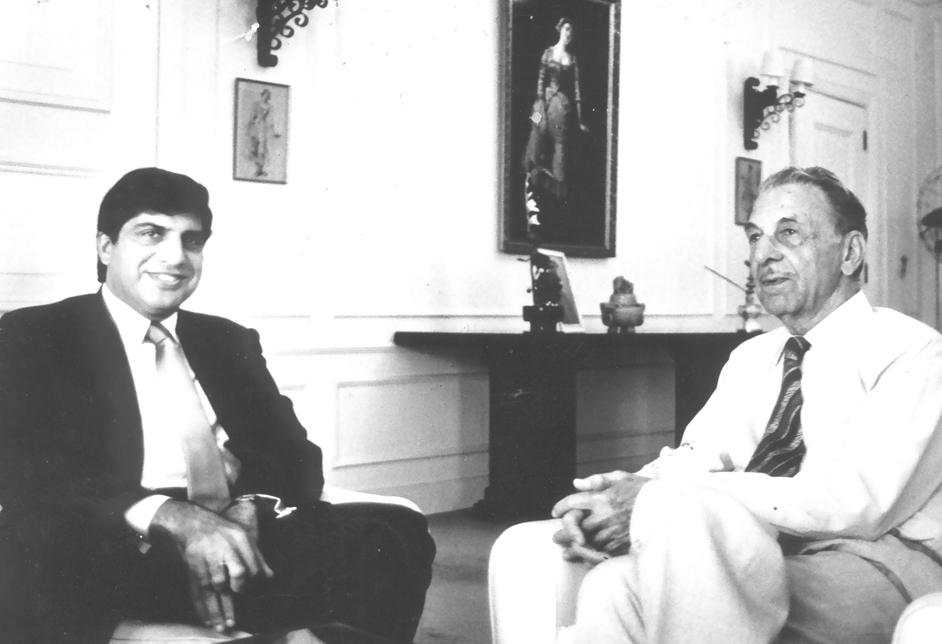
In his early years at the Tata Group, he worked closely with J.R.D. Tata, who was the chairman then. J.R.D. Tata gave him support and advice. This helped him get ready for the tough and complex jobs that come with leading a huge and diverse group like the Tata Group.
Pivotal Moments and Rise to Leadership
The key moment in Ratan Tata’s path to becoming a leader was in 1991. That’s when J.R.D. Tata stepped down and said he would be the next one to lead. This change was not easy. There was a lot of pushback from some strong leaders in the smaller companies. They were used to working on their own.
To bring the group together and get it ready for what is coming next, Ratan Tata put a few important rules in place. He set a retirement age for directors. He made sure that all the smaller companies had to report right to the group office. He also said that these companies must give part of their profits to help grow the Tata brand. These steps helped the group feel more like one team with a clear leader at the top.
He did not give up. He had a clear vision, and this helped him win over people who did not agree at first. He put new ideas first. He gave trust to young people and let them shine. By doing this, he made a way for strong leadership. This helped the Tata Group start to become modern and grow across the globe.
Transforming the Tata Group
Under ratan tata’s leadership, the tata group went through big changes. He turned the group from many different businesses into one strong and modern company. Under tata’s leadership, the tata group became competitive with other companies all over the world. He wanted the group to be ready for new changes in India’s economy and to face the world market.
This was a time of big change and new ideas at Tata Group. The company worked hard to improve and try new things. Let’s look at the smart plans he used and see the main things that made this time so important for Tata Group’s growth.
Visionary Strategies and Business Modernization
Ratan Tata had a fresh way to bring the tata group up to date. When he started to lead, he could see the group had to move faster and pay more attention to key things to do well in a world where many around the globe want the same things. One big move he made was to make the many parts of the group work together better and focus more.
He started the process to leave businesses that were not linked to the main goals. He also brought together teams that were doing the same kind of work. This helped the company put more of its money and time into key areas that could grow a lot. His plan was not only to save money. He wanted to build a business where the teams worked better together and had more power. This would help the company be ready to go up against others around the world.
He encouraged new ways of doing things and gave more responsibility to young leaders. This helped to build a fresh feel inside a group that used to be more set in its ways. These choices were a big part of making the Tata Group a more modern business. They helped turn it from a big name in the country to a strong player around the world.
Key Achievements in Indian Industry
Ratan Tata was the chairman of the Tata Group. He made many big changes that helped the Indian industry. During his time as leader, the Tata Group’s revenue went up by more than 40 times. Its profits also grew by more than 50 times. This shows his smart way of leading.
One project many people talk about is the Tata Nano. He came up with this “people’s car” because he wanted the average Indian family to have a chance to own a four-wheeled vehicle. The Tata Nano had some problems, but people still see it as a sign of simple engineering and new ideas.
His other big wins changed important parts of the Indian industry.
- Tata Consultancy Services (TCS): He helped with the public offering of TCS in 2004. This gave the company a lot of value and made it a top name for consultancy services in the world.
- Tata Steel: He led the company when Tata Steel bought Corus. This made Tata Steel one of the biggest steelmakers in the world.
- Tata Motors: Besides what he did with the Nano, he helped Tata Motors grow a lot. He also played a big part in the successful purchase of Jaguar Land Rover.
Global Expansion and International Acquisitions
One of Ratan Tata’s biggest legacies is making the Tata Group known around the world. He wanted to turn the tata group from a business in India into a true global powerhouse. To do this, he led the group in making smart international deals. This helped increase the tata group’s global footprint by a lot.
This goal was not only to make Tata bigger. The aim was also to get top brands and top technology to help Tata make a name for itself in the world. Let’s look at some of the big takeovers that made this growth possible and see how these deals helped turn Tata into an Indian global brand.
Major Takeovers and Partnerships Abroad
The effort to make the Tata Group known around the world, led by Ratan Tata, was marked by several big purchases. These bold steps showed the world that India was now very confident in doing business with other countries. For Ratan Tata, growing in other countries was a key goal, and each buy was a careful move to help the Tata Group become a strong and wide-reaching business around the globe.
The most well-known of these deals was when Tata Motors got Jaguar Land Rover from Ford in 2008. This step pushed Tata Motors into the high-end car market. It has turned into a big win for them. In the same way, Tata Steel got Corus, a large European steel company, in 2007. That was a key moment for the Indian industry. Both these moves show how tata motors, land rover, tata steel, and jaguar land rover are important for business in India.
These big takeovers changed the tata group’s list of businesses. The company became a strong international name. Here are some of the main buyouts that happened during his time in charge:
| Acquired Company | Tata Company | Year |
|---|---|---|
| Tetley | Tata Tea | 2000 |
| Corus | Tata Steel | 2007 |
| Jaguar Land Rover | Tata Motors | 2008 |
Building an Indian Global Brand
Ratan Tata helped the Tata Group become a well-known name around the world. He did this by making smart international acquisitions. The Tata Group used to earn most of its money from business inside India. Under his leadership, more than 65% of its money came from outside India by the time he left. Ratan Tata and the Tata Group showed how a company can grow in the global market.
This change was big. It was not just about buying companies from outside of India. It was also about bringing them into the Tata group, and letting each keep what makes them special. When Tata bought well-known brands like Jaguar Land Rover and Tetley, the Tata name became known around the world. People now see it as a name that stands for quality and for doing things well in many areas, like Land Rover.
Ratan Tata made the Tata Group a global powerhouse. He did more than only help his company grow. He showed people all over the world that an Indian company could compete with the best. Not only that, but he could get those top companies too. This gave other Indian companies the push to think in a big way and go global. Because of him, the Tata Group—and India—are known on the world business stage now.
Philanthropy and Social Responsibility
Giving back was not just something Ratan Tata did. It was at the heart of who he is. He worked hard to keep his family’s good work going. He led the way on social responsibility with the Tata Trusts. These trusts own most of Tata Sons. Ratan Tata wanted to help in a way that lasted a long time and made life better for many. His goal was to see real, lasting change with his work.
He thought that businesses should help give back to society. With his guidance, the Tata Trusts grew the work they did in important areas. They started to help more with things like education, health, and development in rural areas. Now, let’s take a closer look at the charitable work done by Tata Trusts.
Tata Trusts and Charitable Initiatives
Ratan Tata has had a big impact on giving and doing good in India. As the head of several Tata Trusts, such as the Sir Ratan Tata Trust and the Sir Dorabji Tata Trust, he played a key role. He made sure the group’s focus on social responsibility was not lost. A big part of the company’s profits goes to important projects that help people, and he helped lead this change.
He used a smart plan for his giving. He wanted to solve some of India’s biggest problems. He led the trusts to work on projects that could grow and last for a long time. He did not want to give only short-term help. He brought new ideas to the way the trusts worked. This helped them do their job better and help people all over the country.
Some of his good work for others includes:
- Helping people who suffered in the 1984 anti-Sikh riots by giving trucks. This helped drivers get their jobs and lives back.
- Giving $50 million to his old school, Cornell University. He became the biggest overseas donor for the university.
- He was there and helped right after the 26/11 terrorist attacks in Mumbai. He made sure the hotel staff and their families got what they need and looked after them.
Landmark Projects in Education, Health, and Welfare
With help from Ratan Tata, the Tata Trusts started many important projects in education, health, and welfare. These projects have changed the lives of many people. He believed that there should be quality education and good healthcare for everyone. He wanted to help the people who need it the most, and made sure the Tata Trusts worked for them.
He cared a lot about health, especially when it comes to cancer care. The trusts played a big part in this work. They helped the Tata Memorial Centre and also set up many cancer hospitals across India. These places give good and low-cost treatment to thousands of cancer patients.
He wants to make a real difference, and you can see this in these projects:
- Education: These include a $50 million gift to Harvard Business School to make Tata Hall. There is also a $28 million fund for scholarships at Cornell. This is to help students from India.
- Health: A grant of ₹750 million was given to the Indian Institute of Science. This helps research about Alzheimer’s disease.
- Welfare: Help is given to the University of New South Wales for work on capacitive deionization. This technology will give clean water to people in tough places.
Honors, Awards, and National Recognition
Ratan Tata has made a big impact on India’s industry and society. People have noticed the work he has done. He got many top honors and awards in India and from other countries. Some of the best-known awards he has are India’s highest civilian awards, given for his great service to the nation.
He got the Padma Bhushan in 2000. Then, he got the Padma Vibhushan in 2008 from the Government of India. These awards show how he helped build the nation. Let’s look at some of these big honors and the strong mark he left behind.
Major Tributes and Achievements
Ratan Tata had a life where he got many awards for his work and the help he gave to others. He was known for his great leadership and for doing good things for people. He did not just get the Padma awards. He got many honors from many countries and big groups all over the world. This shows the high place ratan tata had and how much people everywhere looked up to him.
These warm words were given not just because of his work, but also for his strong promise to do good and help people. He was known for being kind and for having big dreams. A lot of people say he is one of the most looked-up-to business leaders of his time. He got several honorary doctorates from top places like Cambridge, Yale, and IIT Bombay, which shows how much he has done and how much people respect him.
Some of his major international honors include:
- Honorary Knight Grand Cross of the Order of the British Empire (GBE) from Queen Elizabeth II in 2014.
- Commander of the Legion of Honour from the Government of France in 2016.
- Grand Cordon of the Order of the Rising Sun from the Government of Japan in 2012.
- Honorary Citizen Award from the Government of Singapore in 2008.
Impact on Indian Society and Business
Ratan Tata‘s influence in Indian society and business is bigger than the numbers for the Tata Group. His most significant contributions are in how he changed the way people see Indian business around the world. He showed that an Indian company like Tata Group can be the best in quality, ethics, and new ideas.
In business, he helped people feel new ideas were welcome. He pushed for trying new things. This made many young people want to start their own work. Even after he stopped working full-time, he put his money in new companies like Ola and Paytm. This showed he still believed in what India could do next. He was not just trying to make one good company. He wanted to shape a better India for all of us.
He cared a lot about giving back to people. On a large scale, his strong support for social responsibility raised the standard for companies all over the country. A big part of the money that came from the group went to tata trusts. Because of this, there was a clear link between the company’s good work and making life better for many people in India.
His Life, His Times:
October 2024: Mr Tata passes away at the age of 86
1937: Ratan Tata is born to Soonoo and Naval Tata.
1955: Leaves for Cornell University (Ithaca, New York, USA) at age 17; goes on to study architecture and engineering over a seven-year period.
1962: Awarded bachelor of architecture degree.
1962: Joins the Tata group as an assistant in Tata Industries; later in the year, spends six months training at the Jamshedpur plant of Tata Engineering and Locomotive Company (now called Tata Motors).
1963: Moves to Tata Iron and Steel Company, or Tisco (now called Tata Steel), at its Jamshedpur facility for a training programme.
1965: Is appointed technical officer in Tisco’s engineering division.
1969: Works as the Tata group’s resident representative in Australia.
1970: Returns to India, joins Tata Consultancy Services, then a software fledgling, for a short stint.
1971: Is named director-in-charge of National Radio and Electronics (better known as Nelco), an ailing electronics enterprise.
1974: Joins the board of Tata Sons as a director.
1975: Completes the Advanced Management Program at Harvard Business School.
1981: Is appointed Chairman of Tata Industries; begins the process of transforming it into a promoter of high-technology businesses.
1983: Drafts the Tata strategic plan.
1986-1989: Serves as Chairman of Air India, the national carrier.
March 25, 1991: Takes over from JRD Tata as Chairman of Tata Sons and Chairman of the Tata trusts.
1991: Begins restructuring of the Tata group at a time when the liberalisation of the Indian economy is underway.
2000 onwards: The growth and globalisation drive of the Tata group gathers pace under his stewardship and the new millennium sees a string of high-profile Tata acquisitions, among them Tetley, Corus, Jaguar Land Rover, Brunner Mond, General Chemical Industrial Products and Daewoo.
2008: Launches the Tata Nano, born of the trailblazing small car project he guided and commanded with zeal and determination.
2008: Is awarded the Padma Vibhushan, the country’s second-highest civilian honour, by the Government of India.
December 2012: Steps down as Chairman of Tata Sons after 50 years with the Tata group; is named Chairman Emeritus of Tata Sons.
2012 onwards: Mr Tata served on the international advisory boards of Mitsubishi Corporation and JP Morgan Chase. He continued as Chairman of the Tata Trusts, he steered Sir Ratan Tata Trust and the Sir Dorabji Tata Trust, two of the largest private-sector-promoted philanthropic trusts in India. He served as the Chairman of the Council of Management of the Tata Institute of Fundamental Research, on the board of trustees of Cornell University and the University of Southern California and initiated the Tata-Cornell Institute for Agriculture and Nutrition. He received honorary doctorates from several universities in India and overseas.
2013: TheTata Hall at Harvard University is completed and named in honour of Ratan Tata.
2014: Began investing in startups, at a time when India’s startup ecosystem was still emerging.
2014: Awarded the Knight Grand Cross of the Order of the British Empire (GBE).
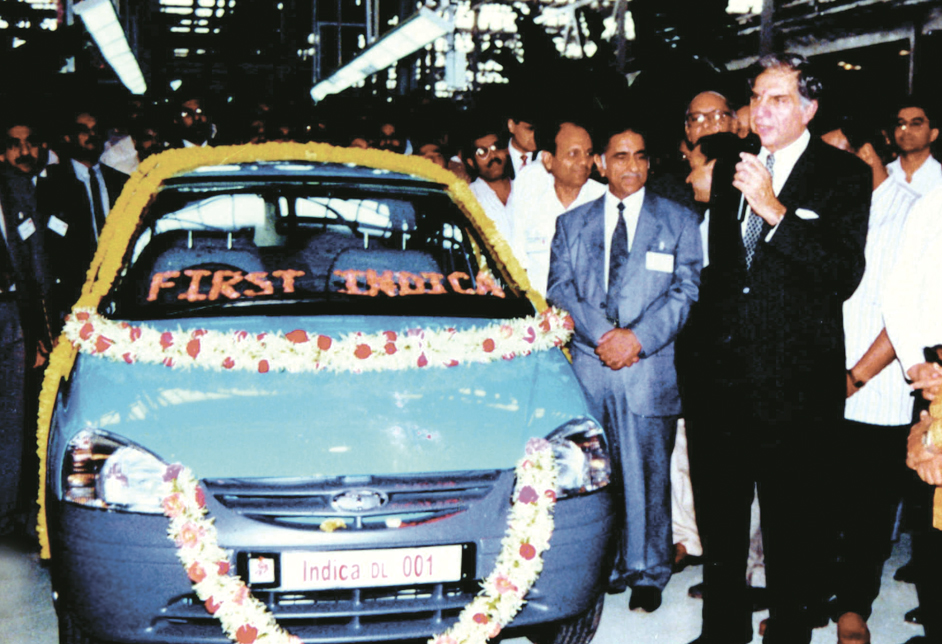
2015: Inducted into the Automotive Hall of Fame, recognising Mr Tata’s quest to produce the country’s first fully indigenous car, the Indica, in 1998, following it with the ground‑breaking Nano in 2008.
2017: Under his stewardship, the Tata Trusts introduced the Cancer Care Programme in 2017. It propelled the Trusts efforts in this sector — spanning from the Tata Memorial Centre in Mumbai in 1941 to the Tata Medical Centre in Kolkata in 2011 — to a growing network of cancer care facilities and cancer hospitals in India.
2022: Set up the Ratan Tata Endowment Foundation.
October 2024: Mr Tata passes away at the age of 86.
Conclusion
Ratan Tata’s work as a leader goes beyond his role in building the Tata Group. He has a strong focus on giving back to people and doing good for the society. Ratan Tata used smart ideas and looked at the world as one big place to help grow the Tata Group, but that is not all. He made sure the people and communities feel the good change. He joined together old ways and new thinking to help move things forward. Because of his hard work, many people and businesses try to be the best they can and help others at the same time.
If you look at what he has done, you will see that Ratan Tata is more than just a boss. He is a true leader for the next set of people coming up in the world. If you want to know more about ratan tata, his time at the tata group, and his ideas about social responsibility, look for more stories and information about this amazing man.
Frequently Asked Questions
What are Ratan Tata’s most significant contributions to India?
Ratan Tata made some of the most significant contributions to business and society. He helped turn the Tata Group into a global powerhouse. This change raised the profile of Indian industry around the world. He is also well-known for being dedicated to philanthropy through the Tata Trusts. Because of this work, there have been many good changes in education, healthcare, and social welfare all over the nation.
Why is Ratan Tata considered a visionary leader?
Ratan Tata is seen as a forward-thinking leader because he saw early on that the Tata Group needed to improve and compete around the world. He made smart changes to the company and pushed for new ideas, like the Tata Nano car. He also led the group to buy big companies in other countries. Because of all this, he changed the Tata Group in a big way for today’s world.
How has Ratan Tata shaped the future of philanthropy in India?
Ratan Tata changed how people see giving in India. He used the Tata Trusts to help make real, lasting change instead of just giving money away. Ratan Tata made sure the trust worked on health, education, and help for people in rural areas. He wanted development to last for years. This focus set a new way for companies to act with social responsibility. Now, many others feel inspired to give back to their people and work for sustainable development because of him.
Why sudden hate for Ratan Tata?
The sudden backlash against Ratan Tata could be because of people misunderstanding things on social media. It may also happen when there are different views about what companies do, or when people want too much from him as a leader. A lot of the time, people say bad things when someone like Ratan Tata makes a choice that does not match what they feel or what most people think is right.
How simple is Ratan Tata and his family?
Even with his strong influence, Ratan Tata was known for being humble and living a simple life. He liked to be alone and did not want the spotlight on him. He lived in a modest way. This simple and down-to-earth side made people respect ratan tata, not just for his business work, but for the person he was.
What are some unknown facts about Ratan Tata?
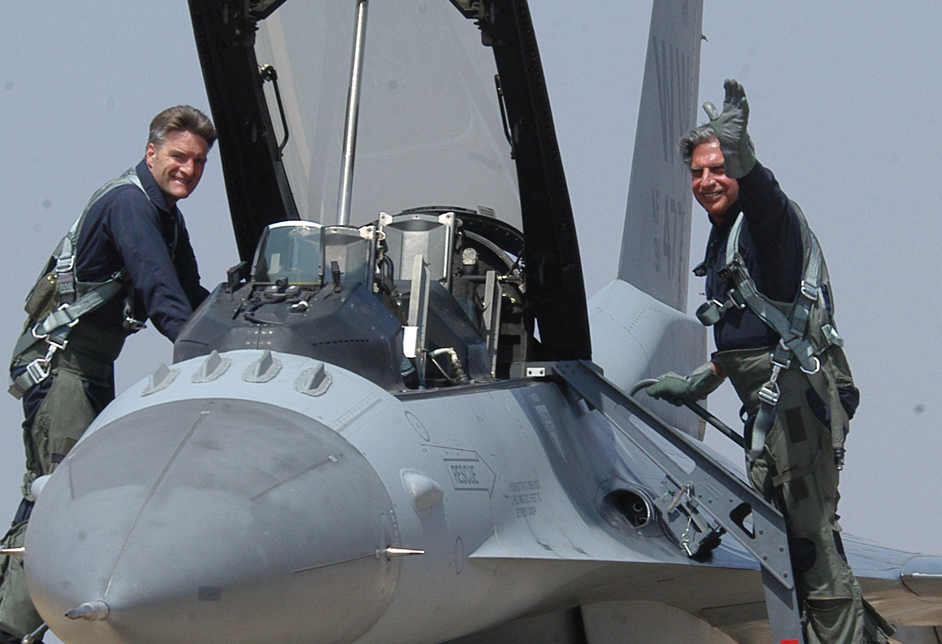
Many people may not know this about Ratan Tata. He was a trained architect. He finished his degree in architecture at Cornell University. Ratan Tata was also a licensed pilot. He loved to fly and was very fond of fast cars. These passions stayed with him all his life.




