
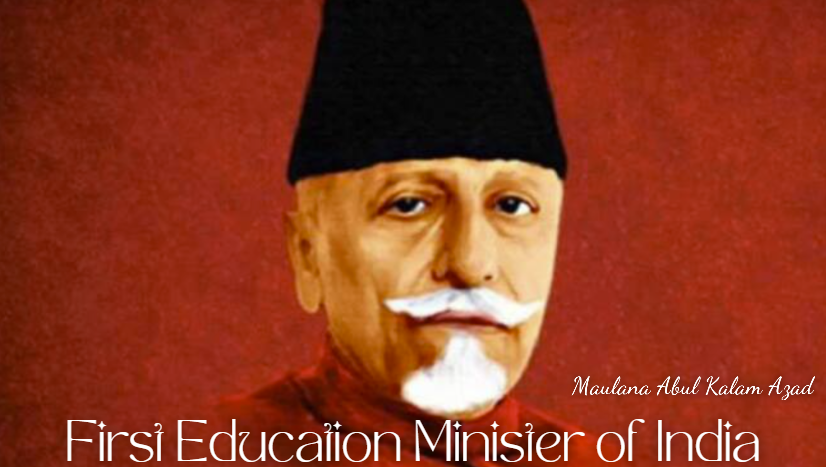
Key Highlights
Here’s a quick look at the key points we’ll cover:
- Maulana Abul Kalam Azad was the first education minister of independent India. He served from 1947 to 1958.
- He had a significant role in building the base of the Indian education system.
- His birthday, November 11th, is called National Education Day to celebrate his work.
- Azad started key places like the University Grants Commission (UGC) and the Indian Institutes of Technology (IITs).
- While he was minister of education, he was a strong advocate for universal primary education and for bringing scientific learning to all.
Table of Contents
Introduction
Have you ever thought about who started the path for India’s modern education system? The answer is Maulana Abul Kalam Azad. He played a big role in the Indian National Congress. He was also the country’s first education minister. In 1947, he became the education minister. Abul Kalam Azad worked hard as he led the planning for new policies in the education system. These policies were made to help all people get quality education. His ideas and strong will helped the Indian education system grow right after independence.
Profile of Maulana Abul Kalam Azad – India’s First Education Minister
Maulana Abul Kalam Azad was a well-known scholar and freedom fighter. He was also a key part of the Indian National Congress. He took the name “Azad,” which means “free.” This name showed his strong wish and spirit for an independent India. Abul Kalam Azad was known for his great mind and new ideas. He was the best choice to lead changes in education for the nation.
After India became free, Abul Kalam Azad was chosen to be the first Minister of Education. He took on a big task. His job was to help set up the country’s education system from nothing. Azad worked hard every day to make sure that people from all parts of India could learn and grow. Below, we talk about his journey as the first Minister of Education and the important changes he brought to India.
Early Life and Role in India’s Independence
Before he helped shape education, Maulana Abul Kalam Azad was known for his strong role in Indian politics and the struggle for freedom. He was a true leader even when he was young. At age 35, in 1923, he became the youngest president of the Indian National Congress. His dedication to the country and to independence never slowed down.
During the Quit India Movement, he was the president of congress from 1940 to 1945. At that time, he and other important leaders went to jail. He used his journal, Al-Hilal, to speak about Hindu-Muslim unity, secularism, and socialism. These ideas were at the heart of his political beliefs.
Azad was very involved in the freedom fight, and he had a strong mind. People looked up to him as a leader. He wanted India to be together and for people to have good education. When India became free, Azad was the right person to join the cabinet. There, he showed he could put his ideas to work and help make them real through new plans.
Appointment as Education Minister Post-Independence
After India became free on August 15, 1947, Maulana Abul Kalam Azad was made the first education minister. This move showed that the new government wanted to build a strong base for the country’s schools and learning. He started working at the Ministry of Education and began to change how people saw teaching and learning.
Keywords: abul kalam azad, abul kalam, maulana abul kalam azad, maulana abul kalam, first education minister, education minister, ministry of education
His selection for this role showed his forward-thinking view. Maulana Azad said that everyone should have the right to education. In independent India, he wanted a system that was open to all. It did not matter where a person came from. He hoped this would help people think in a scientific way and learn about different cultures.
The Indian government says that Maulana Abul Kalam Azad was the first person to have this important role. He helped build the first systems and rules for the ministry. Because of his work, people often call him the father of India’s modern education system.
abul kalam azad, abul kalam, maulana abul kalam azad, maulana abul kalam
Tenure and Timeline of Maulana Azad’s Service
Maulana Abul Kalam Azad worked as India’s education minister for more than ten years. This time saw big changes in how education grew in the country. He started his role as education minister when India became independent in 1947. He stayed in the job until he passed away in 1958. With this long and steady leadership, Abul Kalam Azad was able to build a strong base for the Ministry of Education.
He was the first education minister, and his job was big. He needed to build a national education system for a new country with many kinds of people. Let’s look at the timeline of when he worked and the main things he did as education minister in those early years.
These were important times for the national education system, and he helped set up the first ways for schools to run in the country.
Years in Office as Education Minister
Maulana Abul Kalam Azad was the first Minister of Education in India. He held this post from August 15, 1947, to February 22, 1958. The time he spent as Minister, more than 11 years, was very important for the country. He helped shape what education would look like for people in India. His name comes first when you look at the list of education ministers of India. Maulana Abul Kalam Azad set a high bar for the other education ministers who came after him.
His many years in this role helped the country keep things steady and make big changes. This gave India time to start and build its new groups and systems from the ground up. As the minister of education, his main goal was to set up a plan that would help India for many years ahead.
The table below shows that he was the first education minister.
| S.No | Name | Tenure |
|---|---|---|
| 1 | Maulana Abul Kalam Azad | 1947–1958 |
This time in the ministry stands out as one of the most important. It has made a big mark in their history.
Milestones Achieved During His Tenure
During his time as education minister, Maulana Abul Kalam Azad played a big part in changing the Indian education system. He led the Ministry of Education with a strong plan for a modern and open India. Azad wanted the education system to work for all people, and he helped to make things better for the country.
These achievements were more than rules or laws. They helped build the country’s thinking and society. He paid attention to higher education. He also worked on making sure many people could read and write. In this way, he took care of every part of nation-building.
Here are some of his biggest achievements:
- The University Grants Commission (UGC) was set up to give money and recognize universities.
- The start of the Indian Institutes of Technology (IITs) laid the base for these top schools.
- He pushed for universal primary education so every child could learn.
- There was strong support for women’s education and adult literacy programs. This helped close the gap between people in society.
- The focus was also on secular and scientific learning. This helped people have a clear and reason-based way to think.
Vision for Education in Independent India
Maulana Abul Kalam Azad had a strong vision for education in independent India. He thought that the education system should help rebuild the nation. It should also give people the chance to think for themselves and help everyone in society get ahead. For abul kalam azad, national education was about more than knowing how to read and write. He believed it was also about shaping good character and helping people feel like they belong together in independent india.
His way of thinking was that education should be up-to-date but still honor India’s many cultures. This idea helped shape the education policy. The plan was made to welcome everyone and help move things forward. Let’s look at the main parts that shaped what he wanted to do.
Foundational Principles and Philosophy
The educational philosophy of Maulana Abul Kalam Azad focused on ideas like secularism, reason, and care for people. Maulana Abul Kalam Azad thought that people should use education to break free from bias and fixed ideas. His main goal was to bring an education policy that would build a scientific way of thinking and teach young people in India about democracy and its values. Abul Kalam Azad wanted the youth to think for themselves and help everyone get along.
This way of thinking was made a big part of the goals of the national education policy that Abul Kalam Azad started to work on. Abul Kalam Azad wanted every person to get the chance to use all of their skills and be the best they can be. He believed that education should help everyone be equal and break down the social and money gaps. This was at the heart of his ideas for the national education policy and the whole system of education policy in the country.
He wanted to mix ideas from both the East and the West. He set up an education system that made use of global knowledge and held on to Indian culture at the same time. This way, people could feel proud of their country and also grow smarter.
Focus on Universal Access and Literacy
A big part of Maulana Azad’s work was to make sure that education got to every part of the country. When India got its independence, the literacy rate in the country was only 12%. Maulana Azad wanted to change this. He worked hard to make inclusive education a top goal for the nation.
He worked hard and helped start later plans like the Sarva Shiksha Abhiyan. This plan wanted every child to get basic schooling. He knew that a country would not move forward if most people cannot read or write.
His key areas of focus included:
- Universal Primary Education: He spoke in favor of free and needed schooling for every child up to age 14. He wanted all to get universal primary education.
- Women’s Education: He stood up for girls and women. He said they should get a chance to learn and have good education too.
- Adult Literacy: He started programs that helped grown-ups learn if they did not get to go to school when they were young.
Landmark Initiatives and Reforms under Maulana Azad
Maulana Abul Kalam Azad was the first education minister of India. He did not just dream about making the education system better. He put strong plans into action to help all people learn and grow. His work gave the Indian education system a solid base to stand on. Because of his efforts, the country moved forward in learning and new ideas. People will always remember abul kalam azad for his role as the first education minister, as he shaped the education system that helped us grow and become better.
He worked hard to set up the best technical schools. He also helped to encourage cultural and scientific learning. The things he changed touched many parts of life. Let’s look at some of the main schools and learning goals he started while he was in charge.
Establishment of Key Institutions and Universities
Maulana Azad played a big part in building the foundation for higher education in India. He was the Minister of Education at that time. He saw that India needed strong and independent groups to look after and make higher education better. Thanks to him, these important institutions still shape the world of learning in India today.
These places were set up so that Indian universities and technical colleges could reach global standards. His vision in this field has helped for many years. It built a strong base for research, new ideas, and quality education.
Here are some of the main groups he helped start:
- University Grants Commission (UGC): This organization started in 1956. It works to keep the standards of university education high. The UGC also gives money and official recognition to the universities.
- Indian Institutes of Technology (IITs): The very first IIT started in Kharagpur in 1951. It helped set up a group of top schools for engineering and technology in the country.
- Sangeet Natak Akademi: This group was set up to help promote the performing arts and cultural education.
Promotion of Scientific and Technical Education
Maulana Azad always believed that India’s future would be better if people were open to scientific learning and technical education. He knew that when a country is new in building things and growing, it needs people who have skill to help it move forward. This thought was a big reason for many of the things he changed in the Indian education system. His ideas shaped the education system to be more open to scientific learning.
He was one of the first to move away from just memorizing things. He wanted more people to try asking questions and doing things with their hands. This way of learning puts more focus on understanding, not only remembering. He also took steps to bring vocational education into the main school system. It helps students get ready for work and also helps them feel they can handle life on their own.
His focus areas included:
- Emphasis on Scientific Learning: The curriculum in schools puts focus on learning with a scientific view. It helps us think in the right way and use facts in what we learn.
- Founding Technical Institutes: Leading the building of the IITs was to let us have top engineers and scientists in the world.
- Encouraging Vocational Training: It’s important to teach skills that help people work and grow the economy. Vocational training gives us this kind of practical learning.
Maulana Azad’s Legacy in Indian Educational Policy
The work of Maulana Abul Kalam Azad still has a big impact on India’s education policy. The ideas that abul kalam azad introduced are still felt in the Indian education system. He dreamed of an education system that was for everyone, modern, and did not favor one group over another. This vision from maulana abul kalam azad is still important for people who make choices about education in India.
More than 60 years after he was in charge, the impact of his work can still be seen in the way our schools and universities are set up and what they stand for. He helped make education a main part of building our nation. Let’s look at how what he did still helps shape education today and see how people remember him now.
Impact on Modern Education System
Maulana Abul Kalam Azad made a huge difference in the Indian education system. The work of abul kalam azad still shapes what we see in higher education today. Some places he started, like the UGC and the IITs, are still very important. The IITs and UGC are the backbone now and play a big part in Indian higher education. These centers started by maulana abul kalam azad help bring out talent that people around the world notice. This shows how strong and trusted the Indian education system is because of abul kalam.
His focus on quality education and making sure everyone can go to school has been important to all the education ministers of India who came after him. The ideas he supported, like caring about all religions and looking for answers through science, are now part of the way students learn in schools across the country. These things help shape the minds of millions of students every year.
Even now, India is bringing in new rules like the National Education Policy (NEP) 2020. The main thinking behind national education, such as mixing different ways to learn and including everyone, comes from Azad’s first plan. He helped shape an education policy that tries to be fair for all and give good results.
Recognition by the Indian Government and Awards
The Indian government honors Maulana Abul Kalam Azad for what he did for the country. His work is big and important in our history. The country knows him as more than just the first Minister of Education. He is also seen as a hero who helped guide India’s mind and shape the future for all of us. His legacy will be remembered by many generations.
This honor can be seen in things like big celebrations in the country, top awards, and places that are named after him. These ways of saying thanks show how much the country respects and values all that he did for us.
Here are some of the key recognitions:
- Bharat Ratna: He got India’s top award after he died. It is called Bharat Ratna, and he got it in 1992.
- National Education Day: His birthday is November 11. In 2008, the day was made National Education Day.
- Institutions and Scholarships: There are many universities and colleges with his name all over India. Some scholarships also have his name. These help keep his ideas about national education alive.
National Celebrations Honoring Maulana Abul Kalam Azad
India pays respect to Maulana Abul Kalam Azad through many national events. These celebrations show what he did for education and the country. The most well-known event is National Education Day. This day happens every year to remember abul kalam azad’s dream for the indian education system. National education day keeps his ideas alive and helps people think about how that can make the education system better in India.
These celebrations are not only about formal events. They give the country a chance to think about how education helps people move forward and feel united. On this day, there are also many awards given out in his name. These awards honor people who do very good work in this area. Let’s take a closer look at these acts of respect and learn more about them.
Observance of National Education Day
Every year, India celebrates National Education Day on November 11th. This marks the birthday of Maulana Abul Kalam Azad. He was a big part of building the country’s education system after independence. In 2008, the Ministry of Education made this day official. This day helps us remember and honor the work of Maulana Abul Kalam Azad in national education.
The day is marked in schools and colleges all over the country. There are many events and programs. The main goal is to remind everyone about how important education is and to remember the key ideas that Maulana Azad worked for.
Activities on this day often include:
- There be seminars and workshops on topics about education.
- There be essay and speech competitions for students.
- There be campaigns to help promote literacy and learning.
- People have discussions on Azad’s life and what he did for us.
- There be special assemblies that show the value of education.
Awards Named After Maulana Azad
To keep alive the memory of Maulana Abul Kalam Azad, many well-known awards are given in his name. These awards go to people and groups who do great work in the areas of education, news, and bringing people together. All these are important fields to abul kalam azad, and he cared about them a lot.
These awards keep the dreams of the first minister of education alive. They urge other people to follow his way of doing things. When we honor greatness, we keep the values of the first minister of education strong. This is how his work goes on, even now, long after his time.
The Maulana Abul Kalam Azad National Fellowship is one good example of a big plan to help students from minority groups with money for higher studies. This shows that abul kalam azad cared a lot about inclusive education. This is just one way people remember maulana abul kalam azad. His name lives on during national education day and at other times too.
Significance of Maulana Azad’s Contributions to Indian Society
Maulana Abul Kalam Azad played an important role that went beyond the education system. As the education minister, he set up policies to help bring social change. His work helped make Indian society more fair and forward-thinking. Maulana Abul Kalam Azad believed that education could help people reach their full potential. He thought it was the way to break down old walls and problems that people faced.
He helped build a national identity made up of unity, open minds, and not mixing religion with government. Because he wanted every person to get an education, he was very important in making India a modern country. Let’s see how his ideas pushed society ahead and even now, make us feel inspired.
Influence on Social Progress and Inclusivity
Maulana Abul Kalam Azad played a big role in making sure all people could get an education in the early days of independent India. He always said the education system must give equal chances to everyone. This meant people from all groups, and women too. Azad believed this was the way for a just and fair society. His push for inclusive education helped the country move forward after it became free.
He wanted everyone to have the chance to go to primary school. He also wanted more girls and women to get an education. At that time, these ideas were new and bold. His goal was to help more people learn, so they could take part in their country’s choices and its work. What he did, opposed the strict social rules that existed before.
Maulana Azad made rules and ideas that helped make the country more united and open to all people. He knew that when people learn together, they feel like they belong to the same group. This shared education helps everyone feel like they are part of one nation. For the new country to do well, maulana azad saw that people needed to feel together as one.
Enduring Inspiration for Future Generations
Maulana Abul Kalam Azad is still a strong source of hope for people and will be for many years. The work and life of abul kalam azad show the big changes education can bring. As a strong advocate for knowledge, clear thinking, and bringing people together, his ideas are needed now more than ever. The words and actions of maulana abul kalam remind us what we can do when we work as one.
For students, he stands for a deep need to learn and a wish to help the public. For teachers and those who make rules, his time as education minister is a guide for how to make a system that is good for all. He proved that with a clear plan and strong will, we can set up schools and ideas that can lead a country forward.
His work inspires all of us to keep working toward an India where each child can learn, grow, and help their community. The story of maulana azad shows that when one person cares enough, it can help many people find a way forward.
Conclusion
Maulana Abul Kalam Azad was the first education minister of India. He played a big role in shaping the country’s education system. His ideas helped make learning open and easy for all people. Azad helped set up important schools and colleges. He pushed for science education. Many people are still inspired by what he did. Azad wanted everyone to read and write, no matter who they are. This helped bring people together and made the country better. We need to remember how his work, as abul kalam azad, changed things for the good and still matters now. If you want to know more about maulana abul kalam azad, how the education system works, or how our schools shape our future, feel free to talk to me or ask for advice!
Frequently Asked Questions
Why is Maulana Abul Kalam Azad remembered as the first education minister of India?
Maulana Abul Kalam Azad is known as the first education minister because he took up this important job in 1947. He was a key leader in the Indian National Congress at that time. Abul Kalam Azad built the base of the Indian education system. He set up main policies and new places for learning. His work still shapes the education system of the country. People still see the changes that abul kalam azad and maulana abul kalam made back then.
Which notable achievements did Maulana Azad bring to Indian education?
As the education minister, Abul Kalam Azad did many important things. He helped start the University Grants Commission (UGC) and the first Indian Institutes of Technology (IITs). Abul Kalam Azad believed in national education, so he worked hard on scientific learning, helping adults read, and free primary education. Because of him, the Indian education system grew and changed a lot. His work shaped the Indian education system and still helps us today.
What is celebrated on Maulana Azad’s birth anniversary?
November 11 is National Education Day in India. This day marks Maulana Abul Kalam Azad’s birth anniversary. It was declared by the Ministry of Education. It is meant to honor abul kalam azad and recall what he did as the first minister of education. People celebrate his important work and his forward-thinking ideas for national education. He had a big part in making the country’s education policy.




