
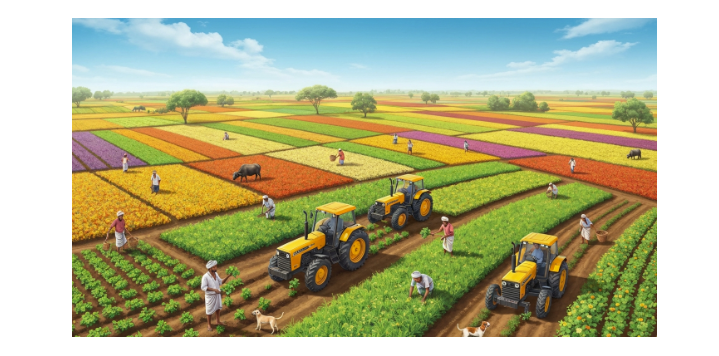
Key Highlights
- The Indian agriculture industry reached a size of INR 99,689.0 Billion in 2024. It is set to grow at a rate of 10.08% every year. By 2033, the market is expected to be INR 236,603.2 Billion.
- Agriculture is a big part of India’s economy. It gives 17 to 18% to the GDP and helps about 55% of the people in the country get work.
- Some top trends in indian agriculture are the use of precision agriculture. More people are also into organic farming and better ways to take care of the earth. A lot of digital tools and new ideas are now in use as well.
- The government helps by starting many special programs. They give money for better roads and buildings and make sure it is good to sell to other countries.
- A few big problems are climate change, loss of land, and trouble getting good market access for crops.
Introduction
Welcome to a closer look at Indian agriculture. This is the main part of the country’s economy and social life. For a long time, most people in India have made their living through farming. Now, we can see that the agriculture sector is changing in big ways. It mixes old farming practices with new ways to grow more food for the growing number of people. These changes do not only help get more crops. They also change how people see farmers in the 21st century. Indian agriculture is now both old and new and is important for the whole country.
Overview of the Agriculture Industry in India
The Indian agriculture area is big and has many different crops. This makes Indian agriculture very strong in food production around the world. India is the second biggest country when it comes to farming land. The people in India lead in growing many things, like milk, spices, rice, and wheat. The agricultural sector is not just important for food. It also helps many people in villages earn money and support their lives.
About 55% of people depend on the industry for their way to make money. So, its health affects the whole country. These days, many new farming practices are starting to be used. They help things run better and last longer, giving hope for a better time ahead. Now, let’s see how it started, what it has given to the economy, and what makes it special.
Historical Evolution and Milestones
Since India became free, the farming sector in the country has changed a lot. At first, the main goal was to have enough food for everyone. This was done with several strong changes in farming that helped raise crop yields by a lot. These steps helped India continue to move forward with better ways for food production and the farming sector.
In the last ten years, agricultural output in India has gone up by 40%. This is a big increase. India has changed a lot during this time. The country used to not have enough food, but now it can even send extra food to other places. This high growth rate shows the hard work of the farmers. It also shows the good planning by the government of india. The government has started many steps that help improve agricultural productivity.
Agriculture is very important for the economy. This sector helps make sure there is enough food for the people. It also adds a lot to the country’s money. Many industries use the things that come from farms as raw materials. Because of all this, agriculture plays a key role in India’s growth and development.
Key Features Defining Indian Agriculture
Indian agriculture is known for having many types of crops. The country has different weather and land in each part. This helps farmers grow many things. India is a global leader in farm output and gives food security to the people. There is a lot of raw material in Indian agriculture. This supply helps to keep the food processing industry strong.
One important thing about this is that it uses both old ways and new science. Many farmers in rural areas still follow the path their families have used for years. But now, more farmers are trying out new ways to do better crop management. They are starting to use smart irrigation systems and take good care of soil health. These changes help make farming last longer and be better for the people and the land.
Here are some of the most common crops that help shape India’s farm output:
- Staple Grains: Rice, wheat, and maize are key to the nation’s food supply.
- Cash Crops: Sugarcane, cotton, and tea help the economy in a big way.
- Spices: India is one of the top producers and sellers of spices like turmeric and chili.
- Pulses: A lot of lentils and beans are grown all over the country.
Contribution to National Economy and GDP
The farming sector plays a big role in the Indian economy. It adds a steady and strong share to India’s Gross Domestic Product (GDP). The farming sector brings in about 17.8% of the country’s Gross Value Added (GVA). This shows how important it is for the whole economy. The steady growth from the farming sector helps support development in rural areas.
Other than the numbers, this sector does more than just drive us economically. It is where most jobs come from. About 55% of people depend on farming for their income. It helps indian farmers and their families. Because of this, what farms produce is important not just for the economy. It also matters for how people live, since it touches most citizens’ lives.
Government helps farmers with many support programs and a national mission. These steps improve the agricultural sector and help the country’s economy grow. The help makes sure farmers earn better and get more crops from their farms. This helps villages stay strong, and many people can get out of poverty. A strong and growing agricultural sector is important for development that includes everyone in the country.
Market Size and Share Analysis
The Indian agricultural sector is very big. It is important for India and the world. People value it at trillions of rupees. This shows how large it is. The sector is strong because there is a lot of output each year. Many people want different kinds of food. When we know its value today, we see how important this sector is to the economy.
Looking at the market share shows that there be many changes happening, and different parts of the industry help it grow. People use both old ways of farming and new agri-tech methods. Each way helps decide where the industry will go next. Now, we will check what the total value is right now, how much it has grown lately, and where crop yields are found in different places.
Current Valuation of the Sector
The Indian agriculture industry is very large and is important for the country’s economy. In 2024, the whole sector was valued at INR 99,689.0 Billion. This number shows the strong role of indian agriculture, that keeps growing because the demand is high and farms now make more than before.
This number shows more than a single value. It stands for a lively and growing market. The steady growth rate comes from several things, like more people, higher incomes, and more care for food security. People talk about this number in lakh crore, which points to the huge money system built around farming.
Here is a fast look at the market right now:
| Attribute | Value |
|---|---|
| Base Year | 2024 |
| Market Size | INR 99,689.0 Billion |
This value gives a good starting point for the hopeful future estimates of the sector.
Recent Growth Patterns and Segments
India’s agriculture industry has seen fast growth in the past few years. A big reason for this is that more people want food as the population grows and incomes go up. This has led to a steady and strong growth rate in food production. People now look for many new and healthy food choices. This is helping the industry grow even more.
Farmers are starting to try crop diversification to meet new needs. The people now grow more than just the usual crops. Many are switching to things like high-value crops, garden plants, and special kinds of products. This change helps farmers get better money from their work, and it also makes the food supply chain stronger. With crop diversification, there is more variety in what people eat.
There be a big shift towards using sustainable practices now. Many people, farms, and companies choose organic farming more, focus on better water management, and use ways to save resources. This helps the environment and brings good change. Because of these steps, there is more demand for organic and eco-friendly products. So, the sector get a boost and continue to grow with new market opportunities.
Regional Distribution of Agricultural Output
Agricultural output is not the same across India. It changes a lot from one region to another. Every area has its own strong points. The country has different weather and soil in different places, so some states be better at growing certain crops. This helps show the crop yields of each region.
Some states are famous for how much they grow. Punjab and Uttar Pradesh stand out. They are called the breadbaskets of the country because they produce a lot of wheat and rice.
Other areas are known for their own types of crops. For example, states in the south are known for being first in growing spices. Western states do the most with cotton. The amount they produce is counted in millions of metric tonnes. This shows just how big the fields and the work are in these places.
Here are some regional highlights that show this diversity:
- West Bengal and Uttar Pradesh: These states are top places where a lot of rice and sugarcane grow.
- Tamil Nadu: tamil nadu has big plans for selling fish and seafood to other countries, and wants to earn US$ 5 billion from it.
- Madhya Pradesh: This state is known for growing a lot of pulses and oilseeds.
- Maharashtra: A main state for fruits, especially grapes and pomegranates, as it leads in horticulture.
Major Trends Shaping Indian Agriculture in 2024
In 2024, the indian agriculture sector is seeing big changes. A set of strong trends is helping people grow more food and protect the land. Technology leads the way in this. New ideas and tools are making farming better, faster, and smarter. These trends do not only impact how crops be grown. They also change the way food is made ready and sold to people.
The way of growing and selling crops in agriculture sector is not the same as it used to be. Now, everything moves faster and it works better for all involved.
The way people farm is changing quickly. This is because of new data tools and a push for eco-friendly ways of doing things. Now, let’s look at some key changes. Many are starting to use precision agriculture. There is also a move toward more sustainable farming. A big digital shift is happening across rural India. These changes will have a big effect on how and why we grow food.
Adoption of Precision Farming Techniques
One big change in indian agriculture is more farmers are starting to use precision farming. This way of farming uses data and technology to help farmers do their work more carefully and with control. With precision farming, farmers do not just add water and fertilizers everywhere in the field. Instead, they can put them only in those parts where they are needed the most. This helps make sure farmers use the right amount of resources and do not waste any.
Technologies like artificial intelligence and machine learning are now leading this change. They use data from things like drones and sensors to help people get important information. For example, these sensors can check soil moisture all the time. This means farmers can use water in a better way because the system makes irrigation easier and saves water.
GPS-guided machines, drones for watching crops, and automated tools are now common in Indian farms. These are not just ideas about the future. Farmers are using them today. This change to precision farming helps farmers get more from their land. They use less money to grow crops. It also helps the land and the air stay healthy. This is a new time for farming in India.
Rise of Sustainable and Organic Farming
A big change in Indian agriculture is the way more farmers now use sustainable and organic farming. People are now more aware of health and care more about the environment. That is why more people want food that does not use synthetic chemicals. This means the change is not just about the market. It is about making a real effort to protect our natural resources.
More and more farmers now use ways that help soil health and add to biodiversity. Natural farming means not using any synthetic products. This kind of farming is growing fast because the government is giving strong support. There are efforts, like the National Mission on Natural Farming, that urge farmers to move to these methods. It lowers the environmental impact of farming and helps the land stay productive over time.
The benefits of this shift are numerous:
- Improved Soil Health: Using organic ways helps the soil get better. It builds up soil health with time.
- Water Conservation: Ways that are good for the earth save more water. They help us use water better.
- Reduced Pollution: When you stop using strong sprays and chemicals, you keep our air and water clean. It helps save animals and plants too.
- Higher-Value Produce: Food with the organic label is sold at a greater price. Many people want these organic products in the store.
Digital Transformation in Rural Agriculture
The digital revolution is not just happening in big cities now. It is reaching rural areas, too, and bringing change to farming. A digital public infrastructure for agriculture is being built. This is helping create a network where people can share and get information with ease. With more technology adoption, farmers now have tools and knowledge that they did not have before. This is helping them in many ways.
Mobile apps now play a big role for farmers. They give the latest news on weather, market prices, and advice on crop management. Farmers can also check for pests with these apps. Platforms like the e-NAM (National Agriculture Market) let farmers talk right to buyers in the country. This helps everyone see prices better and makes things clear for all.
This digital change is helping to fill the gap in information. It also helps people make better choices on the farm. With digital lists and advice, farmers can plan what they grow in a better way. They can get credit with more ease and follow best ways to get the most from their fields. All this can help them earn more and change the way people see farming in villages.
Top Agricultural Subsectors in India
The Indian agricultural sector has many different parts. Each part helps the country’s food supply and its money matters in its own way. Growing main crops is the base of it all. But livestock, growing fruits and plants, and fishing are also becoming important now. These areas are changing how people farm and are opening new doors for everyone to grow.
These parts are important for a healthy farming economy. They give people important proteins and nutrients. They also give raw goods to make other foods. Let’s look at some top areas like crop farming, the livestock and dairy segment, plus new things happening in plant farming and fish farming.
Crop Production and Leading Varieties
Crop production is the main part of Indian agriculture. India is a global leader in growing many types of crops. Growing main grains like rice and wheat is very important for food security in the country. India is also the second-biggest producer of both rice and wheat in the world. These grains are in the daily diet of millions of people.
Along with growing basic crops, India is very good at growing many cash and specialty crops. The country is the leading producer of spices, sugarcane, and cotton. These crops are important for the economy and exports. Crop diversification helps farmers reduce risks. It also lets them meet the many needs of both local and global markets.
Here are some of the top crops that show how strong India’s production is:
- Rice & Wheat: These are must-have food grains. There is a lot of rice and wheat made every year.
- Sugarcane & Cotton: These crops are very important for business. People grow them to make money.
- Fruits & Vegetables: India grows a lot of fruits and vegetables. It is the second-biggest grower in the world.
- Spices: India sells a lot of spices. It is the top country for turmeric, chili, and cardamom in the world.
- Pulses: Pulses are a huge source of protein. A lot of people in India eat them because many people do not eat meat.
Livestock, Poultry, and Dairy Segment
The livestock, poultry, and dairy part is very important and is growing fast in India’s farming economy. It gives people food that is high in protein. It also helps create jobs in villages and brings in more money for farmers. India is the largest producer of milk in the world, showing how big and important its dairy part is.
The country has the world’s biggest group of cattle. This helps both the dairy and meat industries. The poultry area has also grown a lot because of the higher food demand for eggs and chicken meat, especially in cities. This growth helps give good nutrition to more people as the population keeps going up.
This part is important for the lives of many small and marginal farmers. These people take care of animals along with growing crops. There is always a need for dairy and poultry products. This helps farmers get a steady income. Because of this, this area be a strong base for India’s food security and the rural economy.
Horticulture and Aquaculture Developments
Horticulture and aquaculture are the two fastest-growing parts of indian agriculture. Horticulture covers fruits, vegetables, and flowers. It has seen a lot of progress over the years. In 2013-14, the total output was 280.70 million tonnes. By 2024-25, this number went up to 367.72 million tonnes. This big rise is mainly because more people want fresh and different types of food.
In the same way, fish farming has grown a lot in the last few years. Now, India is the second biggest country to produce farmed fish. This helps with the country’s food needs and also creates jobs for people who live near the coast and rivers. The growth of fish farming also means there is more fish for people in India and for sending to other countries.
These changes show good results in crop diversification. Farmers are not just growing regular grains now. They are trying other crops that can make more money in the market. The government wants to help too. There are plans by the government to develop new infrastructure and help farmers use technology adoption. This will help these sectors grow even more in the future.
Leading Agricultural Companies in India
In India, the farming world is made up of many different kinds of companies. There are old, big firms and also new, active ones. These groups help push new ideas. They also work to make agricultural productivity better and link farmers with the market. The companies do a lot of things, like provide seeds, sell fertilizers, and handle food processing right up to retail stores.
Along with big companies, there is a lively group of new startups using technology to change the sector. In the next parts, we will talk about some of the big agribusiness companies. We will also point out startups that are making new changes. Plus, we will talk about how important farmer cooperatives are.
Large Agribusiness Corporations
Several big companies in the agriculture sector have an important part to play in India. These businesses bring money, new ideas, and tools to improve farming practices. This helps to make farming better and makes supply chains stronger as well. They work by giving out good farm inputs and by buying what farmers grow for the global market.
These companies take part in a lot of research and development. They bring in better seed varieties and ways to protect crops. Many of them are also important in the food processing sector. They add value to raw agricultural produce and make food products for the people in India and outside the country. Their work helps move indian agriculture into the world economy.
Some of the top agribusiness companies working in India are:
- DuPont India
- Rallis India Limited (a Tata company)
- Godrej Agrovet Limited
- Nestle India Limited
- Britannia Industries Limited
Innovative Startups Transforming Farming
Beyond the big companies, a fresh group of new startups is changing indian agriculture. These agri-tech businesses use the latest technology to tackle the biggest problems in farming. They help make farming smarter, better for the land, and give farmers a chance to earn more.
These startups use tools like artificial intelligence and machine learning to help farmers. They give advice on precision farming, predict pest problems and diseases, and connect farmers to buyers. The startups look at a lot of data to share tips that help farmers use less and get more from what they have. This helps to make more crops. The government is also giving money and helping grow these services.
Here are a few ways startups are making an impact:
- Precision Agriculture: Using sensors and drones to watch over crops closely.
- Supply Chain Efficiency: Making platforms such as Ninjacart that help farmers sell to stores right away.
- Data Analytics: With AI, farms can predict what crops will grow and make their work better.
Key Cooperatives and Farmer Groups
Cooperatives and farmer groups are very important for indian agriculture. These groups let many indian farmers, big and small, work together. When they do this, they can gather their power. They can get better prices and buy things as a team. This also helps them get tools and seeds they need. With the help of these groups, indian farmers can make sure everyone gets a fair share of the good things that come from growing more food. These groups help to bring more good changes not just for some, but for all.
Well-known cooperatives like the Indian Farmers Fertiliser Cooperative (IFFCO) play a big role in the fertilizer market. They make sure indian farmers get cheap and fast supplies when they need them. There are other groups that work in dairy, sugar, and credit fields. They help indian farmers get the important services that can be hard for a single person to get alone.
These farmer groups help with the selling of agricultural produce. They often get better prices than if a farmer tried to sell alone. By bringing farmers together in strong groups, these groups make the market better for everyone. A strong team helps fields and farms do well and be ready for changes. These institutions play an important role in supporting people and the way the agricultural industry works.
Key Investment Opportunities in the Sector
India’s agriculture sector has many chances for investment right now. Modern tools and new ways of working are coming fast to the market. Many people want more food and better products. The government wants to change how farming works, too. Because of this, new ways to invest are now open. Investors can look at several areas. These include high-tech farming tools and machines and ways to make farm products even better through processing.
If you want to get into technology, infrastructure, or global trade, you can find many good options for smart investments. In the next parts, you will read about great choices like agri-tech and new technology tools, food processing and ways to add more value, plus businesses that focus on exports.
Agri-Tech and Technology Solutions
One of the most interesting areas in indian agriculture right now is agri-tech. The smart agriculture market in India is set to grow quickly. This is because more people want efficiency and sustainability in farming. Putting your money in technology for farming can give you good returns. It also helps farmers with important problems they face.
There are many chances to work in fields that use artificial intelligence, the internet of things, and data analytics. For example, machines and tools that check soil health, help with water usage, and give up-to-date advice for growing crops are wanted by many. These new tools help farmers get more out of their land and take better care of the earth.
The government is working to build a new digital system in farming. There is also a blended capital fund for startups now. These things make it a good time for people to put money into agri-tech.
Many companies offer services like drones to spray crops or sensors for checking soil. There are also tools for farm management. As the field changes and grows, these companies can get bigger and do well.
Food Processing and Value Addition
The food processing industry in India has a huge chance for investment. Right now, only a small part of the country’s agricultural produce is changed into processed food. This shows there can be much more growth in the area. When people have more money and their way of life shifts, they ask for more processed food. This makes the market good for people who want to invest.
The government is working to get more investment in this area. It has started programs like the Pradhan Mantri Kisan SAMPADA Yojana (PMKSY) and the Production Linked Incentive (PLI) scheme. These plans give money help for building new places to work and make supply chains better. The goal is to help get food from the farm to your table in a smoother way.
Key investment areas in food processing include:
- Cold Storage and Warehousing: This is important to help lower post-harvest losses.
- Mega Food Parks: These give full processing places, right from the beginning to the end.
- Value-Added Products: This is about making ready-to-eat meals, juices, and snacks.
- Packaging and Logistics: This area works on new ways to store and move processed food.
Export-Oriented Ventures and Niches
India has a wide range of farm products. This helps the country have a good place in the global market. The growth in this area brings new chances for people to put money in export-focused businesses. The government wants to double farm exports to US$ 100 billion. A steady and helpful export policy will support this goal.
Investors can look at areas in the global market that many people want. Things such as organic foods, spices, marine products, and Basmati rice are liked by many buyers around the world. Starting businesses that offer these items to people outside the country can make good money. The Food Products Export Development Authority helps and offers advice to those who want to export these processed food products.
Investing in better infrastructure is important. This includes setting up new processing units, good quality testing labs, and certified supply chains. If you focus on quality and find niche markets, you can run a good export business. This will also help India get a bigger place in the world market.
Export Landscape of Indian Agriculture
India’s agricultural exports have seen strong growth over the past few years. The country is now a key player in the global food market, with the value of its agricultural products exports at the highest point ever. There is a high demand for different types of agricultural products from India. This shows that the sector is now more competitive and that its products are of good quality.
The range of products that India sells to other countries is getting wider. India is now sending goods to more places around the world. Let’s look at the main things India exports, the important countries that buy from us, and the trends we can see in the amount and the value of these exports.
Major Agricultural Products Exported
India’s export basket has many products. It includes traditional staples, high-value cash crops, and processed goods. The country has used its strong production ability to be a top exporter in several key agricultural products. Rice is one of the top earners. Both Basmati and non-Basmati rice are important. India is the second largest producer of rice in the world.
India does more than just grow grains. The country is also known for its strong exports in other areas. India’s spices are famous all over the world. It exports a lot of sugar, buffalo meat, and sea food too.
In the past few years, there has been a rise in the export of organic products and processed foods. This helps meet new trends and what people around the globe want now.
Here are some of the main agricultural products that India sends to other countries in its export portfolio.
- Rice (Basmati & Non-Basmati): The amount is US$ 11.29 billion in FY25.
- Marine Products: This is US$ 6.73 billion in FY25.
- Spices: The value stands at US$ 3.79 billion in FY25.
- Buffalo Meat: That comes to US$ 3.69 billion in FY25.
- Sugar: The number is US$ 1.86 billion in FY25.
Export Destinations and Partnerships
India’s agricultural products are sent to markets all around the world. They are known well in Asia and the Middle East. Now, these products are also getting noticed in Europe and North America. From New Delhi, there is a push to build trade ties with more countries. There is also work to look for new export places. This helps make sure India’s agricultural products reach many markets.
Some of the main countries that buy Indian farm goods are Bangladesh, Saudi Arabia, Iran, Nepal, and Vietnam. These places take in a lot of Indian cereals, meat, and spices. The government is always trying to make new trade deals and grow this list of export partners.
India has lately achieved a key goal through the Free Trade Agreement with the UK. This deal gives duty-free access to a big part of India’s farm goods. These types of trade ties are very useful for growing India’s reach in the global market. They can also help to lift exports by more than 20% over the next few years. This will get India closer to its bold export goals.
Trends in Export Volumes and Value
India’s agricultural exports have been growing strong every year. The amount and value of what the country sells have both gone up. In FY23, these exports hit a new high of US$ 53.1 billion. This shows that the sector is doing well around the world. The rise comes from more production, better quality, and smart government steps.
The export numbers go up because many people want the main goods and there are also more deliveries of advanced and handled items. The Food Products Export Development Authority and Processed Food Products Export Development Authority both help with this by backing several kinds of items. They help sellers follow global rules so the goods can be sent out.
Looking ahead, this trend will keep going. The government wants to reach US$ 100 billion in agricultural exports. To do this, the focus will be on making supply chains stronger, building new infrastructure, and selling more valuable products. This steady growth in export amount and value shows the sector is now more competitive around the world.
Government Policies and Initiatives Supporting Agriculture
The Indian government puts a big focus on farming in its plans and actions. It has started many government initiatives for farmers. These government initiatives help with important problems like income instability, need for better water use, market access, and technology adoption. The Indian government shows how serious it is through large budgets and major programs. All of these steps aim to help farmers and improve the way farming works in the country.
These policies work to build a strong space for farmers. They help them do well and make the agricultural sector grow in a steady way. In the next parts, we will talk about the top plans, big projects to build infrastructure, and what is done in research and education.
Flagship Schemes and Subsidies
The government of India has started many big plans to help farmers feel secure and earn more. These programs give farmers money directly. They also help farmers deal with risks and let them use important resources. The support includes help with getting things like fertilizers and money on good terms. These subsidies are an important part of how the government helps.
One of the well-known schemes is the Pradhan Mantri Fasal Bima Yojana. It gives crop insurance to protect farmers from the loss when there are natural disasters. Another scheme is PM-KISAN. It gives direct money support to families of farmers. Both of these help to keep money matters steady for many people.
Here are some of the main government schemes that help the people who work in farming:
- PM-KISAN: Gives farmers ₹6,000 every year as direct help with their income.
- Pradhan Mantri Fasal Bima Yojana (PMFBY): Helps farmers with insurance in case their crops fail.
- Pradhan Mantri Krishi Sinchai Yojana (PMKSY): Aims to bring irrigation to more land for better farming.
- National Mission on Natural Farming: Works to spread chemical-free and sustainable agriculture as a way to farm better.
Infrastructure Development for Rural Growth
The government knows how important strong infrastructure is for the agricultural sector. That is why they are putting a lot of money into making rural areas better. A big step they are taking is the Agriculture Infrastructure Fund. This fund gives money to help build good places to keep crops after harvest and to support tools or spaces used by groups of farmers in rural areas.
This fund helps build things like warehouses, cold storage units, and processing centers. These places are important to cut down waste and help farmers earn more. Another big goal is to make irrigation facilities better. There are plans like the Pradhan Mantri Krishi Sinchai Yojana, which wants to bring water to every farm with the idea of ‘Per Drop More Crop’.
These investments are changing life in rural India. The government is making it better by giving people more places to store food, better ways to get around, and easier ways to get water. All of this helps farmers do their jobs well. It also helps the economy grow and gives more people jobs in these areas.
Research, Education, and Extension Services
Innovation in farming is pushed forward by deep research and sharing what is learned. The Indian Council of Agricultural Research is the top group in this field. It leads by working on the best research in making crops better, caring for animals, and using natural resources in a smart way. Its work helps make new ideas and strong crops that can deal with change. The Indian Council of Agricultural Research plays a big role in this area.
Research is useful only when it gets to the farmers. This is why extension services are important. There are 729 Krishi Vigyan Kendras (KVKs) set up in districts all over the country. These centers link the laboratory and the land. They show farmers new technologies and help them learn about the best ways of crop management.
The Department of Agriculture works with these groups to help farmers get the latest scientific updates. The main goal is to share new research, teach people, and offer support services. This is very important to make Indian agriculture more productive. It also helps keep farming strong over a long time.
Technological Innovations and Modernization
Technology is now a big part of indian agriculture. It is making farming practices better and smarter. Many new technological advancements are used in farms today. These tools help farms be more efficient. They also help with more crops and good soil care. Now, farmers use data and smart machines. This new way is changing the field with more growth and new ideas.
These new technologies help farmers to make better choices and solve old problems. Artificial Intelligence and Machine Learning help use resources in a better way and lead to higher crop yields. Now, let’s see how artificial intelligence, machines, and mobile platforms each play an important role in this new way of farming.
Role of Artificial Intelligence and IoT
Artificial intelligence and the internet of things are now playing a big role in indian agriculture. They help farmers move to a type of farming that uses data and facts instead of just guessing. With these tools, people can make better choices. This makes every part of farming work better.
IoT devices, like sensors in the field, can collect real-time data. This data can be about soil moisture, temperature, and nutrient levels. Machine learning looks at this information to give clear advice. For example, it can tell farmers when and how much to water their crops. This can help save water and keep the crops healthy.
AI now helps farmers guess crop yields, spot diseases early, and pick the right pest control steps. When using AI and IoT, people working on farms can get more done, spend less money, and keep their farms strong even when the weather is not stable or changes suddenly.
Mechanization and Smart Equipment
The move to use machines is an important part of modern agriculture in India. When people start to use machines instead of doing work by hand, it helps a lot. Machines do jobs like sowing, harvesting, and tilling faster. This saves time and money. It also helps when there are not enough people to do the work. Using machines is a key way for big farms to get more work done in less time.
Smart equipment is now making farming even better than before. Farmers today use GPS-guided tractors, automated irrigation systems, and drones in their fields. These tools help them use the right amount of water, seeds, and fertilizers. With the use of these new machines, people can get more crops from the land and waste less. This shows how much farming has changed with new technology.
The good things that come from using smart equipment in farming are easy to see:
- Enhanced Precision: This way, less seeds, fertilizers, and water get wasted.
- Improved Efficiency: Farm jobs can be done faster and need less work.
- Better Monitoring: Drones you use can show the crops from above. This helps to check if the plants are healthy.
- Increased Crop Productivity: When you use the best ways to farm, you can get more crops.
Mobile Apps and Advisory Platforms
In today’s connected world, mobile technology helps Indian farmers in many ways. There are now many mobile apps and advisory tools that give farmers a lot of helpful information. Even those living in rural areas can use these tools. With the help of mobile technology, farmers get the news and tips they need right in their hands. These digital options help fill the gap in know-how for farmers and are changing the way they run their farms.
These apps give users up-to-date info that fits the local area. Farmers get weather reports for each day, know what their crops are selling for now, and find expert advice to help with crop management. Some apps also use image recognition. A farmer can use their phone to take a photo and the app will help spot pests or diseases.
These advisory platforms give farmers important information when they need it. This helps them make better choices in their work. Mobile technology lets farmers pick the right seeds, know how much and which fertilizer to use, and decide the best time to sell what they grow. Because of this, farming is now easier to plan out and can bring in more money for them.
Most Commonly Produced Crops in India
India has many types of land used for farming. There are a lot of different crops grown in the farming sector across the country. People grow crops for eating and for selling. Because the climate and land are not the same in every area, farmers can grow many kinds of crops. This crop diversification is a big strength for farmers in India. It helps feed the country and also supports people around the world.
The production is led by a few main groups that play a big part in both food security and the economy. In the next parts, we will look at the most important staples such as rice and wheat. We will also talk about the main cash crops that help the business grow, and the special crops that show the strengths of different regions in India.
Staples: Rice, Wheat, and Maize
Staple grains are very important for food security in India. The country is a global leader when it comes to growing these grains. Rice and wheat are the two main food crops in India. A lot of people get most of their calories from them. India is the second-largest producer of rice and wheat in the world. There are large parts of land in India used for growing these crops.
Maize is an important crop. People eat it, and it is also used to feed animals. Over the years, farmers have grown more maize. This has happened because there are better types of maize now, and crop management has improved. Getting better harvests from these key crops is something the government and agricultural experts care about a lot.
Here’s why these staples are so important:
- Rice: This is the main food people eat in southern and eastern India.
- Wheat: Most people in northern and western India eat this grain.
- Maize: People use this crop for many things. It can be for food, animal feed, or in factories.
- Food Security: All of these things help the country feed its 1.4 billion people. This gives food security to everyone.
Cash Crops: Sugarcane, Cotton, and Tea
Staple crops help with food security in India. But cash crops are key to the country’s economy. In indian agriculture, these crops are grown mainly to sell, not just to feed families. Cash crops have a vital role because they help bring money into the country and support local industries. Sugarcane, cotton, and tea are three of the most important cash crops in India. They are grown widely and many people work in these fields.
India is one of the top places in the world for growing sugarcane. Sugarcane is the main thing needed to make sugar. The cotton industry is also very big and important in India. Cotton gives raw fiber to the huge textile sector. These two crops help run long supply chains. They make many jobs for people, from farming all the way to the factory.
Tea is one of the top exports. Indian tea types like Darjeeling and Assam are well known across the world. Growing these crops needs the farmer to put in money, time, and hard work. But they help farmers get better earnings. These crops are also very important for the country’s economy and trading with other nations.
Specialty Crops and Regional Highlights
India does not just grow staple and cash crops. It is also known for growing special types of crops. These specialty crops be grown in places that have the best weather and natural resources for them. Growing these crops brings good value to the farm industry, and is helpful for exports too.
Spices are a good example of crop diversification. India is known as the world’s spice bowl. The country produces and sells more turmeric, chili, cardamom, and many more spices than any other place. Pulses are also important. They give people much-needed protein. A lot of people in India eat these. This mix of different crops helps the farming system get stronger and stand up to problems.
Here are some key points about specialty crops in different areas:
- Spices: Kerala and Andhra Pradesh are two main places where people grow a lot of spices.
- Pulses: Madhya Pradesh and Rajasthan grow many types of lentils. They are big producers.
- Horticulture: Maharashtra and Karnataka are well known for growing fruits and vegetables.
Challenges Facing the Agriculture Industry
The indian agriculture industry has seen a lot of growth and covers a big area, but it still has many big problems. These problems can hurt how much farmers produce, what they earn, and how long the sector can last. It is important to deal with these issues so that the indian agriculture sector there can have a bright future.
There are many challenges today. Some are from changes in the climate. Others are about problems like getting into the market. These things are not simple, and they are all connected to each other. In the next parts, we will talk about some of the biggest problems. We will look at how bad weather can affect us, how having less resources makes it hard, land getting split up, and prices going up or down.
Climate Change and Weather Extremes
Climate change is one of the biggest risks for Indian agriculture today. The weather keeps changing, with strange rain patterns, long periods without rain, and more disasters happening than before. This makes farming harder and more about luck than skill. Bad weather can ruin crops and cause farmers of India to lose a lot of money.
The environmental impact can be seen in the country’s most important resources. Water is running low, and this is turning into a big problem. Because of this, people need to focus more on water management to make good use of what they have. Extreme weather can also cause soil to wash away or get worse, which makes soil health suffer in the long run. This cuts down how much good the land can do in the future.
Building farming that can stand up to bad weather is very important. We need to use farming practices that save water and help soil health. We also want to have less harm on the environment when we farm. It is important to adjust to climate change. This is how we can keep farming safe for India’s future.
Productivity and Resource Constraints
India is one of the top places for growing crops. Still, in many crops, farm productivity is less than what you see in other countries. Closing this gap is a big challenge. Food demand is going up because there are more people now. To make sure there is enough food for everyone in the future, it is important to improve how much food is grown. Food security will depend on solving this.
This problem gets harder because the country has very limited resources. Water is not easy to get in many places, and many people in the country use too much water for farming. This puts a lot of stress on this important need. Using water wisely is very important. There is also only so much good land for farming, and cities are getting bigger and taking it. These things put more pressure on resources like land and water.
These problems hit small and marginal farmers the most. They are the main group in the farming area, but many of them do not have enough money to buy tools that can help them work better. It is very important to help marginal farmers get more out of what they have. This is needed to help all parts of farming grow and be better for everyone.
Land Fragmentation and Urbanization
Land fragmentation has been a problem in Indian agriculture for a long time. Most farms in India are small, and these keep getting smaller as they are divided between family members over the years. Because the land is split up like this, it is hard for people to use modern machines or manage crops in the best way. This affects the way people work in indian agriculture and limits better crop management.
This problem gets worse because cities are growing fast. As cities get bigger, they often spread into the nearby rural areas. These rural areas have good land for farming. When cities take this land and use it for other things, there is less left for food production. This means there is even more pressure on the land we need to grow food.
To solve land fragmentation, there should be new ideas like land consolidation and supporting cooperative farming. At the same time, cities need to grow in a way that keeps the best farm land safe. This balanced approach helps development and food production work together. Handling both of these things well is important if we want farms to stay strong for many years.
Market Access and Price Fluctuations
Even when a farmer has a good harvest, there can still be problems. A big problem for many Indian farmers is getting their crops to the market and getting a fair price. Market access is often poor, especially for people in far-off places. Bad supply chains and not enough good storage mean that some of the produce can go to waste after harvest. This way, the farmers get paid less.
Farmers often face big changes in market prices. When they have a very good harvest, the price can drop a lot. But if the harvest is bad, prices for buyers can jump, and farmers still may not earn more from that. These price swings make it hard for the farmer to have a steady income or make plans for the future.
Key issues affecting market access include:
- Fragmented Supply Chains: There are many steps in the supply chains from farm to market. Because of this, farmers get less of the final price.
- Lack of Storage: There is not enough cold storage or warehouse space. A lot of food goes bad because of this.
- Information Asymmetry: Many farmers do not have up-to-date facts about market prices.
- Global Market Volatility: The changes in the global market can cause big changes in prices at home.
Future Market Forecast and Growth Projections
The future for Indian agriculture is good and full of hope. Right now, there is strong growth, and experts say this area will get much bigger in the next ten years. Technology, support from the government, and more people wanting farm products are some of the main reasons for this rise. Because of this growth, there will be many chances for everyone in indian agriculture.
In the coming years, the main goal will be to get steady and lasting growth. To do this, we need a clear plan that finds the right balance of making money and taking care of the environment. Let’s look at the market size we think we will see, what is making it grow, and the best steps to take going forward.
Expected Market Size by 2030
The future of India’s agriculture market looks very good. The industry is expected to grow at a strong growth rate in the next ten years. This steady rise will make the whole market bigger. It will also help keep agriculture as an important part of the Indian economy.
The market is expected to grow fast in the coming years. By 2033, it will likely be worth INR 236,603.2 Billion. This happens because there is a compound annual growth rate of 10.08% from 2025 to 2033. These figures show that the sector has a lot of potential and is set to keep growing.
Here’s a look at what is being expected for the future:
| Attribute | Value |
|---|---|
| Forecast Period | 2025-2033 |
| Market Forecast | INR 236,603.2 Billion |
| Growth Rate (CAGR) | 10.08% |
This expected growth shows that there will be chances for new ideas and money investment in the years to come.
Factors Influencing Future Growth
The future looks bright for Indian agriculture because of many big reasons. These reasons will help move the sector ahead. With these changes, farming in India can become more productive, better, and have less harm on the earth. Technology will play a key role. New government policies will also help. Markets are changing too. All these things together will shape how Indian agriculture and sustainable farming grow in the coming years.
Technological advancements will keep driving big changes. New ideas in AI, IoT, and mechanization help boost how fast we work and how much the crops yield. At the same time, strong and steady government initiatives will give the needed rules and money to help people move forward and grow.
Key things that will help growth in the future are:
- Technological Advancements: More people now use precision farming and agri-tech to make work easy.
- Government Initiatives: The government keeps bring out helpful new rules, gives out money, and puts money into buildings and roads.
- Sustainable Practices: There are now more people who want organic and eco-friendly things.
- Rising Food Demand: A lot more people have more money to spend, so they buy more food.
- Export Promotion: There is a strong plan now to get a bigger part of the global market.
Strategic Roadmap for Sustainable Expansion
To grow the right way, we need a clear plan. It is not only about growing, but about growing in a way that lasts. This helps farmers, consumers, and the environment. This national plan will bring together technology, policy, and the best ways of doing things.
A main part of this plan is to make the whole value chain stronger, from seeds on the farm to when the food gets to the customer. The goal is to make more use of post-harvest systems, like setting up cold chains and places that can handle processing. This is so there will be less waste and more value will be added to agricultural produce. The plan also supports crop diversification to help farming stay strong and help farmers earn more.
The main goal of this plan is to build a strong and modern agricultural sector. The aim is to make it more active and long-lasting. The roadmap looks to new ideas, better ways to earn for farmers, and care for the earth. When India puts these things first, it can work toward being a huge name in farming around the world. This will also help make sure the people who farm feel good about their work and life ahead.
Conclusion
To sum up, farming in India is a big part of the country’s economy and food security. Indian farmers have new tools, better technology, and are using more sustainable farming practices to boost agricultural productivity. This is important as they deal with issues like climate change. Government initiatives give support to improve things like irrigation systems and soil health. These efforts help make the future for farming strong. With more investment, new ideas, and these changes, India can meet its own food needs. The country can also become a global leader in agricultural exports.
Frequently Asked Questions
What are the latest trends impacting the Indian agriculture industry?
The indian agriculture sector is seeing changes. Farmers are starting to use more technology and new farming practices. People are interested in sustainable farming and organic farming. These methods are changing how crops are grown. The government is also helping to support modern ways of farming. Climate-smart farming is another practice that more people are trying. Because of these new ways, supply chains are starting to change, too.
Which companies lead the agriculture sector in India?
Several big companies lead the agriculture sector in India. These are Tata Chemicals, Mahindra Agri Solutions, and Bayer CropScience. They do well in coming up with new ideas and ways to help the environment. Their work helps the market grow and run better. They also make sure there are enough agricultural products for growing needs.
What are the top challenges for Indian farmers today?
Indian farmers deal with many problems today. The weather is not regular now because of climate change. The cost to grow crops is going up. Many farmers do not get the new technology they need. A lot of them find it hard to reach a market for their goods. On top of this, bad land and not having enough money make it tough for indian farmers to do well and keep going.
What is your opinion on agriculture in India?
The agriculture sector in India is very important for the economy. It gives jobs and food to many people in the country. The future looks good for this sector, with new technological advancements and help from the government. These changes may help to grow more crops in a better way. They can also help people deal with climate change and use resources wisely.
What is the present condition of agriculture in India?
The present state of agriculture in India has both problems and chances. Problems like climate change and not having enough resources still go on. But new technology and government initiatives are helping the sector grow in a better way. These things are making it possible to get more out of farms and let people work in agriculture for many years to come.
What is the future of agriculture in India, in the next 10 years?
The next ten years will see big changes in how people do agriculture in India. There will be more use of new technology, better ways to protect the earth, and ways to grow more food. Precision farming and stronger supply chains will help meet rising food needs. These also make sure that sustainable practices are in place to protect the planet.
How can I start an agriculture business in India?
To start an agriculture business in India, you should do market research first. Pick the crops or products that are best for your area. Get the licenses you need for your business and try to get funding as well. Remember, using sustainable practices can help your business grow. You should also set up a strong network to get your products to people. This will help you have more success in the long run.
Which agriculture is the most in India?
In India, rice and wheat are the main crops. A lot of people eat them every day. Other big crops in the country are pulses, sugarcane, and cotton. The different crops grown in the country help make food security strong. They also help many people get work and support their families.
What is an agriculture industry?
The agriculture industry is about growing crops and raising animals. It also includes businesses that work with farms. This area is important for India. It gives people jobs and adds a lot to the economy. The industry helps with food security and also supports ways to keep things working well for a long time.
How is India an agriculture-dominated country?
India’s economy depends a lot on farming. More than half of the people there work in this field. Farming also gives a big part of the GDP. Different weather helps grow many types of crops. This makes farming important for food security and growth in small towns. Because of this, India is strong in agriculture.




