
Key Highlights
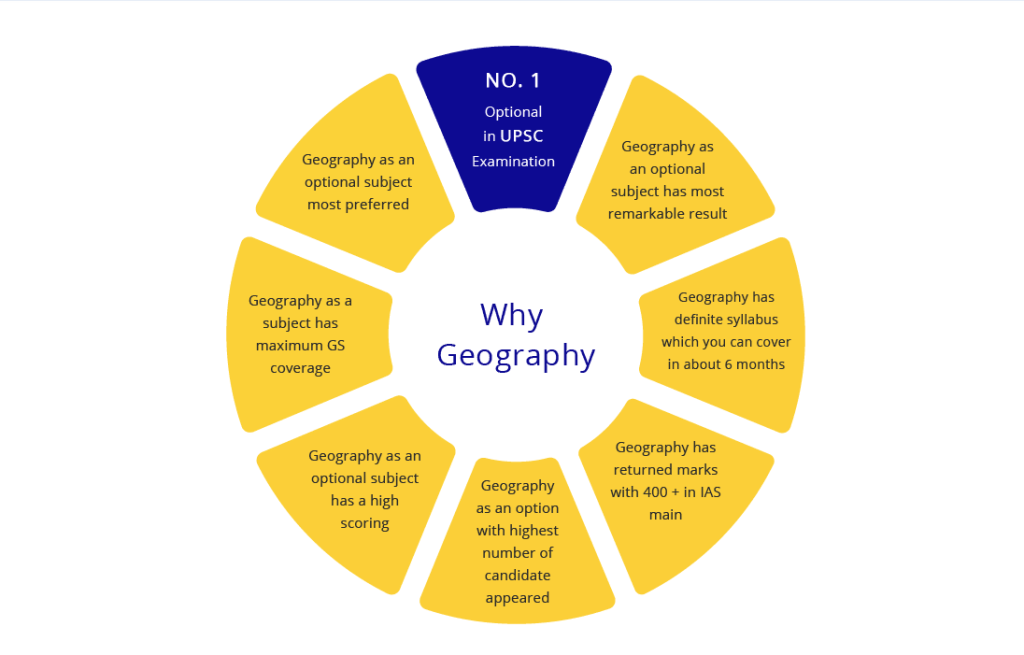
- Geography is an important subject in both UPSC Prelims and UPSC Mains. The marks for this subject are high, so it can help you get a good score.
- The UPSC geography syllabus is big. It covers physical geography, economic geography, Indian geography, and also geography of other countries in the world.
- A good way to start is by reading the NCERT books. After that, read other main books if you want to know more and really understand the topics.
- Good geography notes should be short and simple. Try to use diagrams. This will help you read fast and remember what you learned for both UPSC Prelims and UPSC Mains.
- Some important topics to read are physical geography ideas, Indian geography, and news about recent changes in the world’s maps and events.
- Practice writing answers using maps and diagrams. This is very important if you want to get more marks in the UPSC Mains exam.
Introduction
Welcome to your full guide for mastering UPSC geography! This subject is a key part of the UPSC exam. You will see it in the Prelims, Mains, and even when you take the interview. A good hold of geography helps you score more and sets you up to understand other topics, like environment, economics, and current affairs. If you want to clear the civil services exam, it is important to have a good plan to cover the wide geography syllabus. Let’s start to make a strong plan for your preparation.
Geography UPSC Syllabus Overview
The geography section in the UPSC syllabus covers many topics. It is a big part of the general studies paper in both the Prelims and Mains exams. The exam pattern asks you to know about the earth’s physical features. You also need to understand how societies and the environment interact with each other.
If you pick optional subject, you will find that the syllabus is split into two papers. Each paper has 250 marks. This shows how it can have a big impact on your final score. Here is a look at the syllabus for each part. This way, you can see what you need to work on more.
Structure of UPSC Geography Syllabus for Prelims
The geography syllabus for the UPSC Prelims is given as “Indian and World Geography – Physical, Social, Economic Geography of India and the World.” This one line includes many topics you have to know about. When you study, try to understand different geographical concepts in a simple way. Be sure to cover economic geography, world geography, geography of India, and the economic geography of India as part of your plan.
You need to read about the physical features of India. This includes the rivers, mountains, and the climate. You also have to study world geography because it is as important. You should know the continents, big land shapes, and weather zones across the world. The questions in the upsc prelims are straight or clear. They want to check what you know and how well you understand things.
A big part of the Prelims paper has map-related questions. You need to practice mapping often and keep up with important places that come up in the news. A solid foundation in Indian geography and world geography will help you feel ready and do well in this part of the exam.
Breakdown of Geography UPSC Syllabus for Mains
Geography is included in General Studies Paper I of the UPSC Mains. Many people also choose it as an optional subject. The syllabus for Mains asks for a deep understanding. You need to show you get different geographical concepts and how they connect with each other. The questions in General Studies are more detailed and need you to think in new ways compared to Prelims.
If you choose geography as your optional subject, you will get two papers in the syllabus. Paper 1 is about “Principles of Geography”. This means you study topics such as geomorphology, climatology, oceanography, and human geography. Paper 2 looks at the “Geography of India”. You read about India’s land, its resources, farming, and things happening right now in the country.
Success in the Mains exam relies on your answer writing. You need to write clear and well-structured answers. Include diagrams, maps, and add good examples when you can. Bring ideas from both papers together to improve your answers. This will help you get more marks.
Key Differences Between Prelims and Mains Geography Syllabus
Are you thinking if the way you study for UPSC Prelims and Mains in geography is not the same? Yes, it is not. There are many topics that you see in both the Prelims and Mains geography syllabus. But, the exam pattern and questions ask for a different way of study for each one. For UPSC Prelims, you need to know a wide range of facts because the paper has objective type questions.
The UPSC Mains is different because it needs you to show deep understanding and good thinking skills. You have to write long answers. A lot of the time, you will need to join different geographical concepts together. You should also support what you say with examples, maps, and pictures. A good way to prepare is to start with the Mains syllabus. This helps you build a strong base in the subject. A focus on upsc mains and practice with these geographical concepts will help you do well.
This way of learning helps you cover all parts of the syllabus. It also makes the Prelims preparation easy and faster. The table below shows the main differences.
| Aspect | UPSC Prelims | UPSC Mains |
|---|---|---|
| Nature of Questions | Objective (Multiple-Choice Questions) | Subjective (Descriptive Answers) |
| Focus | Factual knowledge, location-based questions, and broad conceptual understanding. | In-depth analysis, interlinking of concepts, and structured answer writing. |
| Skills Tested | Ability to recall facts and identify correct options quickly. | Analytical skills, critical thinking, and ability to present information coherently with maps/diagrams. |
| Syllabus Coverage | Wide coverage of Indian and World Geography with an emphasis on key facts and features. | Detailed study of physical, human, and Indian geography, including contemporary issues and theories. |
Essential Geography UPSC Notes for IAS Preparation
Having good geography notes helps you a lot during your UPSC preparation. The syllabus is big. Clear and short notes help you understand all the important topics. These notes help you build a solid foundation for the UPSC CSE.
These notes let you go over tough topics like physical, human, and Indian geography in less time. These subjects are important for both steps of the exam. With clear and easy-to-read materials from experts, you know you will get all the main points fast. Now, let’s see how to look for and use many kinds of geography notes when you study.
Quick Reference Geography Notes for UPSC Prelims
For the UPSC prelims, your geography notes need to be easy to read. Use them for quick checks and fast practice. The point is to bring together all main facts, words’ meanings, and places’ names in a simple way. There are many sites and coaching centers online. They give you clear notes on each topic for download. This way, you can prep better and faster.
These notes usually have bullet points, simple diagrams, and flowcharts to make hard ideas easy to get. All this is very helpful for keeping the things you read in your mind. If you are making notes for Prelims, look at the topics that appear a lot on the test. Doing this will let you go through the subject list with less stress. You do not have to read too much extra detail.
Make sure your notes for the Prelims include these key areas:
- Physical Geography: The main ideas in physical geography are geomorphology, climatology, and oceanography.
- Indian Geography: Learn about the big rivers, important mountain passes, climate types, and areas with different natural vegetation in India.
- World Geography: Know about large physical features, areas with certain climates, and main places where things are made in the world.
- Mapping: Find out about news locations, biosphere reserves, and national parks.
In-depth Geography UPSC Notes for Mains
When you get ready for the UPSC Mains, it is important that your geography notes go deeper and show that you really know the subject. The exam is not like Prelims. For the Mains, you have to write answers that are more detailed. This means your notes must help you understand each topic in a good way. You will find notes made for UPSC Mains answer writing at coaching institutes and other trusted places. These notes do a good job of covering every topic you need.
Your Mains notes should do more than give facts. They should also tell you why and how things happen in geography. Try to use your notes to see how different topics are linked. For example, connect physical geography with things like economic activities and environmental issues. If you know how to tie these ideas together, you will find it easier to write high-scoring answers.
Focus on making notes that help you break down answers in a clear way. Use these notes for your Mains practice and study.
- Detailed Concepts: Get clear explanations of ideas and models in both human and economic geography.
- Case Studies: Use examples and case studies to support what you want to say. This is very important in regional geography.
- Diagrams and Maps: Practice drawing neat and simple diagrams as well as maps. Make sure the labels are easy to read when you use them in your answers.
- Contemporary Issues: Take notes on new topics like climate change, more people living in cities, and disaster management.
How to Use Geography UPSC Notes Effectively
Just making or downloading geography notes will not be enough for UPSC preparation. You need to use them in a way that helps you get the most from them. The best way is to include your notes in your daily study routine. This works for both UPSC Mains and Prelims. Treat your notes as ongoing work that you keep adding to and improving as you learn more.
Start by using your notes to get a clear idea of the topic. A strong base helps you in the geography syllabus. After you know the topic, use your notes again when you review. It is important to go back over your notes often. This helps you remember more of what is in the geography syllabus.
Do not read your notes without thinking. Try to remember facts and ideas from your notes without looking. This way, you know what you really understand and what you need to read again.
Here are some tips to help you use your geography notes in the best way:
- Regular Revision: Go back to your notes often. This helps keep ideas clear and in your memory.
- Summarize Key Concepts: Make short notes or simple mind maps for hard topics. A one-page summary can be good.
- Practice with PYQs: Answer old exam questions by looking at your notes. This can help you know what may come.
- Incorporate Current Affairs: Add new details to your notes. Use things you read in newspapers and magazines.
- Use Visual Aids: Pay attention to images, flowcharts, and maps in your notes. These can help you remember things.
Most Important Topics in Geography for UPSC Exam
To make your UPSC geography study easier, be sure to know which topics are most important. You need to read the whole syllabus, but some areas come up more in the exam. Focus on these common topics. This will help you use your time better and get the most from your study.
upsc geography, important topics
Your study plan needs to focus on physical geography, the geography of India, and economic geography. Be sure to learn these key areas well. You will see that strong knowledge in these parts helps you answer most questions in the Prelims and Mains. Now, let’s look at some main ideas in each of these sections.
Physical Geography – Core Topics and Concepts
Physical geography is the base for all of your geography learning. It covers the reasons and patterns behind how the Earth’s natural world forms and changes. You need to be clear about these ideas. They are asked often in exams and are key for understanding many other parts of the syllabus.
You need to know about how the land changes over time, how the weather system works, and what makes the world’s oceans what they are. These ideas are not just about what you read in books. They also matter in real life and link to today’s news, like big storms or climate change.
Here are the main things you need to learn in physical geography:
- Geomorphology: Continental drift theory talks about how land moves across the world. Plate tectonics show the way earth’s plates shift. There are earthquakes and volcanic activity as the plates move.
- Climatology: You will find things like atmospheric circulation in the air. Air masses change and fronts form where they meet. Jet streams are fast-moving air high above that can control weather. Tropical cyclones bring strong winds and rain.
- Oceanography: Ocean currents move water all around. Tides cause the sea to rise and fall. Coral reefs can be found in warm seas and are full of life. Oceans have their own temperature and salinity levels that matter for all living things in them.
- Biogeography: Soils are made from many things and their soil profile shows their layers. Soil erosion happens when wind or water washes away dirt. Several factors influence where plants and animals get to live and grow.
Indian Geography – Landforms, Climate & Resources
Indian geography is important in the UPSC exam. many questions come from this topic in both Prelims and Mains. You need to study India’s different land types, weather, and natural resources. It is important to have a clear understanding of indian geography if you want to do well in the UPSC exam.
You need to learn about the main land parts of India. In the north, there are the Himalayas. In the south, there are the coastal plains. The indian monsoon is very important too. It affects how people farm, the economy, and daily life in the country. You should also know how things are spread out in India. This will help you answer questions about how India grows its businesses and deals with problems in nature.
Key parts of indian geography to look at are:
- Landforms: There are several land shapes in India. These include the Himalayas, the Western Ghats, the Eastern Ghats, the Deccan Plateau, and coastal plains.
- Drainage System: India has several big river systems. The Ganga, Brahmaputra, and Indus are important ones. There are also rivers in the peninsula.
- Climate: Indian monsoon is a big weather system. There are western disturbances too. Climate change is changing the country’s climate.
- Resources: Mineral resources are spread out across the land. There are water resources and different types of soils.
- Natural Vegetation: The country has many kinds of forests. Their distribution is not the same everywhere.
Human and Economic Geography – Crucial Areas
Human and economic geography looks at how people, places, and businesses are linked. This part of the course is always changing, and ties in with current affairs. That is why it is so important for good UPSC preparation. The subject helps you see how people live, work, and grow in different areas. You will get to know about settlement patterns, the kind of work people do, and how development happens.
Keywords: economic geography, current affairs, upsc preparation
You will need to read about the theories of how populations grow and where people live. You must also learn about ideas to help regional development, planning, and how areas change over time. Where industries are placed and how energy resources are spread out are big topics, too. All of these help us look at important problems the world and our country face.
There are some important things to talk about in human and economic geography.
- Population Geography: It looks at how the world’s people grow, how they spread out, why people move, and what kinds of people there are in each place.
- Settlement Geography: This is about types and patterns of where people live, in the country or city, and what problems come from having more people living in cities.
- Economic Geography: People study where world resources are and how they are divided. They learn what types of farming people do and how people trade goods across the world.
- Regional Development: Some places grow faster than others. There are imbalances between regions, and people work on how to fix these and talk about environmental issues when they plan.
- Contemporary Issues: Big problems today are environmental degradation, too many people, and how globalization changes the world.
Recommended Geography Books for UPSC Preparation
Choosing the right geography books is very important for your UPSC preparation. The NCERTs give you a solid foundation to start with. But you also need to read standard reference books. These books help you get a deeper understanding, which is needed for the UPSC Mains and when you choose geography as an optional subject.
Having the right mix of books can help you learn all parts of the syllabus. It also helps you build the way of thinking that you need for the exam. Let’s look at some books that the experts say are good for every part of your study plan.
Top Books for Geography Prelims
For the UPSC Prelims, you should pick geography books that help you build a clear understanding and cover all the main facts. It is good to start with NCERT textbooks as they use simple language to explain concepts. These books are important for your preparation at this stage.
Once you finish the NCERTs, start reading a few standard books to add to what you already know. A good atlas is also very important for Prelims preparation. The exam often has map-based questions. Be sure to look at the atlas often.
Here is a list of essential books for Prelims:
- NCERT Textbooks: For classes 6 to 12, focus on “Fundamentals of Physical Geography” and “India: Physical Environment” from class 11. These the books help you get the basics right, and you will find them very useful when you read about physical geography and human geography.
- Certificate Physical and Human Geography: This book is by Goh Cheng Leong. It will help you understand difficult ideas in physical geography in a simple the way.
- School Atlas: You can use either the Oxford Student Atlas or the Orient Blackswan School Atlas. They are great for map practice and important for the topics that come up in physical geography and human geography.
Most Useful Books for Geography Mains
For the UPSC Mains exam, you need books that give more details and cover many topics. At this stage, you must build a deep understanding to help with answer writing. NCERTs are useful, but you should read standard reference books too. These books help make your answers better.
These books talk about different ideas and facts in physical, human, and Indian geography. You get everything you need about the topic. If you read them, you will build the skills to answer big questions in the Mains paper. They help you understand indian geography in new and clear ways.
Here are some of the most useful books for Geography Mains:
- Geography of India: This book is by Majid Husain. It helps you get a clear overview of Indian geography.
- World Geography: Majid Husain wrote this book too. It gives you detailed knowledge of world geography and covers different regions.
- Physical Geography: This book is by Savindra Singh. You can use it to learn about geomorphology, climatology, and oceanography well.
- Human Geography: Majid Husain offers good information on topics like population, settlement, and economic geography in this book.
Expert Choices for Geography Optional
If you pick geography as your optional subject for the UPSC CSE, your reading list will be more focused. You need to read the main General Studies books first. On top of that, find books for the topics in your optional syllabus. These topics cover things like geographical thought and models.
These books give you the basic ideas and important points you need to do well in geography optional papers. They will help you write good answers that show you understand the topic well.
Here are some expert picks for the geography optional paper:
- Geographical Thought: This book, written by R.D. Dikshit, helps you see how ideas in geography have changed over time.
- Models and Theories in Geography: Majid Husain wrote this one, and it talks about all the key models and theories in geography.
- Settlement Geography: K. Siddhartha made this book, and it tells you about life and development in villages and cities.
- Physical Geography: Savindra Singh gave us this valuable book, which teaches about main ideas and lessons in physical geography.
Study Plan for Geography UPSC Aspirants
A good study plan helps you move through the upsc cse syllabus of geography with ease. If you do not have a clear plan, you might feel lost or find it hard to keep up. A proper system helps you read all the important topics on time and do it better.
Your study plan for UPSC geography needs to fit what you want and be easy to follow. It should break the geography syllabus into small, clear sections. Here are some good tips to help you make a plan that works for you. This is helpful if you are new or if you want to get better at your UPSC geography preparation.
Step-by-Step Strategy for Beginners
If you are new to UPSC preparation, you need to follow a clear plan. This will help you build a strong base in geography. Do not try to study everything at once. Begin with the simple parts. After you feel good about those, you can start looking at harder topics. At first, read about the syllabus and exam pattern that you find in the UPSC notification. This is the first step in your UPSC preparation.
Start studying with NCERT textbooks from class VI to class XII. These books use simple words, so you can understand the topics with ease. The books also help you clear your basic ideas about geography. While you read, make short notes in your own words. These notes will be useful when you need to revise later.
Here is a step-by-step strategy for beginners:
- Understand the Syllabus: Look at the geography syllabus for both Prelims and Mains. This helps you know what you need to study.
- Start with NCERTs: Begin with NCERT geography books. These are good for making a solid foundation.
- Move to Standard Books: Once you finish NCERTs, read books by Majid Husain and G.C. Leong. These help you go deeper into important topics.
- Analyze Previous Year Papers: Check old question papers. This lets you see which topics come up often and what the trend is.
Daily and Weekly Timetable for Geography Preparation
Making a daily and weekly timetable can be a good way to be more disciplined for upsc geography prep. A study plan helps you give enough time for each topic. It also makes sure you get through the whole syllabus and feel less stress at the end. Your timetable needs to be a mix of learning new topics, going over old ones, and practice.
Set aside some time each day for different things. For example, use the morning to read a new chapter. Try doing map practice in the afternoon. Use the evening to go over what you learned. Doing weekly revision is also important to help you remember better.
Here’s a sample structure for your timetable:
- Daily Study: Spend 2 to 3 hours each day on geography. Work on one topic at a time.
- Map Practice: Take 15 to 20 minutes every day to practice maps.
- Answer Writing: Each day, write one or two answers from last years’ papers.
- Weekly Revision: Use the weekend to review what you studied during the week.
Map Practice Techniques for UPSC Geography
Map practice is very important when you study for UPSC geography. In the Prelims, there are many questions that ask about maps. If you can draw neat and correct maps, it will help you get a better score in the Mains. So, you should add map practice to your routine every day.
When practicing, look at both political and physical maps. In indian geography, you need to know where states are. Find the major cities, rivers, mountains, and national parks on the map too. In world geography, spend time on continents and oceans. Try to find the important countries and the big geographical features.
Here are some good ways to practice maps:
- Daily Routine: Take at least 15 minutes each day to practice maps.
- Focus on News: Mark places on the map that are in the news right now.
- Use an Atlas: Often look at a good atlas to get to know many regions.
- Draw and Label: Try drawing and naming maps of India and the world from memory.
- Theme-based Maps: Make maps showing things like resource spread, weather zones, or places with certain plants.
Common Mistakes in UPSC Geography Preparation
Knowing what you should not do is just as important as knowing what you should do for your UPSC preparation. A lot of people make some common mistakes that can slow them down in UPSC geography. If you know about these problems, you can stay away from them. This will help you make your study time better and more useful.
These mistakes usually happen when you work with the syllabus, write notes, or practice answer writing. If you avoid these problems, you will save time and feel less stress. This will help you stay on the right track for the UPSC exam. Let’s look at some common errors and see how we can stay away from them.
Avoiding Overlap of Prelims and Mains Content
A lot of people make the mistake of studying for the UPSC Prelims and Mains geography syllabus as two separate things. They often do not see that there is a big connection between the two, so they end up doing the same work two times. The best way is to prepare for the upsc prelims and the geography syllabus at the same time. This helps you save time and do well in both.
Start your prep by looking mainly at the Mains syllabus. This way, you get a strong base and understand the ideas well, which is good for the Prelims too. When you feel sure about your basics, you can move on to learn facts and places you need to know for the Prelims.
Here’s how to manage the overlap effectively:
- Adopt an Integrated Approach: When you read, keep both Prelims and Mains in mind. This way, you cover what’s needed for both.
- Focus on Concepts First: Make sure you understand main ideas well. A strong base helps you at every step.
- Differentiate Your Notes: Write notes that give both key facts for Prelims and help with analysis for Mains.
- Practice Both Question Types: Do practice for both Prelims MCQs and Mains writing. Try both for each topic.
Errors in Note-making and Revision
Mistakes in making notes and going over them can cause big problems for your UPSC preparation. A lot of people write notes that are too long, and they end up making notes that are almost as same as the textbook. When you make geography notes, try to keep them short. Just include the most important points, ideas, and facts. This will help you look over them fast.
Not going over your work often enough can be a big problem. The Geography syllabus is large, and if you do not keep up with revision, you will forget a lot of it. If your plan for revision is not good, then all the effort that you put in might be lost.
Here are some common errors to avoid:
- Making Bulky Notes: Do not write long notes. Best to use bullet points, diagrams, and flowcharts when you study.
- Ignoring Revision: It is a big mistake if you do not have regular time set for revision.
- Passive Reading: If you just read your notes again and again, it does not help much. You should try to remember things and test your memory for better learning.
- Not Updating Notes: If you do not add current affairs or new information to your notes, your notes can be old and less useful.
Pitfalls in Answer Writing for Geography Papers
Answer writing is very important for the UPSC Mains. Many people find it hard to write good answers in the geography paper. A big problem is that some write answers that are too general and do not have enough detail or structure. You should make sure your answers are clear, well-organized, and show careful thinking. Try to give proper facts and examples to support what you write in your UPSC Mains answer writing.
Another mistake is not using maps and diagrams. In geography, these pictures and drawings help you show and explain ideas. They make your answers better. If you do not add them, you miss a chance to get more marks.
Avoid these pitfalls in your answer writing:
- Neglecting Structure: Some people write answers without an opening line, main points, and closing lines. A clear structure makes your answer better.
- Not Using Maps/Diagrams: In geography, answers feel incomplete if you don’t add maps or diagrams. These parts help people understand what you mean.
- Failing to Interlink Topics: Many do not link ideas that are part of different sections, like Paper 1 with Paper 2. Connecting topics can help your answer stand out.
- Ignoring Word Limits: If you write too much and go over the word limit, you can lose marks and waste time. Get used to writing within the set number of words.
Conclusion
To do well in geography for the UPSC exam, you need more than just remembering facts. It is important to understand the ideas, see how things are connected, and know how to use what you learn in the right way. A good plan for study, along with using the right notes and not making common mistakes, can help you feel more sure about your prep. Use many types of resources and read the suggested books. This will help make your learning deep. Getting ready for the UPSC exam is hard. But, with hard work and smart ways to study, you can do well in both the prelims and mains. If you want to feel better prepared, you can start with a free talk to help you make a study plan that fits you.
Frequently Asked Questions
Is there a difference between geography preparation for UPSC prelims and mains?
Yes, there is a big difference between the two. The UPSC Prelims checks your facts with simple, direct questions. The UPSC Mains needs you to give detailed answers and show your skills in answer writing. There may be some topics in the geography syllabus that feel the same for both stages, but the exam pattern is not the same. Mains is more about how well you think, explain, and write your thoughts.
Where can I find comprehensive topic-wise geography UPSC notes?
You can get detailed geography notes for every topic from well-known coaching institutes like Vajiram & Ravi. These notes are made by experts, and they help you cover the full UPSC syllabus for both Prelims and Mains. The notes often have diagrams and flowcharts. This makes them a great tool for your UPSC preparation.
What is the best strategy for preparing geography optional for UPSC?
The best way to prepare for geography optional is to read and know the optional syllabus well. Try to link ideas from Paper 1 and Paper 2 when you study. A good practice is to work on answer writing often. Make short notes and use maps and diagrams in your answers. For regional geography and topics like geographical thought, read standard books.




