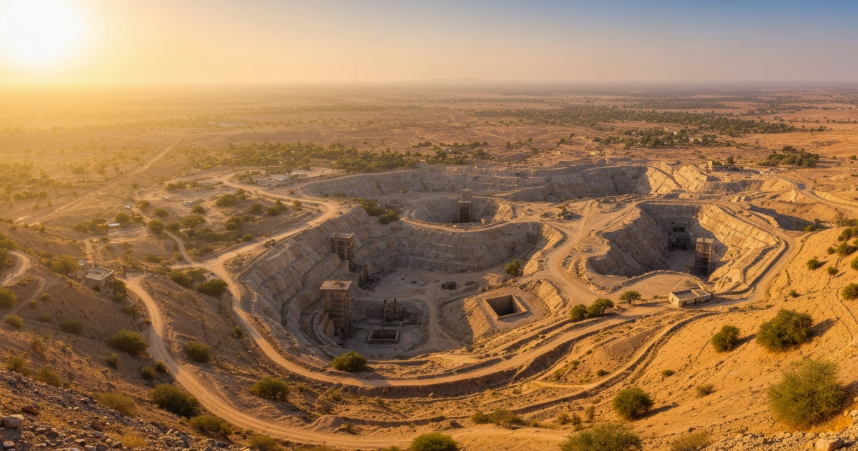
Key Highlights
Here are the main things to know from the story of the Kolar Gold Fields:
- The Kolar Gold Fields are in Karnataka. These gold fields have seen gold mining for over 2,000 years.
- The British firm John Taylor & Sons changed the way mining was done here in 1880. This made the KGF one of the most hard-working gold mines in the world.
- KGF in India was the first city to have electricity in 1902. This helped power its new mining activities.
- After the mines were brought under the government, Bharat Gold Mines Limited (BGML) ran the mines until they stopped work in 2001.
- The gold fields in Kolar now face some problems with the land and the economy. But the area could see new gold mining in the future from old mine tailings.
Introduction
Have you ever heard of a place in South India that people used to call “Little England”? Welcome to the Kolar Gold Fields (KGF). This is a mining town in Karnataka. The gold fields here have a story that shines as bright as the gold that came out of them. For more than a hundred years, the gold mines in KGF were known all over India. They were very deep and made a lot of gold. In this article, we look at the rich history of these gold mines, the technology that made them work, and the story they left behind. We will talk about the golden era of KGF, some problems they face now, and what could come next for this famous place.
Overview
The Kolar Gold Fields in the Kolar district of Karnataka have played a big part in India’s story of industry. Gold fields here are known for having a long past of mining activities. People have been digging here for gold for over two thousand years. This place started with simple digging and later became famous all over the world for its huge gold reserves. KGF grew to be a modern spot for deep mining, breaking several mining records. The kolar gold fields help people in India remember how important mining in Karnataka was and is.
This fascinating history shows more than just gold. It is about how a busy new town grew in a place that was empty before. The development of the Kolar gold mines helped bring electricity to the area. It also brought railways to Kolar. A special group of people from different cultures came together there. During its best years, it was known as a symbol of progress and wealth.
Even after the mines closed, the story of KGF still gets people interested. You can see signs of the good days the town once had, but now there are social, economic, and environmental problems. These things show us the full life cycle of a mining town like KGF.
What To Expect?
If you want to go to the Kolar Gold Fields, you will find a town trying to hold on to its rich past even as it faces hard times now. KGF is about 100 kilometers from Bengaluru and you can get there by road or train. When you reach Kolar, you will see the impact that years of mining operations have had on this place.
Gold production in this area has stopped, but you can still see old signs of the big industry here. For many tourists, the main things to see are not normal sights. Instead, they look at places and things that tell stories from the past. This place still has a special feel and shows what life was like when people in India rushed to get gold.
What you’ll find includes:
- There are old bungalows and clubs from the colonial times that show its “Little England” feel.
- The tall “cyanide hills” are big piles left over from mining.
- You can also see the normal look of the towns Robertsonpet and Andersonpet.
- There are remains of the mining parts that once put KGF on top in the world.
Tips
A visit to the Kolar Gold Fields mining area can feel different from other trips. You need to be ready before you go. This is not a usual place for travelers, so getting to some of the old mines may be hard. There are rules about where you can and cannot go. You must put your safety first when you are in the Kolar Gold Fields.
It is a good idea to hire local guides when you visit this mining area. They know the Kolar region well and can share a lot about its gold fields and mines. A guide can also help you get around easily and make sure you are safe. This will help you have a good time during your visit.
KGF is the main reason why many people come here. But you can also see other places nearby to make your trip feel more complete. The area near Kolar has many old temples and some nice spots out in nature that you will like. This way, you get to learn about the history of KGF and also enjoy the culture and beauty of the Kolar area.
Consider these tips for your visit:
- Always put safety first, especially when you are near old mining structures and tailing dumps.
- Wear comfortable shoes, because you will likely walk a lot.
- Bring your own water and snacks, since there may not be many places to get these things.
- Talk to the local community in a respectful way. This helps you learn about their history and how they live now.
What are Tailings?
You may hear about “tailings” or “cyanide hills” when people talk about Kolar Gold Fields. So, what do these terms mean? Tailings are waste left over after gold is taken out from ore in the gold fields at Kolar. They are made up of crushed rock, some water, and different chemicals like cyanide that are used to get gold during mining.
In KGF, the mining teams used cyanide to pull gold out from the ore. This process left behind tailings that have a lot of sodium cyanide and other chemicals in them, like copper sulphate. For more than 121 years, about 35 million tonnes of this stuff got made and heaped up in big piles. Some of these mounds are as high as 40 meters.
These tailings from KGF cause big problems for the environment. The chemicals in them, such as cyanide, can go into the ground and make the soil and water dirty. On windy days, dust from these dumps goes into the air. This leads to breathing issues and skin allergies for people living nearby. This problem with toxic tailings is one of the main things that KGF has to deal with now.
Origin of the city
The city of Kolar Gold Fields is here because of the gold mines under it. A long time ago, this place in the Kolar district of Karnataka did not have many people, and there was not much here. All that changed because there was gold under the ground. Some people have been mining gold at this place for many years. But the city became what we know now during the late 19th century, when the British started gold mining here in a big way. Now, Kolar Gold Fields is a busy town, known for its mining and the gold that made it famous.
The British company John Taylor & Sons started big mining activities in KGF in 1880. This changed everything in that area. When the gold mines needed many people to work, they built homes, hospitals, schools, and places to shop for these workers. These things helped make the place feel like a real town that could support itself. Robertsonpet and Andersonpet towns were made during this time. The need for mining made them bring railways and electricity there. All this helped KGF become an important city because of the gold mines and the work of john taylor and john taylor & sons.
Demographics
At its best, Kolar Gold Fields was full of life. There were around 30,000 miners, labourers, and their families living there. A lot of people in kolar did not want to do risky mining work at first. So, many workers came in from places close by, like tamil nadu. That is why tamil is often heard in KGF now.
The group that worked in the gold fields had large Anglo-Indian families and skilled miners from Europe. You could see many cultures mix in the kolar gold fields because of this.
Today, around 260,000 people still live in the Kolar Gold Fields. Life there be very different now. The mines closed, and with that, most jobs went away. A lot of people in the gold fields live in small homes in poor areas. Many have little water or power, and the problem with dirty living spaces makes things even harder.
The Kolar Gold Fields, which once gave jobs and hope to many, now face a lot of trouble with little work and money. A good number of the gold field inhabitants want a better life, so they travel to Bengaluru to find work as daily wage earners. The struggle for basic needs continues every day for most people in this old mining town.
Mine closures
The Kolar Gold Fields were very busy at one time, but they stopped working on February 28, 2001. The main reason for this closure was the cost. People had been mining gold in Kolar for over one hundred years. To get to the gold, they had to dig very deep—more than 3,000 meters down. Over time, the amount of gold found in each tonne of ore became much less. At the same time, high operational costs, like paying for electricity, made it too expensive to keep mining. Because of this, the people running these gold fields could no longer make a profit, so they had to close the mines.
Bharat Gold Mines Limited (BGML), a public company, was in charge of the gold mines from 1972. The company started losing a lot of money. Even though it had a long and successful past, the government found that it could not keep the business running anymore. So, they decided to stop its operations. After the closure, there was a large hole left in the towns’ social and economic life. Many people who worked in the gold mines and their families lost their jobs with no warning. The closure of gold mines limited hurt the local economy badly. Most of the town faced poverty, and many good buildings and roads quickly started falling apart.
Location and Overview of Kolar Gold Fields in Karnataka
The Kolar Gold Fields are in the Kolar district of Karnataka, in south India. This old mining town sits only about 100 kilometers east of Bengaluru, which is the capital of the state. The place is close enough for people to get to in a short time, so you can visit it over the weekend or just for one day.
For many years, this place was one of the top centers for gold mines in India. It gave a big part of the country’s gold each year. The spot of the mines helped them grow fast. The mines were close to the Cauvery Power Plant. This plant gave them the power they needed to do their work since the early 1900s.
Geographical Setting and Importance on the Map
When you search for Kolar Gold Fields on a map of Karnataka, you find it in the southeast area of the state. It sits near Andhra Pradesh and Tamil Nadu. This spot is good for many reasons. Lots of people came from other states to work in this gold fields mining area in Kolar. People from Karnataka, Tamil Nadu, and other places mixed here while working in the mining area.
The town was in the right spot for it to do well. It was only 100 km from Bengaluru, so it could get machinery and supplies easily. Moving the gold from here was simple too. The closeness to the Cauvery River was also big for them. It helped make power that they sent over 140 km to light up the mines back in 1902. This was a huge thing at the time.
Traveling to KGF from Bengaluru is easy. You can get there by road or by train. The town is big and covers a several square kilometers. You can still see the old charm of KGF in the way it is set up. There are colonial townships and large areas filled with mine tailings.
How to Visit Kolar Gold Fields – Accessibility and Nearby Attractions
Getting to Kolar Gold Fields is easy. The gold fields are close to Bengaluru. It is about 100 km away from Bengaluru. You can drive there in 2 to 3 hours by car. You can also take a train. Take the train to Bangarapet. Bangarapet is the nearest big railway junction. From Bangarapet, you just need a short ride to KGF.
The mines are the main thing that people come to see as tourists. But there are also other places to visit in the area. You can go around the Kolar district. It is known for old temples and quiet nature. This way, visitors can get to know both the story of kgf and the special culture of kolar.
For a well-rounded trip, consider visiting:
- Kotilingeshwara Temple is famous because there are millions of Shiva lingas. A lot of people come to see it in Kolar.
- Antara Gange is known for its temple. People go there for cave trips and enjoy being in nature.
- Someshwara Temple is a good example of Dravidian building style. You will find this in Kolar.
- There are hills and natural rocks all around Kolar. The area is good for people who like the outdoors.
Historical Significance of Kolar Gold Mine, Karnataka
The Kolar Gold Mine in Karnataka is very important in the history of India. It led the way in India’s industrial changes. For more than one hundred years, these gold mines helped most of the gold production in the country. The Kolar gold mines brought global attention to India because of the deep and advanced mining activities there. These mines did more than just give wealth to the country. Kolar was also a place for new mining technology and hard work in gold production.
KGF is the first city in India to have electric power. It also has one of the world’s deepest mines. The story of KGF shows the rise of big mining in the area. It shows how colonial rule was complex and how it changed life for people there. KGF is now an important place in Karnataka’s history because of this. The city is a big part of mining in India.
Early Beginnings and Ancient Exploitation
The story of gold mining in Kolar started a long time before the British came. In fact, it goes back many years. Old records and things found by digging in the ground show that mining was happening here as early as the 5th century. Rulers from the Western Ganga Dynasty and later the Chola empire were known to get gold out of Kolar’s land.
The early miners did not have advanced tools. They dug shallow pits to find gold. To break rocks, they would first heat them with fire. Then, they poured water on the hot rocks. This made the rocks crack, so it was easier for them to take out the gold quartz.
These old ways were not like the big factories that came later. But, they showed that the area had a lot of gold under the ground. The people of kolar worked hard for many years to find gold. Their work and stories made others want to come to this place. In time, these stories pulled in people who searched for gold. Later, a british company came and changed kolar for good.
British Influence and Industrial Development
The colonial period was a big change for Kolar. In 1880, the British firm John Taylor & Sons took over the mining operations. They began an era of industrial growth in KGF. John Taylor & Sons brought in new machinery, better mining techniques, and good management. This changed KGF into one of the top mining centers in the world. With their control, the mining work in Kolar used to be very good and, for some time, it held the record for being one of the deepest mines in the world.
This development had a pivotal role in shaping Karnataka’s past. The British built a small England in KGF. They set up bungalows, clubs, and hospitals that looked like the ones found in Europe. A lot of the wealth from the mines was sent to England. But some of it also helped to build important things in the area.
After independence, the gold mines became national property in 1956. Later on, Bharat Gold Mines Limited (BGML) took charge and started to manage them in 1972. But, it was during the British time that the gold mines, modern mining work, and the special feel of the township came to be. This unique culture that you see now goes back to when the british were in control.
Gold Mining Techniques at Kolar Gold Fields
The gold mining at Kolar Gold Fields changed a lot over time. When people first started at these gold fields, they used basic ways from old times. Things were very simple then. But when the British came to Kolar, everything changed. The British made mining faster by bringing in machines. People started to use tools and big machines, not just their hands. This switch from slow manual work to machine mining is an important part of the KGF story.
The journey of gold mining in Kolar has changed a lot over time. At first, miners used simple hand tools and panned for gold. Later, they started to use advanced drills powered by air. They also worked far underground and used chemicals to get more gold. The next parts will talk about these changes. They will show the big shifts in technology that made mining operations in Kolar well known.
Evolution from Traditional to Modern Methods
In the early days, mining in Kolar needed a lot of hard work from miners. People used basic tools like hammers and chisels to do the job. They got gold by panning river sand. Sometimes, they had to break rocks by hand. Another old method was called fire-setting. In this technique, miners heated the rock until it cracked. These ways did not give much gold and were not good or fast.
The british came in the late 19th century and changed mining. They used modern ways for mining gold. Machines, like steam drills, were used to dig deep from the ground. The cyanide method started at this time too. It helped get a lot more gold out from the ore, with chemicals doing most of the work.
But these new ways had a big effect on nature. People used dynamite to blast and cyanide to help get gold, which made a lot of dangerous trash. This leftover material got left in huge piles. It made the ground, water, and air dirty and left a hard problem for the future.
Technological Innovations and Mining Infrastructure
The company run by John Taylor was the first to bring new technology to KGF. A big achievement was when they made the mining operations use electric power in 1902. They got power from a hydroelectric plant at Shivasamudram, which is 140 km away. This made KGF the first city in India to use electric power, and one of the first mining areas in the world to do so.
The mining project had an impressive setup. It used some of the deepest shafts around the world. The Champion Reef mine went down more than 3,200 meters. Workers set up many underground railway tracks and lifts. These helped move ore and people quickly. The site used high-tech drilling machinery. A lot of this equipment came from Germany to help get as much ore as possible.
These new technologies were important for keeping mining operations going at very deep levels. The infrastructure had strong fans and pumps. They helped control high heat and water leaking through the earth. This showed how good the engineering was back then.
Closure, Impact, and Current Status of Kolar Gold Fields
The closure of the Kolar Gold Fields in 2001 was the end of a golden era. Bharat Gold Mines Limited, also known as BGML, stopped all work here after many years of low profits. Because of this, thousands of people lost their jobs in Kolar. The closure caused the town’s people to go through hard times. A place that was once busy and full of life went into economic trouble. This was a big change for everyone living near the gold fields and old gold mines.
Today, KGF is very different from what it once was. It has been struggling since the closure happened. But even now, there is a glimmer of hope for this place. The next parts will talk about why the closure took place, what the area looks like now, and what could happen in the future if there is a chance to get more gold from it.
Factors Leading to Closure and Socio-Economic Outcomes
Several things led to the closure of KGF. By the end of the 20th century, mining here was not making money anymore. A main reason was the high operational costs. Mining gold from more than three kilometers deep was very hard and expensive. A lot of electricity was used for air, cooling, and pumping the water. This made the cost of extraction high, and is a big reason why mining in KGF stopped.
At that time, the gold mines started to run out of gold. Each tonne of ore had less than 3 grams of gold left in it. Gold prices across the world also dropped in the 1990s. Bharat Gold Mines Limited (BGML) did not make enough money to pay for costs. BGML was losing a lot of money, so the government shut down the mines.
The closure had a huge impact on the people. A lot of people lost their jobs right away. This made many in the local area poor. Buildings and roads that looked good before are now getting worse. The town used to be full of life, but now it is dealing with big problems.
Present Condition, Residual Gold Extraction, and Future Potential
Kolar Gold Fields is now a town that deals with problems left over from earlier times. The people there have no jobs, the places they live in are not good, and the land is affected by leftover mine tailings. Still, the future for KGF can see some hope. There is a chance to get more gold from the large piles of tailings.
Recent surveys say that these tailings are about 33 million tonnes. They have not just left-over gold but also other valuable platinum group elements. The Indian government has started to auction these tailing dumps. People think that minerals in them could be worth thousands of crores. This step by the indian government could bring new investment and more jobs to the area.
If the work in KGF is done with a focus on sustainability and uses modern, green ways to get gold, it can really help the area. This new time for gold extraction could give a big lift to the economy of KGF. Many people believe these actions may help bring life back to the town and make things better for the people who live there.
Environmental Impact of Gold Mining in Kolar
The Kolar Gold Fields made a lot of money, but mining there for 121 years has hurt the area. You can still see large piles of waste, called tailings, all over the land. People call these piles “cyanide hills” because they are dangerous. The hills made by gold fields mining have hurt the land, water, and air in Kolar. This lasting problem is a big part of what the mining left behind.
Dealing with these issues is a big problem for KGF right now. If there is to be a restart of mining in the future, it will have to be done in a way that is good for the earth. They need to make sure they do not make the same mistakes that happened before. The sections below talk about the different problems in nature and the ways people are thinking about to fix them.
Land and Water Concerns in Kolar Gold Fields Karnataka
The gold fields in the Kolar Gold Fields mining area have big problems with both land and water. The main trouble comes from the 35 million tonnes of tailings left there after gold extraction. These tailings still have toxic things in them, mainly cyanide, which was used to pull gold out of the ore.
These chemicals make big problems for our water. When the monsoon comes, rainwater takes the toxic leftover materials from the dumps and washes them into streams and farmlands. This action gets harmful stuff into the groundwater and rivers, which means people cannot drink the water. It also ruins good farmland by making it no longer able to grow crops. The land that people once used for farming and growing food is now empty and cannot be used.
Besides polluting the water, the tailings create land problems too. When the wind blows in Karnataka, fine dust from the cyanide hills gets into the air. This dust can make it hard for people to breathe, and it may cause rashes and allergies in people who live around there.
Steps Toward Rehabilitation and Sustainable Practices
Some things have been done to help fix the damage to the environment, but there is still a lot of work left. A key step is planting small trees on the cyanide hills. This helps stop dust from spreading in the air. It also keeps the dumps in place so they do not move or fall apart.
KGF needs better plans to have a strong and long future. The old way of shutting down mining was not organized. This left the town in a bad spot. The area did not get the care the rules demand.
It is very important to manage the dangerous waste in the right way. The land and water must be fixed too. Only then can new life come back to KGF after the mining closure.
Gold mining is not active right now. But people are talking about selling the tailings, so some more gold can be taken out from them. Any new mining projects need to use better ways to remove gold, like a process that does not use cyanide. They also have to have strong plans to protect the environment. This will help the area grow again, but it will not hurt nature more.
Kolar Gold Fields in Karnataka’s History & Society
The Kolar Gold Fields is part of Karnataka’s story and life. It was not only a mine, but also a big force that helped change how people lived and worked in the area. The money and new ideas from the gold fields helped the world to know about Karnataka. The gold fields made the place busy with people from many backgrounds, making it feel special and different inside Karnataka.
The story of KGF shows hard work, control from outside powers, and strong togetherness in the people. In the next parts, you will read how KGF helped make the local area richer and how it gave its people a unique way of life.
Contributions to Regional Economy and Local Communities
The Kolar Gold Mines were important for the regional economy for more than one hundred years. At one time, these gold mines made up to 95% of all the gold in India. This helped both the state and the country by bringing in a lot of money. Thanks to this wealth, there was development of roads and buildings, not just in KGF, but all over Mysore. The gold from Kolar played a big part in bringing new things and changes to the area.
The mining operations helped grow strong local communities. KGF turned into a big place for jobs. A lot of people came to work in mining. This brought many people together and made the area busy. Workers and their families lived in this township. There were its own schools, good hospitals, and places to relax. All of this helped people feel closer and gave them a real sense of who they were and where they lived.
Even now, after the gold mines closed and with all the money problems that came with it, there is still a real sense of pride in the people of KGF. They feel proud about their home’s great history and how much it gave to the nation. This shows just how big of an impact the gold mines had on families in KGF for many years.
Cultural Legacy and Significance in Kolar Gold Fields Kannada
The cultural story of Kolar Gold Fields is special. Many different people from around the globe came here and left their mark. Kolar Gold Fields got the name “Little England” because many British people lived here for a long time. You can see buildings, social clubs, and a way of life that feel like what you would find in England. At the same time, local customs and ways of living mixed with that British feel. This made a new and different social scene in Kolar. The mix of British and Indian ways in the gold fields has made Kolar stand out from other places.
The workers at the gold fields came from many places. People from Kolar and the local Kannada community lived there. A lot of workers also moved in from Tamil Nadu, Andhra Pradesh, and England, especially from Cornwall. Because of this, KGF had people of many types and faiths living together. You could hear Tamil, English, and Kannada spoken every day in Kolar Gold Fields.
This mix of cultures is a big part of KGF’s identity. People here feel a strong sense of pride in this shared past. The stories from this multicultural time are a key part of the town’s soul. These things make KGF stand out from any other place in Karnataka.
Facts, Figures & Global Position of Kolar Gold Mines
The Kolar Gold Mines are known for more than just their past. The facts and numbers about these gold mines help show how important they were in the world. For many years, KGF stood out in mining because of how deep, big, and modern it was. These details show just how large and strong the kolar gold mines were.
The amount of gold that has come from Kolar is huge. The mines are also known for how deep their shafts go. KGF has some big numbers tied to it, which show just how important it is. The next parts will show some of these records and key facts. This will help you know why KGF and Kolar are so important.
Notable Records – Depth, Yield, and Comparisons Worldwide
Kolar Gold Fields was known for a lot of amazing records while it was active. One of the most well-known places was the Champion Reef mine. It went down 3,200 meters underground. This made it the second deepest gold mine in the world at that time. Only some mines in South Africa were deeper. This huge depth showed the strong skills of the engineers who worked in that time in kolar gold fields.
KGF was one of the biggest gold producers in Asia. For a long time, it was the main place in India to get gold. It made over 800 tonnes of gold by working through 51 million tonnes of ore. When it was doing really well, the mine could get as much as 47 grams of gold from each tonne of ore. That is much higher than what most places get now.
These achievements helped KGF get attention around the world. Mines in South Africa were bigger, but KGF kept working for 121 years. KGF was also one of the first to use new technology. This made KGF well known and respected.
| Notable Record | Detail |
|---|---|
| Mine Depth | The Champion Reef mine reached over 3,200 meters, making it one of the world’s deepest. |
| Total Production | Over 800 tonnes of gold were extracted throughout its operational history. |
| Electrification | First city in India to be electrified in 1902. |
| Peak Yield | At its peak, the mines produced around 47 grams of gold per tonne of ore. |
Essential Statistics and Data Points for Visitors and Researchers
If you are a visitor, researcher, or someone getting ready for big exams like the UPSC, it will help you a lot to know some key facts about the Kolar Gold Mines. These numbers help you get a quick look at how big and important the KGF or Kolar Gold Mines are. For example, these gold mines were active for a total of 121 years. They started work in 1880 and stopped in 2001. That is a long time for any kind of work like this.
The mining activities in KGF have led to a huge amount of waste over the years. Around 35 million tonnes of tailings were produced during the mining. These tailings made the well-known “cyanide hills.” The dumps from the mining take up about 15% of all the land in KGF. This shows the serious challenges the area faces now because of mining and cyanide waste.
Here are some essential statistics to remember:
- Location: This is 100 km east of Bengaluru in Karnataka.
- Operational Period: It was in use from 1880 to 2001. That is 121 years.
- Total Gold Produced: They got over 800 tonnes of gold.
- Residual Tailings: There are about 33 million tonnes of tailings left, and people think there could still be gold in them for future use.
More Things to Do Near Kolar Gold Fields
After you look into the history of the Kolar Gold Fields, you may want to see new things around the area. The Kolar district has a lot of culture and natural beauty. There are many places for tourists to visit and enjoy. If you go outside KGF, you get to know more about the past and the scenery of this region.
There is a lot that you can see and do in and around KGF. You can find old temples and pretty hills nearby. A short drive from the gold fields in KGF will take you to Kotilingeshwara Temple. This famous place is known because it has one of the biggest Shiva lingams in the world. If you love nature or want some fun, you can visit the rocks and caves at Antara Gange. This spot gives you something new. These places are close by and stand out from the usual busy life and feel of the gold fields.
Conclusion
To sum up, the Kolar Gold Fields show the rich past and strong mark of gold mining in India. The area started early in gold mining and grew with new ways and tools over time. This place has been big for the local jobs and lives of people. The closing of mines and worries about the land have brought many problems. But, there is hope now in the way some plan for better and cleaner use of these gold fields. These efforts might help bring new life to the land. If you like knowing about past events, care for nature, or want to see new places, you will find that Kolar Gold Fields offers a mix of its old feel and fresh chances. Want to know more or plan your trip? Reach out for more ways and tips to see Kolar Gold Fields in india and learn about gold mining and kolar touch in mining.
Frequently Asked Questions
Is gold still available at Kolar Gold Fields Karnataka?
Yes, gold can still be found at Kolar Gold Fields. This is not because of new or regular mining activities. There are a lot of leftover mine tailings at Kolar, about 33 million tonnes. These tailings have a good amount of gold in them. The government is now looking for ways to get this gold out. If they do, it might help bring back work and business in the area.
Are there ongoing efforts to restart mining or gold extraction?
Yes, there are actions to begin gold mining again, but this will not be by opening the deep mines. The Indian government has started to sell the tailing dumps to private companies. The future of this area could be in modern, safe mining operations. With this, gold and other useful minerals can be found from the waste left behind.
What makes the Kolar Gold Fields Kannada culture unique?
The culture in the Kolar Gold Fields stands out because it mixes many groups. People from Tamil, Kannada, and Anglo-Indian backgrounds came together in this place. Because of this mix, Kolar Gold Fields is often called “Little England.” The area shows both local ways and touches from Europe. The mix makes a special feel that people in Kolar Gold Fields are proud of. They feel good about their gold fields’ history, and this “Little England” name means a lot to them.
What are some interesting facts about Kolar Gold Fields?
Kolar Gold Fields has some interesting facts. This city was the first place in India to get electricity, back in 1902. The Champion Reef mine here was very deep. It reached over 3,200 meters down, which is one of the deepest in the world. For a long time, most of the gold in India came from Kolar Gold Fields. It got global attention because the mining here was very advanced.
What is it like to live in KGF, Karnataka?
Life in KGF is hard for the people living there now. After the mining stopped, many who live in the area lost jobs. A lot of them face poverty today. The way of living has changed a lot since the mining times. People do not always get water and electricity as they need. This is very different from when mining was running well in KGF and the people had good lives.
What are some dark secrets of KGF?
The dark side of the Kolar Gold Fields is hard to ignore. The land and water there have been polluted with cyanide from tailings. This has hurt both the area and the people living in it. When the closure of the mines happened suddenly, it caused many problems. A lot of families lost their income and fell into poverty. After the gold fields closed, many miners got health problems like silicosis. The tough conditions in Kolar affect people even now.