
Key Highlights
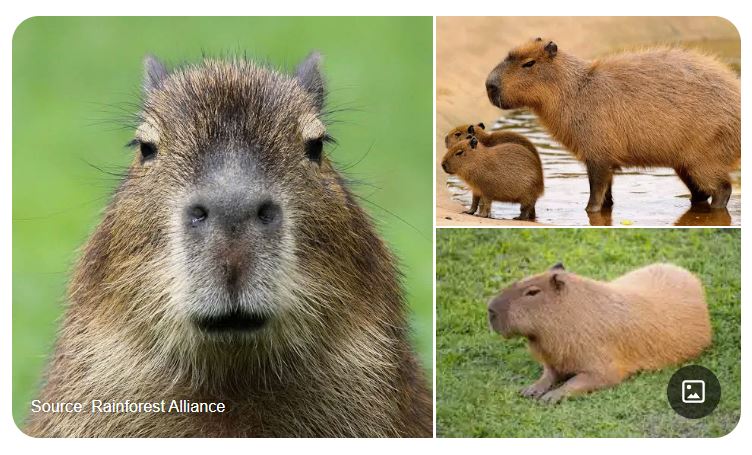
- The capybara (Hydrochoerus hydrochaeris) is the largest rodent in the world.
- This animal comes from South America. These social animals need to always have water nearby because they are semi-aquatic.
- Capybaras are excellent swimmers. They get help from their webbed feet and a special shape to their face.
- They are herbivores. Most of the time, they eat grass and aquatic plants.
- Capybaras like to live together. These social animals often gather in big groups. The animals are usually known to be calm and friendly.
Introduction
Have you ever seen or heard about a rodent that’s as big as a large dog? That animal is called a capybara. It comes from South America. The capybara is a gentle animal, and many people find it fascinating. Its scientific name is Hydrochoerus hydrochaeris, and this name means “water hog.” That fits well because this rodent spends a lot of time in the water.
These capybaras are the world’s largest rodents. People know them for being calm and friendly. They often get along well with other animals. Now, let’s take a closer look at the life of this “water hog” and find out why it’s so sociable.
Animal Capybara – An Overview
The capybara (Hydrochoerus hydrochaeris) is known as the largest rodent in the world. It gets this title for good reason. You can find capybaras in many parts of South America. This animal is in the same family as guinea pigs and rock cavies. A capybara almost always stays close to water, as it needs this to live.
These mammals live partly in water and partly on land. The way they look, act, and live together stands out in the rodent family. Here, you will find what makes them interesting and how people group them.
What Makes a Capybara Unique Among Animals
The capybara is really a rodent of unusual size. It stands out in a few ways. The most striking thing about the capybara is how it lives both on land and in water. Capybaras are strong swimmers. They can stay under water for up to five minutes each time. This is important, as it helps them get away from dangers like jaguars and anacondas. The eyes, ears, and nose of the capybara sit high on its head. This lets the animal see and breathe with most of its body under the water.
Besides the way they swim, the social behavior of capybaras really stands out. The capybara is very gentle and calm. You will often see them getting along well with other animals. Birds, monkeys, and other capybaras like to sit on their backs. It looks like the capybara is a chair that moves.
This friendly way of life helps them stay safe. They live in big groups for protection, and this helps them feel better because they are always with others. These animals are some of the most sociable you will ever get to see. Being calm lets them make special bonds with other animals.
Classification of the Capybara as a Rodent
Yes, capybaras are the largest rodent in the world. They are in the family called Caviidae. Guinea pigs and rock cavies are also in this family. Capybaras are part of a group in the subfamily of caviidae known as Hydrochoerinae.
The scientific name of the capybara is hydrochoerus hydrochaeris. This name lets us tell it apart from its close relatives. The lesser capybara, for example, has the scientific name hydrochoerus isthmius. Both belong to the same group, but they are not the same species.
They may look like a pig, but they have front teeth that keep growing. This is something most rodents have. A lot of studies on their genes show that they really are part of the rodent family. Even though they are big, they belong in that group.
Physical Description of the Giant Capybara
Being the largest living rodent, the capybara stands out because of how it looks. It has a heavy body that is shaped like a barrel. Its head is short, and the color of its fur goes from reddish-brown to yellowish-brown. When you look at adult capybaras, you find the average weight is pretty good. Most of the time, female capybaras are a bit heavier than the male capybaras.
Their body is made for the place they live in. The size and shape of their face and body help them survive. Everything about how they look is important. Let’ s take a closer look at these traits.
Size, Appearance, and Notable Features
Adult capybaras are the world’s largest rodent. They can grow up to four feet long and reach about two feet in height at the shoulder. Their average weight is between 77 to 150 pounds, but some wild females can be as heavy as 201 pounds. A capybara has coarse and sparse fur that sits on top of thick fatty skin, which helps keep the animal warm.
Their bodies have some good and interesting features. One is their small ears. They can press these ears against their heads. This keeps water out. They also have vestigial tails, which means the tails are very small. You can only see them a little.
The molar shape of their teeth helps them grind tough plants. The teeth grow all the time. This lets them handle wear from chewing.
Here’s a quick look at their key physical traits:
| Feature | Description |
|---|---|
| Average Weight | 77 – 150 lbs (35 – 70 kg) |
| Height | 20 – 24 inches (50 – 62 cm) at the shoulder |
| Length | 3.5 – 4.4 ft (106 – 134 cm) |
| Fur | Coarse, reddish-brown to yellowish-brown |
| Feet | Partially webbed with four toes on front feet and three on back feet |
Adaptations for Land and Water Life
Capybaras are excellent swimmers. They have hind legs that are a bit longer than their front ones. Their feet are partly webbed, which helps them move through bodies of water with no trouble. You can see them rest or even sleep in the water. They keep their noses up so they can breathe. This way, they stay safe from animals that may hunt them on land.
Their face is just right for living both in and around water. Their eyes, ears, and nose sit up high on top of the head. This lets them keep most of their body under water. At the same time, they can still watch and listen for what is going on around them. This helps them be strong swimmers and makes it easy for them to stay out of sight when there is danger.
Capybaras may be big and great in water, but they move well on land too. They can run up to 35 kilometers per hour, which is about as fast as a horse. Being able to move this way helps them look for aquatic plants and grass close to the water. It also lets them get away fast from dangers when they are on land.
Natural Habitat of Real Capybaras
Capybaras live in nearly every country in south america, but you will not see them in Chile. You can find the capybara in many places, such as thick tropical rainforest and the big, wet grasslands called the Venezuelan llanos. A lot of them are found in mato grosso, which is in Brazil.
The capybara always needs to have water nearby. A river, lake, swamp, or marsh is the kind of place where it will live. It builds its life around water sources. Now, let’s look at the places where the capybara likes to be.
Where Capybaras Live in the Wild
Capybaras can be found in the wild throughout most of South America. They like to live near bodies of water, like lakes, rivers, ponds, and marshes. These large rodents live in some places that are full of plants and trees. Capybaras are often seen in countries such as Brazil, Venezuela, Colombia, Peru, and Argentina. Some of the biggest groups of capybaras live in the Pantanal and the Mato Grosso wetlands.
These animals make their home ranges around water. A home range can be as big as 25 acres, or 10 hectares. They like to be close to a good water source at all times. Sometimes, they change and start to live on land where people keep cattle. These places have a lot of water that the animals use too.
Escaped capybaras have set up small groups that breed in some other places, like Trinidad and Florida. You can often find them in wet areas, much like the places they came from. This shows they can live well in new homes if there is water around.
Climate and Environment Preferences
Capybaras do well in places with changing weather. They can handle both the dry season and the wet season. When it is the dry season, the water sources get smaller. Big groups of capybaras, sometimes up to 100, meet by the last ponds and rivers that are left. They need these water sources to live.
They do well in warm places that feel wet, like the tropical rainforest. They can live just as easy in flooded fields and open grassy areas. These animals eat grasses and aquatic plants. By doing this, they help keep plants from getting too thick. They are also important because many hunters like jaguars, pumas, anacondas, and caimans look for them to eat.
Even though they are not counted as a threatened species worldwide, their numbers are steady. But in some places, people hunt them for meat and hide. This has caused rules to be put in place. These hunting restrictions help keep their local groups safe.
The Capybara’s Diet and Feeding Habits
The capybara eats mostly grasses and aquatic plants. It is a herbivore and often picks some plants but does not eat others. Capybaras cannot make vitamin C in their body. So, they have to get vitamin C from what they eat. This helps them avoid sickness like scurvy.
One of their strangest ways to eat is to eat their own feces. By doing this, they get a source of bacterial gut flora. This helps them break down the tough parts of their food and get the most nutritional value from it. Let’s now look at what these giant rodents eat.
What Do Capybaras Eat?
Capybaras are animals that eat grass and aquatic plants. They have to get enough food each day. A capybara will eat about 6 to 8 pounds (3 to 3.5 kg) of fresh vegetation. Most of the time, their eating is picky. But, in the dry season, the plants they like lose some nutritional value. So, capybaras will eat other things. You might see them eat fruit, tree bark, melons, and grains then. They change what they eat because of what is around and what gives them nutrition.
A special and important part of their diet is eating their own feces. They practice autocoprophagy, so they eat their droppings again to help with the way they digest food. This acts as a source of bacterial gut flora. Gut bacteria are needed to break down tough plants and help them get more proteins and vitamins from what they eat.
Capybaras eat only plants, but people in some parts of South America hunt them for capybara meat. This happens more often in the time before Easter. The Catholic Church in South America used to say the capybara was a fish, so people could eat it during certain days.
Foraging Behavior and Ecological Impact
Capybaras are known for how they eat. I see that they are picky about their food. The animal with the scientific name hydrochoerus hydrochaeris, or “water hog,” likes water a lot. But they spend most of their time eating on land. Capybaras come out for food mostly in the late afternoon and early evening when it is cooler outside.
The capybara makes a big difference to nature. It eats lots of grass and aquatic plants. By doing this, capybaras help keep areas healthy. They stop some grasses and aquatic plants from getting out of control. This work helps keep the wetlands in good shape for all kinds of life.
Capybaras play a big role in the food web in south america. Many of the top hunters eat capybaras. This includes animals like anacondas, jaguars, pumas, and caimans. Because capybaras are a main food for these carnivores, they help these predator groups stay strong. That is why capybaras are very important in their ecosystem.
Social Behavior and Daily Routine of a Capybara
Capybaras are social animals that live together in capybara groups. A group usually has 10 to 20 animals, but their herd can get much bigger when the dry season comes. In each group, you will often see a dominant male. There are several females, their babies, and some subordinate males. This mix shows how their social behavior looks with all the group members living side by side.
The social structure is clear in this group. The dominant male is at the center and has the first choice for mating. He stays at a protected spot among them. These animals live together because it helps them stay safe. They can watch out for danger as a group. They also care for their young ones together. Now, let us look at how they talk to each other and what they do every day.
Group Living and Communication Styles
The way capybaras live together is interesting. The main group has a clear social structure. A dominant male leads the group and looks after the females. This helps the group stay together and feel safe. Capybaras are friendly by nature, and this keeps the peace among all the members. They count on each other for safety. They also enjoy being social.
Capybaras talk to each other in many ways. They be very vocal animals. They make different sounds, and each one means something special. The sounds are important to how they live and talk with others in their group.
Some of their communication methods include:
- Barks: The group uses barking to let others know if danger is close by.
- Whistles: A female named whistle will use it when she is ready to mate.
- Grunts and Purrs: These soft sounds help them stay close and talk to each other all the time.
- Scent Marking: A male animal marks his area with scents from glands near his nose and bottom.
Typical Activities Throughout the Day
A capybara likes to stay cool, so its day depends on how hot it is outside. It spends a lot of time in water or mud during hot times. This helps it keep its body temperature just right. You will see capybaras most active in the late afternoon and early evening. That is when they head out to eat.
They start their day by eating grass before the sun comes up. Around midnight, they rest by taking a nap. Most of the time, they stay inside their home ranges. They know this area very well. In some city areas such as the Nordelta suburb in Argentina, people have found ways to live with capybaras. The capybaras change how they act so they can be around humans.
This way of living, where they spend time floating in the water and then eating on land, makes them look very calm. Their day follows a simple pattern. Most of the time, they work on keeping cool, looking for something to eat, and being with others in their group.
Conclusion
To sum it up, capybaras are special animals. They are the largest rodent in the world. You can see how they live both on land and in water. Their social behavior and what they eat also are important things to know about them. These animals do a lot for the world around them. If you get to know these gentle creatures, you may feel more for animals and want to help save them. If you want to learn more about capybaras or need help with keeping them as pets or understanding the part they have in nature, feel free to reach out.
Frequently Asked Questions
Can Capybaras Be Kept as Pets?
Some people may want to keep a pet capybara. But it can be hard, and it is not allowed in every place. These social animals like to be with other capybaras. They need a big fenced space. A good-sized pool for swimming is also important. Their diet is special. They also eat their own feces. This makes them hard to keep in most homes.
Why Are Capybaras Considered Friendly Animals?
Capybaras are seen as friendly because they are very social animals. They have a calm and gentle way of being. This peaceful side is needed when they live together in large groups. They stay laid-back with other kinds of animals too. That is why you may see capybaras getting along well with birds, monkeys, and more.
Are Capybaras Endangered or Protected Species?
No, capybaras are not on the endangered species list. Groups like the San Diego Zoo Wildlife Alliance say that the population of capybaras is stable and found in many places. Still, they could be a threatened species in some spots, where people hunt them for their meat and hide. This has caused rules and limits on hunting to help keep them safe.




