
Key Highlights
- This blog talks about the list of national symbols of India. It covers all 17 official emblems that help show what the nation is all about.
- You will get to know the cultural and historical meaning behind things such as the national flag (Tiranga) and the national anthem, Jana Gana Mana.
- Find out what the national symbols mean for India’s rich nature, like the Royal Bengal Tiger, Indian Peacock, and the National Heritage Animal, which is the Indian Elephant.
- We share information about natural symbols such as the Ganga River and the national aquatic animal, the Ganges River Dolphin.
- You will see fun tips for teaching children about the national symbols of India and get answers to some common questions.
Introduction
Have you ever thought about what makes a country feel different from others? In India, the national symbols play a big part in that answer. These are not just signs or pictures. They are strong symbols that show the heart of Indian culture and its long history. Knowing these symbols helps you feel closer to the rich heritage in India. You also feel a stronger sense of national identity when you learn about them. This guide will show you all of the official national symbols of India. It will tell you what they mean and the story behind each one.
Overview of National Signs of India
The national signs of India are symbols that have been officially chosen to show the country’s values and special traditions. Each symbol of India tells about an important part of the country, like its old history and the many kinds of plants and animals found there.
In the next parts, we will go through the complete list of national symbols. You will get to know what these national symbols are. You will also find out why they matter so much in Indian culture. These symbols show the pride the nation has, and why people feel that way.
Understanding Symbol in India: Definition and Importance
A symbol of India is something that is officially chosen to show the country’s identity and culture. The symbol of India is not only about what you see, but also about how people feel. These symbols help all people feel close to what India stands for and what the people hope for. The symbol of India helps everyone remember the story and the values that make us all part of one nation.
These symbols help people feel national pride and have a strong national identity. When people from many backgrounds see the same flag or sing the same anthem, they feel a special connection. That helps them feel proud of who they are. These emblems are like a language that tells others about unity and the sense of pride we all feel together.
In the end, these symbols are very important for keeping Indian culture strong for the next generations. They hold stories, ideas, and the heart of the nation. This helps make sure that India’s rich past stays alive and makes people feel respect and love for their country.
How India National Things Represent Culture and Heritage
India’s national symbols show us the rich heritage and traditions that are found in the country. Each of these symbols has been picked to share a part of the story of India’s past and how life is now. For example, the lotus flower and the banyan tree are both national symbols that connect to India’s spiritual side and its old stories. These symbols be a nod to the cultural heritage that goes back thousands of years.
These important national symbols are not just random. They stand for deep values in Indian culture. The Royal Bengal Tiger is a sign of strength and courage. The Indian Peacock stands for grace and beauty. People in India feel a lot of pride in these qualities. The royal bengal tiger and the indian peacock are both loved and honored parts of indian culture.
When you learn about these symbols, you get to know what makes Indian culture special. They help teach people about the country’s past and pass it down to younger generations. This gives people a sense of pride and helps them feel close to their shared roots.
The Complete List of India National Things
Now that we know what national symbols are and why they are important, let’s see the list of national symbols of India. There are 17 national symbols. Each one is part of the country’s identity and makes India special. This list of national symbols of India helps us know which things show the spirit of the country.
Knowing all these official symbols lets you see more of India’s heritage. The government emblems, famous animals, and other signs each play a part in the country’s story. When you learn about each one, you add more to your understanding of the nation. Let’s get to know all of them.
An Introduction to the 17 Official National Symbols
India has 17 official national symbols. These national symbols are a good mix of nature, culture, and history. The list of national symbols did not come out at one time. The national flag, for example, has roots that go back to India’s fight for freedom and the Indian National Congress. Some of the other national symbols were picked to be part of the list much later.
Here is a simple list of the national symbols of India for you:
| Category | National Symbol Name |
|---|---|
| Flag | Tiranga |
| Anthem | Jana Gana Mana |
| Song | Vande Mataram |
| Emblem | National Emblem of India |
| Calendar | Saka Calendar |
| Currency | Indian Rupee |
| Pledge | National Pledge |
| River | Ganga |
| Animal | Royal Bengal Tiger |
| Bird | Indian Peacock |
| Flower | Lotus |
| Fruit | Mango |
| Tree | Indian Banyan |
| Vegetable | Pumpkin |
| Reptile | King Cobra |
| Heritage Animal | Indian Elephant |
| Aquatic Animal | Ganges River Dolphin |
Together, these 17 symbols help shape the national identity. They give people a common ground to feel connected. More than a billion people feel united by these symbols. They show what is special about the country to others around the world.
Names and Meanings Behind Each Symbol in India
Each of India’s national symbols has a special name and meaning. They are tied to the country’s culture and history. The national flower of India is the Lotus. People also call it ‘Padma’ in Sanskrit. The national flower of India stands for purity, spirituality, and enlightenment. In Indian stories and art, it has a sacred role. So, the national symbols and especially the national flower mean a lot in India.
In the same way, the national animal of India is the Royal Bengal Tiger. The royal bengal tiger stands for power, bravery, and grace. By choosing the bengal tiger as its national animal, India shows care for its great wildlife. The national emblem is a strong sign, too. It comes from the Lion Capital of Ashoka at Sarnath. This national emblem shows India’s old past and its stand for truth and justice.
Even the national anthem, ‘Jana Gana Mana,’ has a deep meaning. It celebrates India’s unity even with so much diversity. These names and their meanings are not just random facts. They let us see into the heart of the nation. They show what India values most and what the people care about in their everyday lives.
Historical Significance of National Things India
India’s national symbols are not chosen just because they look nice. The selection of these symbols has deep ties with history. Many of these national symbols come from key events in India’s past, especially the fight for independence and when the country became a republic.
The Constituent Assembly made some big decisions in the late 1940s. At that time, they chose several important symbols, like the national flag and the anthem. This history explains why the national flag and these other symbols became a strong part of India’s national heritage. These choices were made so that people in India, for years to come, would feel proud of their national heritage and stay connected to these symbols.
Why These Symbols Were Chosen for India
The national symbols of India were picked with a lot of care. The leaders wanted to show what the country stands for and what it has gone through in the past. The Constituent Assembly helped to choose these symbols. A major decision was to use the Lion Capital of Ashoka for the national emblem. This choice was made to respect the old history of India and the idea of peace that comes with it.
Influential people helped shape the national heritage. The national anthem, Jana Gana Mana, was created by Rabindranath Tagore. The national song, Vande Mataram, was written by Bankim Chandra Chatterjee. Both the national anthem and the national song played an important part in the freedom movement.
These symbols were picked because they stand for ideas such as unity, courage, purity, and truth. They were chosen to show the different parts of India’s culture and its special natural world. These symbols also show the hopes and dreams that people in the new, free nation of India have.
Key Cultural Stories Connected to National Signs of India
Many of the national symbols in India have great stories that add to their deep meaning in culture. The national song, Vande Mataram, is a good example of this. It started as a poem in Bankim Chandra Chatterjee’s book Anandamath in the year 1882. Soon, Vande Mataram became a national song that inspired freedom fighters. It gave a lot of hope and feeling to the independence movement in the country.
Just like that, the national anthem, ‘Jana Gana Mana,’ also has a story from history. People first sang it at a session of the Indian National Congress in Calcutta in 1911. This happened many years before it was made the official national anthem in 1950. That day was an important one in the journey of ‘Jana Gana Mana,’ helping it to become a big part of India’s national heritage.
These stories give more meaning to the symbols. They help change them from simple signs into strong stories about Indian national pride. The stories link today’s India to its long history. They also make people remember both the hard times and victories that made the country what it is now.
Prominent National Symbols of India and Their Symbolism
All 17 national symbols of India are important. But some are seen and known more often in daily life. The national flag, the national emblem of India, the national anthem, the national animal, and the national bird are the most famous symbols. These stand out as signs of the country’s identity.
These symbols are special, as they have strong meaning behind them. You see them a lot in daily life and in things that matter to people. In the sections that follow, we will look at what each symbol stands for. We will also talk about how people use them to show national pride and feel close as one group.
National Flag, Emblem, and Anthem: Meaning and Usage
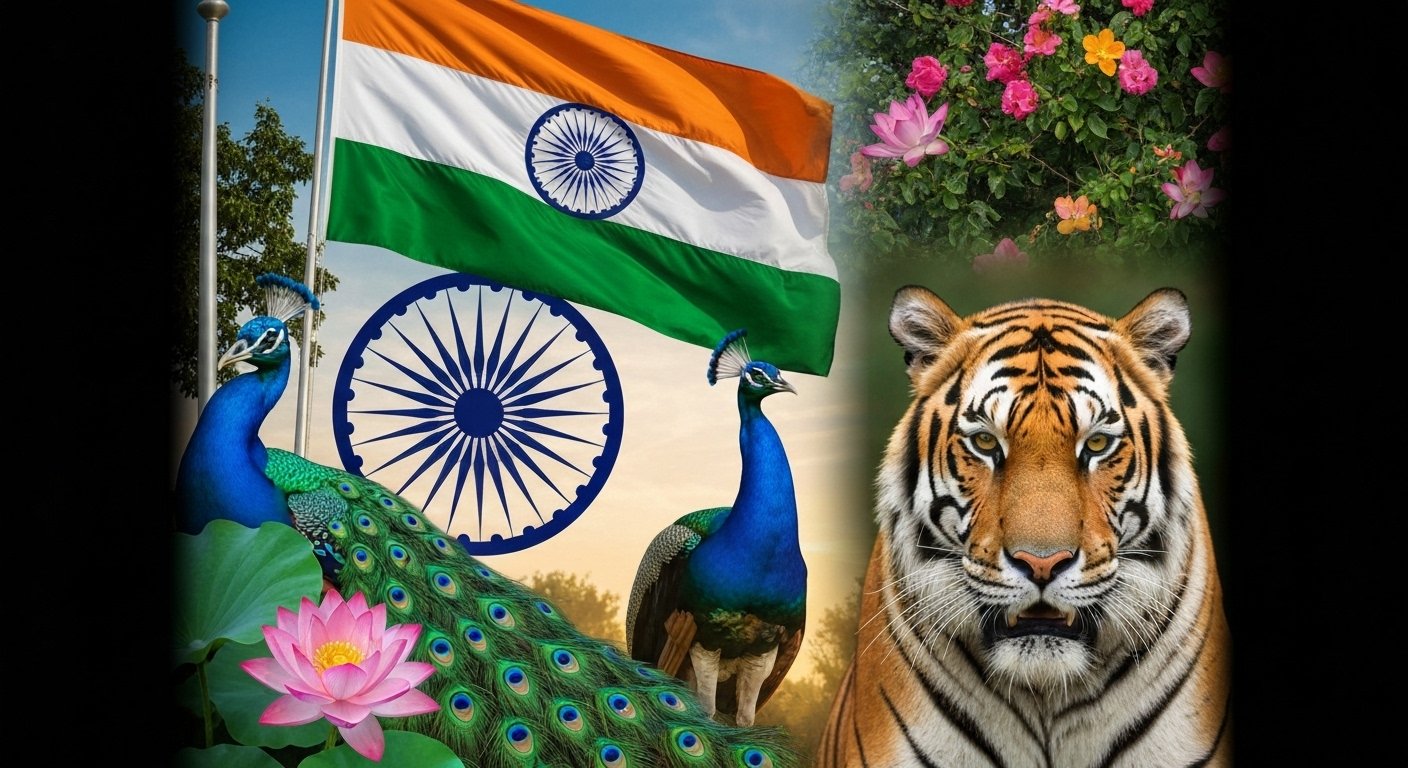
The national flag of India, or Tiranga, has special meaning for the people. The top band is saffron, and it stands for strength and courage. The middle band is white, and it means peace and truth. The green band at the bottom shows there is growth and that the land can give a lot. In the center of the national flag of India is the Ashoka Chakra. This wheel is navy blue with 24 spokes. The Ashoka Chakra stands for law and moving ahead all the time.
India’s national emblem shows four Asiatic lions. It comes from an old sculpture. The lions stand for power, courage, and confidence. Below the lions, you will see the words ‘Satyameva Jayate’. This means “Truth Alone Triumphs.” This idea is very important in the country. The national emblem appears on all official government papers.
The national anthem of India is called ‘Jana Gana Mana.’ It is about the many places and cultures found in the country. The song asks the people to come together as one. You will hear the national anthem at important events and in schools. It helps the people feel proud and united. It also teaches everyone to honor and respect the nation.
National Animal, Bird, and Flower: What They Represent
India picked its national animal, bird, and flower to show how much people in the country love nature. These choices also show what these living things mean to them. The royal bengal tiger, known for its power and beauty, is the national animal. People see the bengal tiger as strong. It is also full of grace. The tiger stands out because it has so much energy.
The Indian Peacock is the national bird of India. People picked it because it has bright colors and looks beautiful. It is also important in Indian culture and stories.
The Lotus is the national flower of India. It is a special flower that means a lot in Indian art and traditions.
Here is what each of these symbols represents:
- Royal Bengal Tiger: The bengal tiger is the national animal. It stands for power, courage, and how much India cares for wildlife.
- Indian Peacock: The indian peacock is the national bird. It shows grace, beauty, and national pride.
- Lotus: This lovely national flower is the lotus. It means purity, spirituality, and being wise.
Natural National Symbols of India
India’s identity is closely tied to its natural world. Many of its national symbols come from its one-of-a-kind plants and animals. The Indian Banyan tree and the powerful King Cobra are two good examples. These national symbols show off the country’s special plants and animals. They remind us of all that is rich and good in India’s wild places.
Symbols like the national river, which is the Ganges river, and the national aquatic animal of India, known as the Ganges River Dolphin, show how important it is to take care of the country’s waterways and living things. These national river dolphin and aquatic animal symbols help us see why we must protect our national aquatic animal. Let’s look at some of these important natural symbols and see what they mean.
Unique Flora and Fauna as National Things India
India has many national symbols that include special kinds of plants and animals. The Indian banyan tree is the national tree. It stands for long life and for being everlasting, because its branches keep spreading. People have always used its wide shade as a place to meet and talk with others. The banyan tree has a big spot in the list of national symbols of this country.
The country knows strong animals like the king cobra, which is the national reptile. The Indian elephant is also called the national heritage animal. The Indian elephant shows national heritage that is special and loved. Picking these animals shows how the people feel proud of their wildlife. The mango is sweet and loved by many. This fruit is the national fruit of India. It stands for plenty and good luck.
Here are a few of these natural symbols:
- Indian Banyan: This is the national tree. It stands for living forever and how all things be linked together.
- Ganges River Dolphin: This is the national aquatic animal. It shows how we must look out for river habitats and the creatures in them.
- Indian Elephant: This is the national heritage animal. People see it as wise and strong. It is part of our national heritage and is highly respected.
Conservation and National Pride Associated with Nature
Naming an animal as a symbol of India is important for the care and safety of wildlife. In 1973, the Royal Bengal Tiger was made the national animal. This led to the start of “Project Tiger,” which was set up to help save the bengal tiger from dying out. These actions show that India wants to protect its wildlife. Now, the royal bengal tiger stands as a strong symbol of India.
In the same way, naming the Ganges River Dolphin as the national aquatic animal, and the Indian Elephant as the National Heritage Animal of India, helps to get more people to care. This move brings attention to the river dolphin and the elephant. It gets people to help with their protection. By calling the Indian Elephant the national heritage animal of India, and the Ganges River Dolphin the national aquatic animal of India, the country shows these animals are special. It lets people know they are part of our national heritage. It is important because both the river dolphin and Indian elephant are in danger. This is a good way to get their protection and support from people. The ganges river, the animals, and the national heritage feel more important to all of us when we do this.
These efforts show that national pride is more than just honoring a symbol. It means we need to care for and protect what is important for the country to keep going. People feel like looking after these animals is a job for everyone in the nation. This helps make the link between India’s national pride and nature even stronger.
Teaching Kids About Symbol in India in Fun Ways
Introducing kids to every symbol of India can help them feel proud of their country from an early age. But some children may feel learning the names and facts is boring. That is why it’s good to make it fun and interactive. This way, they will stay interested and feel national pride about each symbol of India.
Kids can learn about the national bird, the banyan tree, and other national symbols with fun educational activities. These lessons can help them remember what they learn. In the next part, you can find creative ideas. These ideas will make learning about India’s heritage feel like an adventure for kids.
Visual Aids, Charts, and Educational Activities for Learning
Using things that you can see and touch is a good way to teach kids about national symbols of India. These interactive ideas help children understand and remember the ideas better. Easy charts that show each national symbol, its name, and a short description can be used as a helpful tool in a class or at home.
Fun ways can turn learning into playtime. You can tell stories about the banyan tree from old myths, or read cool facts about the mango, which people call the “king of fruits.” This will help your child use their imagination and enjoy the time.
Here are a few ideas for fun learning activities:
- Make your own national symbols chart by using drawings or pictures. Get some paper and pens. You can add the national flag, national anthem, national song, and the Indian peacock to it.
- Set up a quiz game. Find questions about each national symbol and ask them to your friends and family. See who gets the most right.
- Try drawing the national flag or the Indian peacock. Take your time to make it look nice. Use colors where needed.
- Gather everyone and sing the national anthem and national song together. Let all of us enjoy the moment and feel proud.
Use of National Signs of India in Government and Daily Life
The national signs of India are more than just for show. The government of India uses them in many official events. You can see these signs in lots of daily life situations. They show who has the power and what is real in many government activities.
From money that is controlled by the Reserve Bank of India to signs on government buildings, you see these things everywhere. Next, we talk about where the national emblem and indian rupee symbol can be found in official places. We also show you where they are in your daily life. This includes the national emblem and indian rupee symbol both on national currency and in many settings.
Government Emblems and Official Documents
Yes, the national symbols are seen in many government emblems and official documents. The national emblem of India shows its motto ‘Satyameva Jayate’ and acts as the main seal for the government of India. You will see this national emblem of India on passports, government letterheads, and at government buildings. It shows the authority of the government.
The Indian Rupee is the national currency, and it has many national symbols on it. Banknotes printed by the Reserve Bank of India show the national emblem. The Indian Rupee symbol (₹) is also known as a national icon. Udaya Kumar Dharmalingam designed this symbol to show India’s strong economic identity.
These symbols on official items are very important to show they are real. They are a sign of the sovereign authority of the Republic of India. You can see them used both inside the country and in other places around the world.
Everyday Presence of India National Things
Beyond just official documents, national symbols in India are part of daily life. The Indian Rupee is something that people use every day. You can see the national flag of India on many days, like national holidays, sports events, and on public buildings. The national flag brings a feeling of pride that is shared by all.
Many students in the country say the National Pledge during school assemblies. This helps them feel united and shows their love for the nation. Hockey is often called the national game, and people celebrate its spirit all around. The Saka calendar, which is the national calendar of India, is used by the government for official work with the Gregorian calendar.
This ongoing display helps people feel a steady sense of national identity. When citizens see these signs often, it makes them think about their past and about the things that bring everyone together as one nation.
Frequently Asked Questions (FAQ)
Many people have questions about national symbols in India. A lot of us want to know what the national flag means and feel proud when we see it. The national anthem, “Jana Gana Mana,” written by Rabindranath Tagore, gives us a feeling of unity and honor. Some also want to know why the Bengal tiger and the Ganges River are important. The Ganges is seen as giving life to India. Learning about these national symbols helps us feel more connected to India’s rich heritage and national identity.
Are national symbols of India ever changed or updated?
Yes, the list of national symbols can change over time in India. The national flag stays the same, but the government can choose new symbols when needed. For example, they added the Ganges River Dolphin and the Indian Rupee symbol to the list of national symbols of India. These changes show what matters to us now, like taking care of the Ganges river and focusing on the Indian rupee for the economy.
Where can I find official pictures and charts of national signs of India?
You can find real pictures and charts of India’s national symbols on government websites. For example, you can check the National Portal of India. These sites have true images of things like the national flag of India and the Indian peacock. You get the right look of national symbols, so you know it is accurate.
Which symbol in India is the most recognized globally?
The national flag of India, called the Tiranga, may be the most well-known sign of India around the world. The flag is seen at many international forums and events. The national animal of India is the Royal Bengal Tiger. A lot of people know about this tiger. Its strong look and global support to save it make it popular.
Conclusion
National symbols show what a country is all about. They stand for the identity, culture, and heritage of a nation. These symbols bring people together and help everyone feel proud of where they come from. When you learn about the national symbols of India, it helps you know more and feel closer to the stories and history behind them. The Bengal Tiger and the Tricolor flag are good examples. Each one has its own story, and they help connect us to our past. If you teach these national symbols to children, or want to feel more tied to your country, remember that they can make you feel even more proud. Learning about them helps us see India’s rich and colorful background. For more details, feel free to get in touch and find out more!




